By: Dipin Sehdev
Hollywood woke up this week with one fewer major studio owner and one much larger media company.
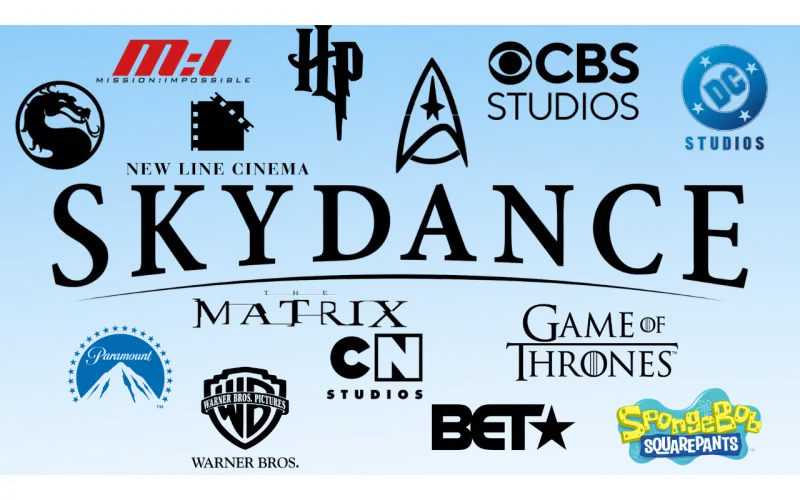
Skydance completed its acquisition of Warner Bros. Discovery on Oct. 6, combining WBD with Paramount Skydance and renaming the entire company Skydance Corp. The transaction values Warner Bros. Discovery at roughly $110 billion on an enterprise-value basis and puts Warner Bros., Paramount, HBO, CBS, CNN, Nickelodeon, DC, HBO Max, Paramount+ and an extraordinary collection of entertainment franchises under one corporate roof.
Skydance is presenting the deal as the creation of a stronger competitor capable of taking on Netflix, Disney, Amazon and YouTube. It promises at least 30 theatrical films annually, more than 180 television programs and over $30 billion in annual content spending. The company says the combination will ultimately benefit audiences and creators.
I am far less optimistic. The issue is not whether Skydance now owns enough good intellectual property. It owns an almost absurd amount of it. The concern is what happens when one company takes control of this much of Hollywood while carrying an enormous debt load and simultaneously promising Wall Street at least $6 billion in annual cost savings. Jobs are already expected to disappear. Studios will overlap. Streaming services will be combined. Real estate will be consolidated. And while Skydance has not announced plans to sell major franchises or dismantle its intellectual-property portfolio, the financial structure behind this deal creates exactly the kind of pressure that can turn beloved entertainment assets into numbers on a balance sheet.
That is what worries me.
This Is Not Simply a Warner Bros. Acquisition
The scale of what David Ellison now controls can be difficult to appreciate. Warner Bros. Discovery is not simply Warner Bros. Pictures. Paramount is not simply Paramount Pictures. The combined company includes two of Hollywood's historic movie studios, major television producers, children's entertainment, animation, gaming, sports, news, streaming and decades of film and television libraries.
Skydance says the new company will generate nearly $70 billion in annual revenue and reach audiences in more than 200 countries and territories. Its streaming businesses have more than 200 million subscribers collectively. The Associated Press described the result as a company controlling everything from Harry Potter and Superman to Star Trek, Top Gun and SpongeBob SquarePants. That concentration alone deserves scrutiny. But then there is the debt.
Skydance Now Has an Enormous Debt Problem
The headline acquisition number does not tell the whole story. Skydance raised roughly $52 billion of new acquisition debt through bonds and term loans as it prepared to close the Warner Bros. transaction. Before closing, the company announced plans for about $44.4 billion in secured notes along with a $7.5 billion incremental term loan facility. Independent estimates now put the combined company's total debt around $87 billion, with roughly $80 billion of net debt depending on the calculation used. That is an extraordinary amount of leverage for a company whose traditional television businesses are facing long-term declines.
It is significant enough that S&P Global Ratings downgraded Paramount Skydance's issuer credit rating to BB ahead of the acquisition, citing higher leverage. S&P said it does not expect its adjusted leverage measure to fall below five times until 2029 and specifically warned that integration problems or faster deterioration in the media business could slow deleveraging. Skydance itself says it intends to reduce net leverage to 3.0 times by the end of 2029. That means the next three years are not simply about making good movies. They are about generating cash. A lot of it.
$6 Billion in “Synergies” Has a Human Meaning
Skydance says it expects at least $6 billion in annual run-rate synergies within three years. Companies like the word “synergies.” Employees tend to experience them differently. The company says those savings will come primarily from technology integration, procurement, marketing and real estate rationalization. Executives have also said most of the savings will not come directly from job cuts.
But layoffs are coming. David Ellison and co-CEO Ynon Kreiz acknowledged that directly in a message to employees after the merger closed, saying the integration would require “difficult decisions that affect our workforce.” And there is reason to take that seriously.
A Los Angeles County-commissioned economic analysis estimated that the merger could put about 4,500 direct film and television jobs in Los Angeles County at risk over the three-year integration period. It estimated 10,360 total job-years could be exposed when suppliers and the broader local economy are included. The county was careful to say those figures are not a forecast of announced layoffs, but they illustrate the potential scale of the consolidation. An earlier county analysis found about 2,495 Los Angeles jobs and roughly 6,000 jobs globally in corporate, technology, real estate and other overlapping functions were particularly exposed to direct consolidation. It also highlighted the combined company's heavy debt burden as an additional risk. This is why I have difficulty celebrating the deal.
Two companies do not find $6 billion in duplicate expenses without deciding that some jobs, buildings, systems, departments and projects are no longer necessary.
Who Owns What Now?
The term “Skydance” now sits above an extraordinary number of production operations. The precise corporate structure will continue to evolve as integration proceeds, but the combined portfolio includes these major active studio operations and labels:
| Studio or Production Operation | Primary Area |
|---|---|
| Paramount Pictures | Theatrical film |
| Warner Bros. Pictures | Theatrical film |
| New Line Cinema | Film |
| DC Studios | DC film and television |
| Warner Bros. Pictures Animation | Feature animation |
| Warner Bros. Television | Television production |
| Warner Bros. Animation | Television and direct-to-consumer animation |
| Cartoon Network Studios | Animation |
| CBS Studios | Television |
| Paramount Television Studios | Television |
| Nickelodeon Studios / Nickelodeon Animation | Kids and animation |
| Paramount Animation | Feature animation |
| Paramount Players | Film |
| BET Studios | Film and television |
| Skydance Film | Film |
| Skydance Animation | Animation |
| Skydance Games / Interactive | Video games |
| Skydance Sports | Sports entertainment |
| Warner Bros. Games | Video games |
| Miramax | Film and television; Skydance holds Paramount's 49% stake |
Warner Bros. Motion Picture Group itself includes Warner Bros. Pictures, New Line Cinema, Warner Bros. Pictures Animation and Warner Bros. Clockwork. Skydance Media Paramount's previously disclosed studio portfolio includes CBS Studios, Paramount Television Studios, Nickelodeon Animation, Paramount Pictures, Paramount Animation, Miramax and the legacy Skydance film, television, animation and games operations.
That is before counting HBO, Showtime, CBS, CNN, TNT, TBS, Cartoon Network, Adult Swim, Discovery, Food Network, HGTV, TLC, MTV, Comedy Central, BET and the company's many other networks and entertainment brands. This is media consolidation on a remarkable scale.
The 10 Franchises That Show Just How Powerful This Company Is
If the corporate chart feels abstract, the intellectual property makes the scale much easier to understand. Here are 10 franchises or IP families now sitting under the Skydance umbrella that, in my view, demonstrate the impact of this merger:
-
Harry Potter / Wizarding World — Warner Bros. has spent decades building Harry Potter into one of entertainment's largest global franchises, spanning film, television, games, consumer products and experiences.
-
DC — Superman, Batman, Wonder Woman and the broader DC universe now sit alongside Paramount's franchises under the same corporate owner. DC Studios remains led by James Gunn and Peter Safran.
-
Game of Thrones — HBO's Westeros franchise remains one of the most valuable television properties in modern entertainment.
-
Star Trek — Paramount's science-fiction franchise spans television, theatrical films, streaming, licensing and decades of library content.
-
Mission: Impossible — One of Paramount's defining theatrical franchises and a major part of the company's contemporary film identity.
-
Top Gun — Once a classic Paramount property, Top Gun: Maverick transformed it into a modern global tentpole franchise.
-
SpongeBob SquarePants — One of Nickelodeon's most valuable global children's franchises, spanning television, film, games, merchandise and licensing.
-
The Matrix — Warner Bros.' science-fiction franchise remains a globally recognizable piece of the studio's film library.
-
Scooby-Doo — Decades of animation, movies, television and licensing make the Hanna-Barbera property one of Warner's most durable family franchises.
-
Mortal Kombat — Warner Bros. Games gives the new company direct exposure to a major gaming franchise in addition to its film and television assets.
That list could easily continue. Looney Tunes. The Godfather. Teenage Mutant Ninja Turtles. Yellowstone. Friends. South Park. The Sopranos. The Wizard of Oz. Casablanca. Dune. Hogwarts Legacy. NCIS. Skydance's own investor materials have highlighted DC, Lord of the Rings, Mission: Impossible, Harry Potter and Star Trek among the company's billion-dollar franchise opportunities. This is not just a big content library. It is a remarkable concentration of cultural assets.
And That Is Why the Debt Matters So Much
There is an argument in favor of this deal.
Skydance can spread technology spending across a larger business. It can eliminate genuinely redundant systems. HBO Max and Paramount+ can eventually share infrastructure. Paramount and Warner Bros. can negotiate from a position of greater scale. The combined company can compete more effectively with technology companies whose market values dwarf traditional Hollywood studios. The Justice Department reached essentially that conclusion when it closed its antitrust investigation. It said the transaction was not likely to harm competition or U.S. consumers in streaming, linear television or theatrical film production and distribution.
Skydance also agreed to theatrical-output commitments. It plans at least 30 movies annually during the first two years, with commitments rising later, and has pledged additional U.S. production spending. Those are meaningful safeguards. But they do not eliminate the financial reality. You can promise to protect creativity. You can promise to invest in content. You can promise that layoffs will not represent most of your savings. Eventually, the debt has to be serviced. Skydance says the combined company can generate more than $10 billion in free cash flow by 2030. Wall Street is not unanimously convinced. Barron's reported that some analysts expect materially lower free cash flow than management projects. The publication put total debt at roughly $86.8 billion and said the company is starting with net leverage around 6.5 times EBITDA.
Those numbers matter because creditors do not care how culturally important Batman is. They care about cash flow.
Does That Mean Skydance Will Sell Harry Potter or DC?
No. There is currently no announced plan to sell Harry Potter, DC, HBO or another crown-jewel franchise. That distinction matters. I would not publish a claim that Skydance is going to sell its best intellectual property because there is no evidence yet that it intends to do so. But I do think the possibility of asset sales deserves attention. Companies carrying this level of debt typically examine everything that is not essential. That can mean real estate. Cable networks. Minority investments. International businesses. Smaller production labels. Licensing rights. Games operations. Libraries or portions of libraries. Consumer-product businesses. Sometimes the most valuable IP is protected precisely because it produces the cash needed to service the debt.
Other times, assets get sold because a buyer is willing to assign them a higher value than the owner can justify keeping on its balance sheet. Skydance has said its current plan is to grow investment in its strongest stories and franchises rather than sell them. I hope that remains true. But with tens of billions of dollars in debt and a three-year deleveraging target, I am going to watch what the company sells just as closely as what it produces.
The Streaming Consolidation Has Already Been Telegraphed
There is another major change coming. Skydance says its direct-to-consumer products will eventually be unified into a single streaming service. That means HBO Max and Paramount+ are ultimately headed toward some form of combination. From a business perspective, the logic is obvious. Why run separate technology stacks, recommendation engines, billing systems, customer-service operations and marketing organizations indefinitely when the company has promised billions in synergies? From the consumer side, the answer is less obvious. One larger service could deliver a remarkable catalog.
It could also mean less choice. The industry keeps telling consumers that consolidation is about simplicity. What often follows is a larger bundle, fewer standalone options and eventually a higher price. That is not guaranteed here. But history gives consumers plenty of reasons to be skeptical.
Hollywood Has Already Seen This Movie
Warner Bros. employees have particular reason to understand what corporate consolidation can mean. AT&T bought Time Warner. Then WarnerMedia was combined with Discovery. Now Warner Bros. Discovery has been absorbed by Skydance. Each transaction arrived with presentations about scale, efficiency and strategic opportunity. Each also brought restructuring. That is why promises about protecting creativity need to be judged against what happens after the deal closes, not what executives say on Day 1. Skydance's leadership says storytelling will remain the center of the business. I hope they are right. Because the people most exposed if the financial model does not work are not the bankers who financed the transaction. They are the people who make the movies, television shows, games and animation.
Two Buyers Just Became One
There is another consequence that deserves more attention. Before this deal, a producer with a project could theoretically take it to Paramount or Warner Bros. Those were two buyers. Now they ultimately answer to the same owner. A Los Angeles County report summarized the problem very simply: “Two buyers become one.” It warned that consolidation could reduce independent commissioning options, particularly in some categories of television. That is what consolidation means beyond balance sheets. There are fewer places to pitch.
Fewer executives able to take independent creative risks. Fewer companies bidding against one another for talent. And potentially fewer opportunities for a project that one corporate strategy decides it does not want. The company argues that greater scale will let it create more content. It has committed to at least 30 theatrical releases annually. That is encouraging. But volume alone is not the same thing as diversity. Thirty movies built predominantly around the safest global franchises would satisfy an output commitment while still producing a much narrower Hollywood.
The IP Is Incredible. The Capital Structure Is What Scares Me.
It is difficult to look at what Skydance now owns and not see enormous potential. Warner Bros. is one of the most important studios in the history of filmmaking. HBO has produced some of television's greatest shows. Paramount has more than a century of history of its own. CBS, CNN and Nickelodeon carry enormous cultural weight. DC, Harry Potter, Star Trek, Game of Thrones, SpongeBob and Mission: Impossible are properties most entertainment companies would build their entire businesses around. Skydance owns all of that under one umbrella. That is precisely why I am uncomfortable.
These properties are no longer sitting inside separate companies that can succeed, fail and invest independently. They are now assets within one highly leveraged corporation that has promised investors $6 billion in savings and a dramatic reduction in debt over the next three years. The company says it can cut costs, increase content investment, integrate two enormous organizations, combine streaming platforms, protect creative output and reduce leverage at the same time. Maybe it can. But those goals are in tension with one another. And we already know one group that will be asked to absorb some of the cost. Employees. Layoffs are no longer speculation. Management has told workers difficult decisions are coming. The question is how far those decisions go.
I Hope I Am Wrong About What Comes Next
I am not against mergers simply because companies become larger. There are genuine strategic reasons for Paramount and Warner Bros. to seek more scale in a world dominated by Netflix, Amazon, Apple, Google and Disney. But there is a difference between scale and leverage. And this deal comes with an extraordinary amount of leverage. That matters to anyone who cares about these studios. It matters to the thousands of people working inside them. It matters to filmmakers trying to get projects funded. And eventually it could matter to consumers who care about the characters, franchises and libraries now sitting inside this enormous company. Skydance now controls some of the most valuable intellectual property in entertainment history. I do not want to see those properties treated as spare parts if the financial assumptions behind this deal fail to materialize.
There is no evidence today that Skydance intends to sell off Harry Potter, DC or its other crown jewels. But there is abundant evidence that this company now has a tremendous amount of debt, a tremendous amount of duplication and a tremendous amount of pressure to cut costs quickly. That is enough for me to be concerned. The merger is complete. Now comes the part that matters. Who gets cut, what gets consolidated, what gets sold and whether some of Hollywood's greatest studios emerge stronger from this deal or simply become collateral for paying for it.