By: Dipin Sehdev
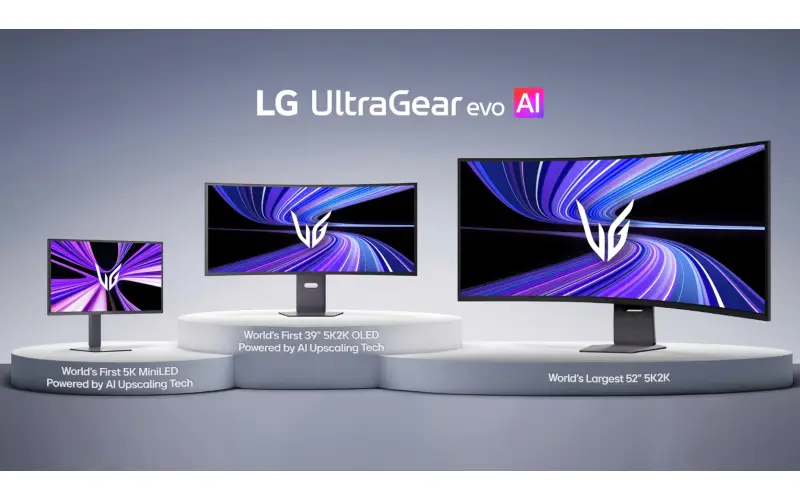
CES 2026 is shaping up to be one of the most important shows in years for gaming displays, and LG is clearly arriving with momentum. With the debut of its new UltraGear evo™ premium gaming monitor brand, LG isn’t just refreshing its lineup—it’s redefining what high-end gaming monitors can be.
Building on years of leadership in 5K and 5K2K displays, UltraGear evo pushes into new territory with RGB Tandem OLED, New MiniLED, ultra-wide formats, and refresh rates tailored specifically for competitive and esports-focused gaming. These monitors are designed to remove long-standing tradeoffs between resolution, speed, and immersion—and they may end up being some of the best displays competitive gamers can buy.
What’s especially exciting heading into CES 2026 is that LG isn’t focused on just one panel technology. Instead, UltraGear evo is a portfolio approach, spanning OLED, MiniLED, and massive large-format displays, all unified around ultra-high resolution and speed.
And buried within the press release is a detail that deserves far more attention than it’s getting: a 52-inch 5K2K gaming monitor. That’s uncomfortably close to TV territory—and potentially a glimpse into where monitors and TVs start to blur.
UltraGear evo: High Resolution Without Compromise
At the heart of UltraGear evo is LG’s insistence that gamers shouldn’t have to choose between resolution and performance. Historically, pushing into 5K resolutions meant sacrificing refresh rate, response time, or GPU requirements. LG is trying to solve that with a combination of panel innovation and on-device AI processing.
The UltraGear evo lineup introduces the world’s first 5K AI Upscaling technology, handled entirely on the monitor itself. Instead of relying on ever-more-expensive GPUs, LG’s new AI engine analyzes and enhances incoming content in real time, delivering 5K-class clarity without overwhelming system hardware.
This approach could be especially important for competitive gamers who want higher frame rates at lower internal resolutions—without losing sharpness.
39GX950B: 39-Inch 5K2K RGB Tandem OLED Built for Competitive Play
The LG UltraGear evo 39GX950B is a 39-inch ultrawide OLED monitor that feels purpose-built for high-level gaming. It uses Primary RGB Tandem OLED, LG’s newest OLED architecture, which improves brightness, color accuracy, and panel longevity while retaining OLED’s defining strengths: perfect blacks and instant pixel response.
Key Specs – 39GX950B
-
Panel: RGB Tandem OLED
-
Resolution: 5120 × 2160 (5K2K, 21:9)
-
Refresh Rate:
-
165Hz at full 5K2K
-
330Hz at WFHD via Dual Mode
-
-
Response Time: 0.03ms (GtG)
-
Curvature: 1500R
-
Pixel Density: 142 PPI
-
HDR: VESA DisplayHDR True Black 500
The Dual Mode functionality is critical here. Competitive players can drop resolution and jump to ultra-high refresh rates for esports titles, while single-player and cinematic games can run at full 5K2K fidelity. This flexibility is exactly what modern gaming demands.
27GM950B: 27-Inch 5K “New MiniLED” That Tackles Blooming
The 27GM950B may be the most technically interesting monitor in the lineup. LG calls it the world’s first 5K New MiniLED gaming monitor, designed specifically to address MiniLED’s biggest weakness: blooming.
With 2,304 local dimming zones and LG’s Zero Optical Distance engineering—which minimizes the gap between the LED backlight and the LCD layer—the GM9 delivers tighter contrast control than traditional MiniLED designs.
Key Specs – 27GM950B
-
Panel: New MiniLED
-
Resolution: 5120 × 2880 (5K)
-
Local Dimming Zones: 2,304
-
Refresh Rate:
-
165Hz at 5K
-
330Hz at QHD via Dual Mode
-
-
Response Time: 1ms (GtG)
-
HDR: VESA DisplayHDR 1000
-
Peak Brightness: Up to 1,250 nits
This monitor targets gamers who want extreme brightness and HDR impact—something OLED still struggles with—without the halo artifacts that plague many MiniLED displays. It also benefits from the same on-device AI upscaling and scene optimization as the OLED models.
52G930B: The 52-Inch 5K Monitor That Changes the Conversation
This is the sleeper headline of the announcement.
The LG UltraGear evo 52G930B is the world’s largest 5K2K gaming monitor, and it’s dangerously close to TV territory. At 52 inches, it delivers the vertical height of a 42-inch 16:9 display while stretching horizontally into a 12:9 panoramic format.
Key Specs – 52G930B
-
Panel Size: 52 inches
-
Resolution: 5120 × 2160 (5K2K)
-
Refresh Rate: 240Hz
-
Aspect Ratio: 12:9
-
Curvature: 1000R
-
HDR: VESA DisplayHDR 600
This form factor offers a workspace 33 percent wider than standard UHD monitors, making it equally compelling for simulation racing, productivity, and immersive gaming.
At this size, the line between gaming monitor and gaming TV becomes extremely thin—and that’s what makes it exciting. It suggests LG is willing to rethink what a “monitor” actually is.
Built for Competitive Gaming
Across the UltraGear evo lineup, LG is clearly targeting competitive and esports players:
-
Ultra-fast response times
-
Dual Mode refresh flexibility
-
RGB Tandem OLED for clarity and motion handling
-
AI-assisted upscaling to reduce GPU load
These monitors are positioned to be some of the best displays available for competitive gaming—especially as GPU prices continue to climb.
Availability and Pricing
LG has confirmed that the UltraGear evo lineup will debut at CES 2026, with hands-on demos available at the show. Pricing and exact retail availability have not yet been announced, but given the specs and positioning, these will clearly sit in the premium tier.
In addition, LG will begin global sales of the UltraGear GX7 (27GX790B) at CES 2026:
-
27-inch QHD RGB Tandem OLED
-
540Hz refresh rate
-
Dual Mode up to 720Hz at HD
Final Thoughts: CES 2026 Can’t Come Soon Enough
LG’s UltraGear evo announcement sets the tone for what looks like a landmark CES. Faster panels, RGB Tandem OLED, serious MiniLED innovation, and a 52-inch 5K gaming monitor all point to a future where gaming displays stop making compromises.
The transition toward ultra-high-resolution competitive gaming is clearly accelerating—and LG is pushing hard to lead it. CES 2026 is shaping up to be something special.