By: Dipin Sehdev
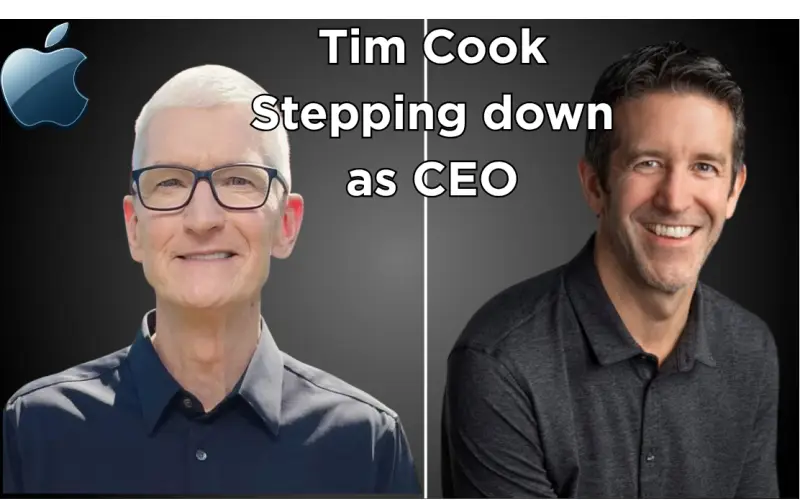
On September 1, 2026, Apple will turn a page that, for many, has been years in the making. Tim Cook will step down as CEO and transition into a board role, handing leadership to John Ternus. Apple, now 50 years old, is no longer the insurgent company it once was. It is one of the most valuable companies in the world, a machine of scale, precision, and consistency. And that machine was largely built by Tim Cook. But what happens when the operator steps aside and a product leader takes over? To understand where Apple might be headed, it helps to first understand the two eras that defined it.
The Jobs Era: Vision Before Everything
Steve Jobs was not just a CEO. He was a force of nature. There are very few leaders in modern business history who so fundamentally reshaped multiple industries at once. Jobs didn’t just build products, he built categories, redefined expectations, and rewrote the relationship between humans and technology. Under Jobs, Apple launched products that still define its identity today:
Steve Jobs Era Product Launches
| Product | Year | Impact |
|---|---|---|
| iMac (Bondi Blue) | 1998 | Saved Apple; redefined consumer PCs |
| iPod | 2001 | Revolutionized music consumption |
| iTunes Store | 2003 | Legitimized digital music |
| MacBook (Intel transition) | 2006 | Modernized Mac ecosystem |
| iPhone | 2007 | Redefined mobile computing |
| App Store | 2008 | Created the app economy |
| MacBook Air | 2008 | Introduced ultra-thin laptops |
| iPad | 2010 | Created the modern tablet category |
| Retina Display | 2010 | Set new visual standards |
These weren’t incremental updates. They were leaps. But there’s something people often forget: Many first-generation Apple products were rough. The original iPhone lacked basic features. The first iPad was seen as a “big iPod Touch.” Early Macs had limitations. Jobs wasn’t building perfection. He was building direction.
The Cook Era: Refinement, Scale, and Control
Tim Cook was never meant to be Steve Jobs. And that was the point. Where Jobs was a visionary, Cook was an operator. A supply chain expert. A logistics mastermind. And Apple needed that. Because once you invent the future, you have to deliver it at scale, consistently, and profitably. Cook’s legacy is not invention. It is execution.
Tim Cook Era Product Launches
| Product | Year | Impact |
|---|---|---|
| Apple Watch | 2015 | Created dominant wearable category |
| AirPods | 2016 | Defined wireless audio |
| HomePod | 2018 | Apple’s entry into smart speakers |
| Apple Silicon (M1) | 2020 | Transformed Mac performance & efficiency |
| AirTag | 2021 | Expanded into tracking ecosystem |
| Vision Pro | 2024 | Apple’s first spatial computing device |
Cook didn’t chase disruption in the same way Jobs did. Instead, he focused on:
- Making products available everywhere
- Refining existing categories
- Expanding Apple’s ecosystem
- Controlling the supply chain
And perhaps most importantly: Making Apple reliable. There was a time when Apple product launches meant scarcity, long lines, limited inventory, and frustration. Cook changed that. Under his leadership, Apple became a company where:
- You could get what you wanted, when you wanted it
- Products matured into their third and fourth generations
- The ecosystem became seamless
There’s a common belief among Apple observers:
Jobs built the vision
Cook perfected it
The Innovation Debate
But with that refinement came a question that lingered throughout Cook’s tenure: Where was the next big thing? Yes, Apple introduced new products. Yes, Apple Silicon was transformative. But many would argue: Apple didn’t disrupt industries under Cook the way it did under Jobs Even Apple Silicon, the M-series chips, while impressive, can be seen less as a bold leap and more as a strategic necessity. Cook wanted control. He didn’t want to rely on Intel. He didn’t want to be subject to external pricing or roadmaps. So Apple built its own. And it worked. But it was an operator’s move.
The Gaps That Remain
By the end of Cook’s tenure, there were clear areas where Apple felt… paused.
- A truly next-generation Apple TV
- A competitive smart home ecosystem
- Meaningful innovation in audio (beyond AirPods)
- A foldable iPhone
- And most notably: Apple AI
The company’s struggles with AI, widely seen as underwhelming and delayed, did something Apple rarely experiences: It dented the brand’s perception For a company known for leading, Apple suddenly felt like it was following.
Enter John Ternus: The Product Guy
Now comes John Ternus. If Cook was the operator, Ternus is something Apple hasn’t had in a long time at the top: A product-first leader Ternus has been deeply involved in Apple’s hardware strategy for years. He understands the DNA of the company not just how to ship products, but how to build them.
John Ternus: Key Accomplishments
| Area | Contribution |
|---|---|
| Mac Hardware Leadership | Oversaw transition to Apple Silicon Macs |
| MacBook Pro Redesign | Brought back ports, fixed keyboard issues |
| iMac (M1) | Reinvented desktop design with color + efficiency |
| Mac Studio | Created a new category for pro users |
| Thermal & Performance Improvements | Helped deliver industry-leading efficiency |
Ternus has already shown a willingness to:
- Listen to users
- Correct course when needed
- Focus on product fundamentals
That matters.
Why This Transition Feels Different
Apple has had leadership changes before. But this one feels different because it represents a philosophical shift. For over a decade, Apple has been: A company optimized for scale, efficiency, and consistency. Now, it has the opportunity to become: A company focused on product breakthroughs again.
What Apple Needs Next
The expectations for Ternus are not subtle. Apple fans, and the industry at large, are looking for:
- A new category-defining product
- Real progress in AI
- A meaningful evolution of the iPhone
- Innovation in home, audio, and entertainment
Not just updates. Not just refinements. But something that feels… new.
The Weight of Expectation
That’s not an easy position to step into, because Apple today is not Apple in 2007.
It is:
- Larger
- More complex
- More scrutinized
Every move matters more. Every failure is amplified. And yet, that’s exactly why this moment feels important.
A Measured Optimism
There’s a temptation to frame this as a return to the “Jobs era.” That would be a mistake. Steve Jobs was singular, Irreplaceable, a once-in-a-generation type of person. Ternus won’t replicate that. But he doesn’t need to. What Apple needs now is not another Jobs. It needs a balance between vision and execution
The Bottom Line
Tim Cook leaves behind a remarkable legacy. He took a company built on bold ideas and turned it into the most efficient, scalable, and profitable technology company in the world. He didn’t invent the future. He made it work. Now, John Ternus steps in at a moment when Apple needs something different. Not just refinement. Not just control. But direction. The next chapter of Apple won’t be defined by what it maintains. It will be defined by what it dares to build next. And for the first time in a long time, it feels like Apple might be ready to take that risk again.