By: Dipin Sehdev
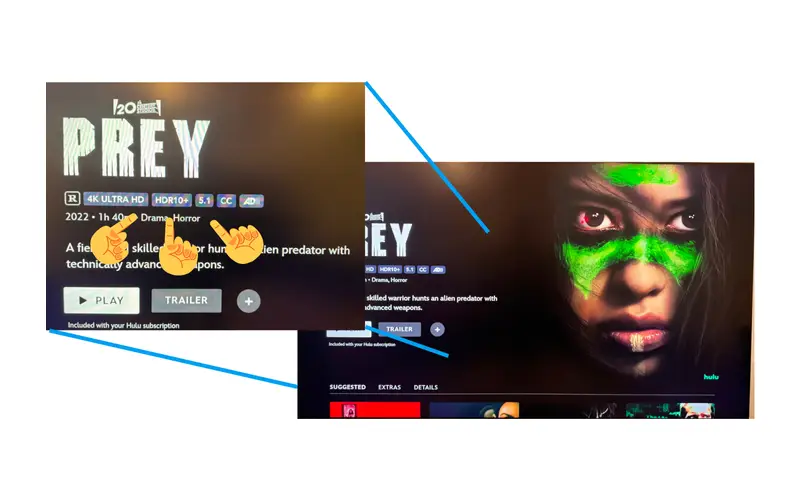
Disney+ is officially rolling out support for HDR10+, beginning with Hulu titles and expanding soon to Disney’s own library of content. It’s a milestone moment — not just for Disney’s streaming strategy, but for the broader HDR ecosystem that’s been dominated by Dolby Vision for years when it comes to Dynamic HDR Metadata.
For Samsung, which has long resisted Dolby Vision in favor of its own open HDR10+ format, this update levels the playing field in a way that few other partnerships have.
A Long-Awaited Upgrade
Disney first announced HDR10+ support back in January, but the rollout is now live. Starting this week, Disney+ Premium subscribers (required for 4K HDR and Dolby Atmos) can access select Hulu titles mastered in HDR10+. More than 1,000 shows and movies are available at launch, with Disney confirming that the technology will soon expand to Disney-branded films and series.
The move means Disney+ now supports three major HDR formats — HDR10, Dolby Vision, and HDR10+ — ensuring maximum compatibility across devices.
For Samsung TV owners, it’s particularly meaningful. Until now, Disney+ titles streamed only in base HDR10 on Samsung displays, which lack Dolby Vision support entirely. HDR10+ introduces dynamic metadata that adjusts brightness and contrast scene by scene — the same advantage Dolby Vision has long provided. The result is richer detail, improved highlight control, and better tone mapping across a range of display types, especially mid-range models that can struggle with static HDR.
Why HDR10+ Matters
HDR10+ was developed by Samsung (in partnership with Panasonic and 20th Century Fox) as a royalty-free alternative to Dolby Vision, which requires licensing fees and certification costs.
At its core, HDR10+ aims to democratize high dynamic range. It uses dynamic metadata to optimize picture quality frame-by-frame, enhancing contrast and brightness in the areas where the human eye perceives it most. Unlike standard HDR10 — which applies a single tone map for the entire piece of content — HDR10+ adapts in real time to maintain detail in both shadows and highlights.
For years, Dolby Vision has been the de facto HDR dynamic metadata standard among streaming platforms. Netflix, Apple TV+, Disney+, and Amazon Prime Video have all used it extensively. But in 2024 and 2025, that balance began to shift.
Amazon Prime Video, Apple TV+, and Netflix have each added HDR10+ support alongside Dolby Vision. That trend gives viewers and TV makers more flexibility — and gives Samsung, the world’s largest TV manufacturer, a much-needed win in the content compatibility race.
Samsung’s Dolby Vision Dilemma
For over a decade, Samsung has been the only major TV brand to refuse Dolby Vision support across its lineup, from its flagship QD-OLEDs to entry-level Crystal UHDs. The company’s reasoning has remained consistent: HDR10+ is open, royalty-free, and backed by a growing number of hardware partners including Panasonic, Philips, Hisense, and Amazon.
But in practice, that stance has left a noticeable gap. Consumers comparing premium TVs often point out that Dolby Vision content from Netflix or Apple TV+ looks more vibrant and precise on LG, Sony, or TCL models than on a Samsung display.
By bringing HDR10+ to Disney+, Samsung is addressing one of its biggest shortcomings — and not through hardware changes, but through a strategic content partnership.
“We are delighted to introduce this technology onto Disney+ and remain committed to collaborating with various partners to broaden HDR10+ support across our product range and the wider streaming landscape,” said Inbeom Kim, VP of Visual Display at Samsung Electronics.
Disney+ Gets a Boost Too
This is also a win for Disney+. The platform, while strong on original programming, has lagged behind Netflix and Prime Video in technical flexibility. By offering HDR10+ in addition to Dolby Vision, Disney+ ensures better HDR performance on more devices — especially Samsung’s massive global user base, which includes millions of Smart TVs and monitors built since 2018.
At launch, HDR10+ is available exclusively on Samsung TVs (LCD and OLED models from 2018 onward) and select Samsung Smart Monitors. Users simply need to update their Disney+ app to see compatible titles.
It’s unclear when HDR10+ will reach other devices, but signs point to broader expansion soon. The Apple TV 4K’s tvOS app already lists HDR10+ metadata for some titles, suggesting the groundwork is in place.
Still, for now, Samsung owners are the first to experience Disney+ and Hulu content in HDR10+, while those using Fire TV, Roku, or LG webOS devices will continue to receive content in HDR10 or Dolby Vision.
A Level Playing Field in the Streaming Wars
HDR10+ support is now available on four of the biggest streaming platforms:
-
Amazon Prime Video (first to adopt HDR10+)
-
Apple TV+ (added HDR10+ in late 2024)
-
Netflix (introduced support in early 2025)
-
Disney+ (rolling out now)
That means the vast majority of top-tier streaming services now deliver both Dolby Vision and HDR10+ — a clear sign that the industry is moving toward dual-format parity.
For Samsung, this is crucial. Its refusal to license Dolby Vision has often been seen as a consumer trade-off — one that competing brands leveraged in marketing. Now, with nearly every major streamer supporting HDR10+, Samsung’s displays no longer carry that disadvantage.
It also strengthens HDR10+ as a format overall, making it more viable for film studios, mastering houses, and content creators looking for a flexible HDR pipeline without Dolby’s licensing costs.
The Technical Takeaway
From a technical perspective, HDR10+ operates very similarly to Dolby Vision — both use dynamic metadata to control tone mapping and contrast on a per-scene basis.
However, Dolby Vision supports 12-bit color depth and higher maximum luminance targets, while HDR10+ remains limited to 10-bit. In practice, though, very few consumer TVs or streaming content exceed 10-bit depth, meaning the visual difference is minimal on most setups.
Where HDR10+ gains ground is in open access and ease of implementation. It allows TV manufacturers and content providers to integrate high-quality HDR without paying Dolby’s per-device or per-title licensing fees.
The Bigger Picture
Disney’s move to embrace HDR10+ sends a broader signal: the HDR ecosystem is finally diversifying. For consumers, it means better HDR performance across more devices. For Samsung, it means long-awaited parity with its Dolby Vision-equipped competitors.
It also reflects a more collaborative era in streaming technology — one where premium image formats aren’t locked to a single company’s ecosystem.
As Disney expands HDR10+ to its flagship content — from Star Wars and The Mandalorian to Avatar: The Way of Water and Guardians of the Galaxy Vol. 3 — viewers on Samsung TVs will finally get the full HDR experience they’ve been missing.
The streaming wars are as much about technology as content, and with this move, Disney and Samsung have made sure they’re not fighting that battle from behind.
In short: Disney+’s rollout of HDR10+ is a technical and strategic win. It gives Samsung users the premium HDR experience they’ve long wanted, strengthens the open HDR ecosystem, and pushes the streaming industry closer to true HDR equality — where no single format or brand holds all the cards.