By: Dipin Sehdev
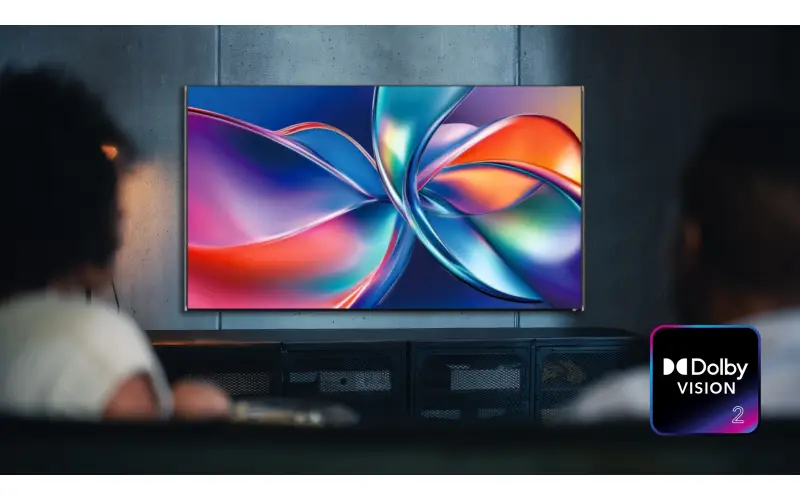
At IFA 2025 in Berlin, Dolby Laboratories dropped a bombshell: Dolby Vision 2, the long-awaited successor to its industry-defining HDR format. For over a decade, Dolby Vision has been the gold standard for premium picture quality in televisions, projectors, and streaming content. Now, with display technologies rapidly evolving—especially the arrival of Micro RGB LED TVs—Dolby is pushing the envelope once again.
But this announcement raises just as many questions as it answers. Will older TVs receive an update to support Dolby Vision 2? How will the transition affect existing Blu-ray discs and physical media libraries? And in a streaming-first era, will content providers adopt Dolby Vision 2 quickly, or will it be years before consumers actually see the benefits?
Let’s break it all down.
What Is Dolby Vision 2?
Dolby is calling Dolby Vision 2 a “groundbreaking evolution” of its HDR technology, designed to go beyond HDR. That’s not just marketing hype—this isn’t a small incremental update. Dolby Vision 2 includes:
-
A redesigned Dolby Image Engine, built to unlock more detail, brightness, and color from today’s most advanced displays.
-
Content Intelligence, a new AI-powered system that adapts picture quality based on both the content and the environment.
-
Bi-directional tone mapping, letting content creators and TVs work together to optimize brightness, contrast, and color saturation.
-
Authentic Motion, a creative-driven motion control system that promises smoother movement without the dreaded “soap opera effect.”
For consumers, Dolby Vision 2 will be offered in two tiers:
-
Dolby Vision 2 Max – reserved for premium TVs, promising all the bells and whistles, from higher brightness to finer motion control.
-
Dolby Vision 2 – a more streamlined version for mainstream TVs, but still more advanced than today’s Dolby Vision standard.
The Brands on Board at Launch
Dolby didn’t come to IFA empty-handed. Two major partners are already committed to Dolby Vision 2 at launch:
-
Hisense – will be the first TV brand to bring Dolby Vision 2 to market, starting with its premium RGB-MiniLED lineup, powered by the MediaTek Pentonic 800 chip.
-
CANAL+ – the French media giant has pledged Dolby Vision 2 support for films, TV shows, and live sports.
That’s a strong start. But with over 350 TV models from LG, Sony, TCL, Vizio, and Roku (via licensing) currently supporting Dolby Vision, the question is: when will the rest of the industry follow? Will Samsung finally adopt Dolby Vision in its TVs?
CES 2026 in Las Vegas is shaping up to be the event where we’ll see broader adoption. Expect Dolby Vision 2 announcements from TCL, Sony, and maybe even Samsung—though Samsung’s history with HDR10+ makes that a wildcard.
The AI Play: Content Intelligence
The real headline here is AI. Dolby is leaning heavily into machine learning to make Dolby Vision 2 smarter.
Content Intelligence works in real-time, analyzing what you’re watching and adapting your TV’s output accordingly. Its tools include:
-
Precision Black – keeps dark scenes visible without crushing shadows or washing out detail.
-
Light Sense – uses ambient light detection plus reference metadata from the source material to adjust brightness and contrast.
-
Sports & Gaming Optimization – dynamically tweaks white points and motion to better handle fast-moving content.
In many ways, this makes Dolby Vision 2 feel less like a “format” and more like an AI-powered ecosystem. And that raises questions:
-
Does this mean older Dolby Vision TVs can’t be updated, because they lack the processing power for the AI engine?
-
Will we eventually see Dolby Vision 2 “Lite” software updates for mid-tier 2023–2024 TVs?
-
Is Dolby pushing this as much for TV manufacturers as it is for content creators?
It’s no coincidence that this AI-forward Dolby update is landing at the same time as TV makers like Samsung and LG are hyping AI processing in their 2025 flagships.
What About Blu-ray and Physical Media?
Physical media collectors are right to be concerned. Dolby Vision is deeply embedded in 4K Ultra HD Blu-ray discs, and enthusiasts have invested heavily in building libraries.
Here’s the good news:
-
Dolby has confirmed that Dolby Vision content will remain backwards compatible. Your current Dolby Vision discs will still play on Dolby Vision 2 TVs.
Here’s the uncertainty:
-
Will future discs encode Dolby Vision 2 metadata, and if so, will legacy players and TVs ignore it, or fail to process it properly?
-
If Dolby Vision 2 relies heavily on AI processing in the TV, will physical media be left behind compared to streaming, which can push live updates?
Given that Blu-ray adoption is already declining, there’s a risk Dolby Vision 2 could accelerate the shift away from physical media.
Streaming and the Dolby Vision 2 Future
Streaming will be the first real battleground for Dolby Vision 2. With CANAL+ already on board, expect other services like Netflix, Disney+, and Apple TV+ to follow.
But don’t expect widespread adoption overnight. Streaming platforms already juggle HDR10, HDR10+, and Dolby Vision today. Adding Dolby Vision 2 means new encoding workflows, higher metadata demands, and more server costs.
Realistically, it could be 2–3 years before Dolby Vision 2 becomes commonplace across streaming libraries. Early adopters may only see select content flagged as Dolby Vision 2 Max in 2026–2027.
Gaming and Dolby Vision 2
Dolby Vision for gaming has been available since the Xbox Series X/S, but its adoption has been limited. Could this be the step for Sony to add Dolby Vision to the PlayStation 5 and PlayStation 5 Pro?
Imagine games with:
-
Authentic Motion to eliminate judder in high-speed titles.
-
Precision Black to reveal hidden enemies in dark corners.
-
Bi-directional tone mapping that adapts graphics to each TV’s brightness and contrast.
But will Sony and Microsoft invest in integrating Dolby Vision 2 into consoles? That’s far from guaranteed. Sony has always pushed its own display standards, while Microsoft has embraced Dolby Vision in a limited way.
Gaming could be where Dolby Vision 2 shines—or where it struggles to gain traction.
The Micro RGB LED Factor
It’s no accident Dolby Vision 2 is debuting just as Micro RGB LED TVs are preparing to hit the consumer market. These sets promise:
-
True RGB pixel-level lighting (no white subpixel compromises).
-
Massive brightness and color range far beyond OLED.
-
Unprecedented black levels with zero haloing.
Dolby Vision 2 looks like it was engineered with these displays in mind. The format’s advanced tone mapping and Authentic Motion tools are tailor-made to unlock the potential of Micro RGB LED panels.
In fact, without Dolby Vision 2—or something like it—these displays might be too powerful for current HDR standards to handle effectively.
Will Older TVs Get Left Behind?
One of the biggest unanswered questions: will older TVs get Dolby Vision 2 support?
Dolby has hinted that only TVs built on the new Dolby Vision 2 image engine can process the updated metadata. That suggests no firmware updates for older models, even high-end OLEDs and Mini LED sets from the past few years.
That’s a bitter pill for enthusiasts who bought expensive Dolby Vision TVs in 2022–2024, expecting years of format longevity. It also risks fragmenting the Dolby Vision ecosystem into “old Dolby Vision” and “Dolby Vision 2,” confusing consumers.
So Many Questions, But Promising Answers
Dolby Vision 2 is exciting—there’s no denying that. Better blacks, sharper motion, smarter AI optimization. It feels like a necessary leap forward as display technologies race ahead.
But this update also raises big questions:
-
Will physical media collectors be left behind?
-
Will gaming embrace Dolby Vision 2 or sideline it?
-
How long before streaming platforms fully adopt it?
-
And most of all: is Dolby Vision 2 truly about picture quality, or is it Dolby staking its claim in the AI-driven future of home entertainment?
The safe bet? It will be at least 2–3 years before Dolby Vision 2 is more than a niche feature on higher-end TVs and select streaming platforms. By the late 2020s, however, it could be the new gold standard.
For now, one thing is clear: the HDR arms race isn’t over—and Dolby just raised the stakes again.
Final Thought: Dolby Vision 2 feels like a format designed for the next decade of display technology, not today’s. If you’re buying a premium TV in 2025, especially a Micro RGB LED model, Dolby Vision 2 support should be on your checklist. For everyone else, patience will be key.
| Feature | Dolby Vision (Original) | Dolby Vision 2 | Dolby Vision 2 Max |
|---|---|---|---|
| Launch Year | 2014 | 2025 | 2025 |
| Image Engine | First-gen Dolby Vision tone-mapping engine | Redesigned Dolby Vision 2 Image Engine with AI optimization | Enhanced Dolby Vision 2 Max engine with premium feature set |
| AI / Content Intelligence | Limited (Dolby Vision IQ adjusts to ambient light) | Content Intelligence: Precision Black, Light Sense, Sports & Gaming Optimization | Full Content Intelligence + advanced scene-by-scene processing |
| Tone Mapping | Single-direction tone mapping (content → display) | Bi-directional tone mapping: TV and content metadata work together | Optimized bi-directional tone mapping for ultra-bright / wide color TVs |
| Motion Handling | Traditional motion smoothing (soap opera effect risk) | Authentic Motion: creative-driven motion control for cinematic look | Expanded Authentic Motion with more granular control |
| Black Levels | Very good (OLED & high-end LCD) | Precision Black AI improves dark scene clarity without crushing detail | Maximum implementation with pixel-level precision on premium panels |
| Ambient Light Adaptation | Dolby Vision IQ adjusts brightness | Light Sense with advanced ambient detection and metadata awareness | Enhanced Light Sense tuned for premium sensors |
| Gaming Optimization | Limited Xbox integration | Sports & Gaming Optimization: white point, motion, HDR fine-tuning | Advanced gaming optimizations with lowest latency |
| Supported Displays | OLED, Mini LED, LCD | Mainstream TVs with new Dolby Vision 2 chipset | Premium TVs (RGB-MiniLED, Micro RGB LED, flagship OLEDs) |
| Physical Media (Blu-ray) | Fully supported | Backwards compatible, but Dolby Vision 2 features not utilized | Same as DV2 — enhanced only if encoded & display capable |
| Streaming | Widely supported across Netflix, Disney+, Apple TV+ | Early adopters: CANAL+ (2025), others within 2–3 years | Same as DV2, but premium tier features may be service-dependent |
| Gaming Consoles | Xbox Series X/S (select titles) | Potential support for PS5 Pro & future Xbox | Same, but with deeper implementation if adopted |
| Positioning | HDR gold standard | Next-gen mainstream HDR format | Flagship HDR experience for the most advanced displays |