By: Dipin Sehdev
The digital battle for viewer attention has a new front: live sports. For years, the major players—Netflix, Apple, Disney, and NBCUniversal—have waged a war over scripted content, from prestige dramas to blockbuster films. But as the market matures and subscriber growth slows, the most coveted commodity isn't a new season of a hit show; it's the real-time, must-watch spectacle of live sports. The latest salvo in this conflict, as reported by Yahoo Sports' Kendall Baker, is a massive shake-up of Major League Baseball's (MLB) media rights, a deal that signals a profound shift in how we'll consume America’s pastime.
Baker's scoop, while noting the deals aren't "finalized" and could still change, reveals a strategic realignment of some of the most powerful media and tech companies on the planet. This isn't just about who gets to show games; it's about each company's long-term strategy, a high-stakes chess match for dominance in a fragmented digital landscape.
The New Playbook: MLB's Content Fragmentation
The old model of sports broadcasting was simple: one network, one league. ESPN dominated with its Sunday and Monday night packages, while Fox held down the fort on Saturdays and for the World Series. But the streaming era has shattered that monopoly, turning sports rights into a series of smaller, more valuable components. Leagues like the MLB, sensing an opportunity to maximize revenue, are fragmenting their content across multiple bidders, creating a complex web of exclusivity that benefits the league and its teams while testing the patience of fans. This is the new playbook: carve up the pie and let the biggest companies fight for the juiciest slices.
This fragmentation is a direct result of the streaming wars. Live sports provide something that pre-recorded content can't: a definitive, communal viewing experience that drives subscriber acquisition and, crucially, reduces churn. A fan will sign up for a service to watch their favorite team and then, ideally, stay subscribed for the rest of the year. The MLB deal is a perfect example of this strategy in action, with each platform picking up a specific piece of the action that aligns with its larger business goals.
Netflix: The Event-Driven Goliath ?
The most intriguing new player in the MLB rights shuffle is undoubtedly Netflix. Per Baker's reporting, the streaming giant is set to acquire the rights to the Home Run Derby, a move that perfectly encapsulates its evolving live sports strategy. For years, Netflix resisted the high-stakes world of sports broadcasting, prioritizing its original content empire. But recent forays into live events, such as the Jake Paul vs. Mike Tyson boxing match and its massive deal with WWE, have proven the value of one-off spectacles.
Netflix isn't trying to become a linear sports channel. Instead, it's focused on "tentpole" events—single, massive broadcasts that can generate a cultural moment and bring in millions of new subscribers. The Home Run Derby, with its highlight-reel-friendly format and built-in star power, is a perfect fit. It's an event, not a season. For Netflix, the value isn't in a long, drawn-out schedule of games; it's in a single night of must-see television that can be marketed globally and drive sign-ups on a massive scale. This move aligns with its shift from pure subscriber growth to increasing its average revenue per user (ARPU) through diverse, high-impact programming.
NBCUniversal and Peacock: The All-in Approach ??
While Netflix is playing the event game, NBCUniversal is going all-in on a more traditional, schedule-based model, but with a streaming-first twist. With its linear channels (NBC) and streaming service (Peacock), the company is building a year-round sports presence. According to the report, NBC and Peacock are set to pick up the Friday night and Sunday inventory, as well as the Wild Card games, which ESPN opted out of.
This acquisition fills a critical gap for NBCUniversal. With its long-standing deals for Sunday Night Football and the increasingly popular Sunday Night Basketball (a package that includes both NBA and WNBA games), the addition of Sunday Night Baseball gives the company a three-season, primetime sports anchor. This strategy provides a consistent drumbeat of live content that can keep subscribers engaged and coming back to the platform week after week. It's a retention play, leveraging the power of live sports to reduce churn and build a loyal audience for Peacock.
ESPN and Disney: The Legacy Network Goes DTC ?
Perhaps the most significant and surprising part of the deal is ESPN's reported acquisition of MLB.tv, the league’s premium out-of-market streaming service. This is not just a content deal; it's a foundational tech play for Disney's long-term streaming future. ESPN's decision to exit its current, costly linear rights deal for Sunday Night Baseball was a signal that the network, and by extension Disney, is rethinking its entire business model.
By acquiring MLB.tv, ESPN is gaining a massive, direct-to-consumer (DTC) asset with an established user base and a robust backend. The platform was built by MLB Advanced Media (BAMTech), a pioneering tech company that Disney acquired years ago to form the backbone of its streaming services, including Disney+ and ESPN+. In a sense, the technology is coming home. This move gives ESPN a potential a la carte product—a pure, subscription-based streaming service for baseball fans—that can exist alongside or as a powerful complement to its soon-to-be-launched flagship streaming platform.
The MLB.tv deal is a key step in ESPN's transition from a cable network to a direct-to-consumer powerhouse. It gives the network the ability to offer a comprehensive, all-games-everywhere solution that cable TV can't match, while also providing a new revenue stream and a wealth of user data that will be crucial for its future ad-supported tiers and personalization efforts.
Apple: Waving the White Flag? ??
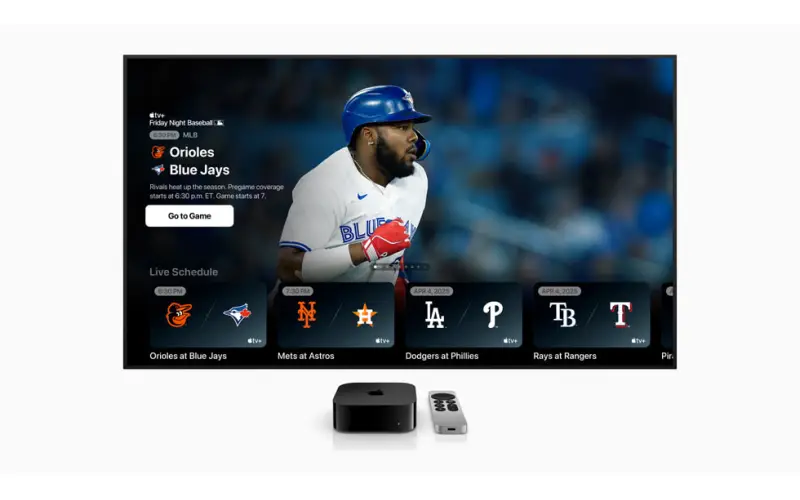
The reported loser in this reshuffle is Apple. The tech giant, which previously held the exclusive rights to Friday Night Baseball, is reportedly exercising an early opt-out and exiting its current deal. This would mark a rare retreat for a company that has been aggressively expanding its services and content portfolio.
Apple's initial venture into MLB was seen as a test run for its live sports ambitions. However, the viewership was underwhelming and the broadcasts were often criticized for a lack of polish and a traditional feel. Unlike its exclusive, long-term deal for MLS Season Pass, which it uses to lock fans into its ecosystem, the MLB experiment appears to have fallen short. The reported exit suggests that Apple's strategy is evolving away from a la carte, fragmented content and towards a more consolidated, high-impact approach, similar to its all-in-one MLS package.
For a company that thrives on premium, user-friendly experiences, the unpolished nature and limited reach of the MLB package may have been a poor fit. The decision to cut bait so early indicates a shift in its live sports focus, perhaps to other leagues or a more refined model.
The Big Picture: A Jigsaw Puzzle of Power Plays ?
The bottom line, as Kendall Baker rightly pointed out, is that none of this is finalized. But if the reported deals hold, they represent a watershed moment in the streaming wars. We are witnessing the dismantling of the traditional broadcast model and its reconstitution in a fragmented digital ecosystem.
-
NBCUniversal is consolidating its position as a year-round sports destination, a powerful force with both a linear and streaming presence.
-
Netflix is proving that it doesn't need to acquire a full league package to win. Instead, it can use specific, high-profile events to drive massive, targeted user engagement.
-
Disney/ESPN is laying the groundwork for its future as a DTC king, using a major league's premium out-of-market product as a cornerstone of its next-generation streaming platform.
-
And Apple is a cautionary tale, demonstrating that not every foray into live sports is a home run, and sometimes, the best move is to walk away.
This is a high-stakes jigsaw puzzle, where each piece is a multi-million-dollar deal and the final picture is a new, complex landscape for sports media. The ultimate winner won't be the one who acquires the most content, but the one who can best integrate it into a cohesive, user-friendly, and profitable service. And for the fans, it means a future where the games you want to watch will be spread out across more apps than ever before. Welcome to the new era of sports fandom.