By: Dipin Sehdev
The stories keep coming, and unfortunately, they all point to the same conclusion: you don't actually own your digital purchases.
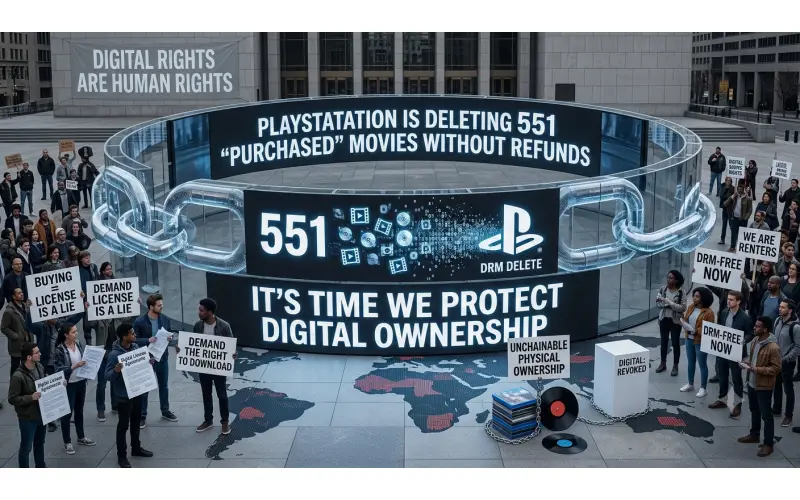
This week Sony confirmed that 551 movies and TV shows distributed by StudioCanal will be permanently removed from customers' PlayStation libraries on September 1, 2026. Even if you paid full price years ago believing you were buying those titles, they will disappear from your account with no refunds and no compensation. At this point, this isn't an isolated incident, it's becoming a pattern across the entertainment industry.
As an industry commentator, I don't think Sony is uniquely at fault here. Licensing agreements expire. Rights change hands. Distribution contracts end. Those disputes happen every day throughout Hollywood. What concerns me is something much bigger. Consumers continue to spend real money believing they're purchasing movies, when in reality they're buying a revocable license that can disappear years later with almost no warning. That's a problem.
Another Reminder That Digital Isn't Ownership
Sony stopped selling movies through the PlayStation Store back in 2021, but customers retained access to previously purchased titles through the My Videos app. Now that promise is changing. Because Sony's licensing agreement with StudioCanal has expired, every affected title will simply vanish from customers' libraries on September 1.
Sony's notification is remarkably straightforward:
Due to our content licensing agreements, you will no longer be able to access your previously purchased content.
That's it. No refund. No replacement credits. No option to download or archive the films. Just gone. Among the movies disappearing are some genuinely iconic titles, including:
- Terminator 2: Judgment Day
- Total Recall
- First Blood
- Rambo: First Blood Part II
- Rambo III
- Apocalypse Now: Final Cut
- Paddington
- Paddington 2
- Hot Fuzz
- The Imitation Game
- Manchester by the Sea
- Moonlight
- Silver Linings Playbook
- Train to Busan
- Pan's Labyrinth
- Bridget Jones's Diary
- Leon: The Director's Cut
- The Deer Hunter
- Logan Lucky
- Hell or High Water
This isn't a collection of obscure straight-to-DVD releases. These are films many people intentionally purchased because they wanted permanent access.
This Is Why Physical Media Still Matters
Every time a story like this surfaces, the argument for physical media gets stronger. When you buy a 4K Blu-ray, it sits on your shelf. Nobody can remotely remove it because a licensing agreement expires. Nobody can edit it. Nobody can revoke your access. The movie is yours. Digital purchases, on the other hand, increasingly resemble long-term rentals rather than ownership. That's becoming harder for consumers to ignore.
Where Is The Consumer Protection?
This is where I think lawmakers need to start paying attention. Digital purchases have become the primary way many consumers buy entertainment, whether that's movies, games, books, or music. Yet there are very few protections when those purchases disappear because of licensing negotiations happening entirely behind closed doors. At minimum, consumers deserve:
- Clear disclosure that digital purchases are licenses, not permanent ownership.
- Refunds or store credit when purchased content is removed.
- A legal framework that preserves access after purchase whenever possible.
Today, none of those protections really exist.
Credit Where It's Due
One thing that continues to frustrate me is how customers usually learn about these changes. Not from Sony. Instead, these stories are often uncovered through Reddit threads, gaming forums, or eagle-eyed users comparing notes online. This time, the reporting quickly spread thanks to those communities and gaming journalists highlighting Sony's notifications. Consumers deserve better communication when something they paid for is about to disappear.
The Bottom Line
This won't be the last story like this. Whether it's PlayStation, Xbox, Apple, Amazon, Google, or another digital storefront, licensing disputes will continue to happen. And every time they do, we'll continue reporting on them because this affects every consumer buying digital entertainment. If there's one lesson to take away, it's this: If you truly want to own your favorite movies, TV shows, music, or games, physical media remains the only format that guarantees ownership. Until legislation catches up with digital commerce, "Buy Now" increasingly means something very different than most consumers think.