By: Dipin Sehdev
Denon knows exactly what it’s doing here. The company is stepping directly into one of the most competitive and volatile categories in consumer audio. Multi-room audio used to be synonymous with Sonos. That dominance has been challenged over the past few years, not because of hardware, but because of software missteps. When Sonos stumbled, others moved quickly. WiiM surged. Bluesound doubled down. Even Apple and Bose tightened their ecosystems.
Now Denon is entering the conversation in a serious way.
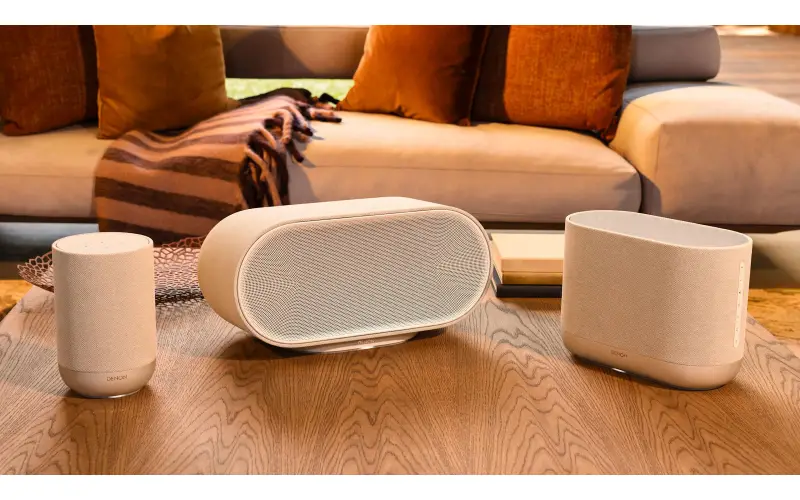
On paper, the new Denon Home 200, 400, and 600 look like strong contenders. The hardware checks the right boxes. The sound pedigree is there. But in this category, none of that guarantees success. Software does.
Denon Enters a Crowded Field
Denon’s new lineup is clearly positioned against Sonos’ core products:
- Home 200 → Sonos Era 100
- Home 400 → Sonos Era 300
- Home 600 → Sonos Five
This is not subtle. Denon is targeting the same use cases, price tiers, and room sizes. Where Denon tries to differentiate is flexibility. Every speaker supports Wi-Fi, Bluetooth, AirPlay, USB-C, and 3.5mm line-in. That alone gives Denon a meaningful edge over Sonos, which has historically limited physical connectivity. The bigger story, however, is HEOS. Denon’s ecosystem has existed for years, quietly powering AV receivers, soundbars, and multi-room setups. Unlike Sonos, which built its identity around simplicity, HEOS has always leaned closer to traditional hi-fi and is more flexible, but also more complex. That difference matters.
The New Denon Lineup (Specs & Pricing)
| Model | Drivers | Amplification | Spatial Audio | Connectivity | Price | Availability |
|---|---|---|---|---|---|---|
| Denon Home 200 | 2x tweeters, 1x 4" woofer | 3x Class-D amps | Dolby Atmos (limited implementation) | Wi-Fi, Bluetooth, AirPlay, USB-C, 3.5mm | $399 | Available now |
| Denon Home 400 | 2x tweeters, 2x woofers, 2x up-firing drivers | 6x amps | Dolby Atmos (height channels) | Wi-Fi, Bluetooth, AirPlay, USB-C, 3.5mm | $599 | Available now |
| Denon Home 600 | Dual 6.5" woofers, 2x tweeters, 2x midrange, 2x up-firing | Multi-amp array | Dolby Atmos (full spatial array) | Wi-Fi, Bluetooth, AirPlay, USB-C, 3.5mm | $799 | Available now |
From a hardware perspective, Denon is doing what it does best: building serious audio products. The Home 600, in particular, reads like a proper hi-fi speaker disguised as a wireless system, with opposing woofers and a full driver array that suggests real stereo performance. The Home 400’s inclusion of up-firing drivers also puts it squarely in Atmos territory, matching what Sonos has done with the Era 300.
The Real Battle: Ecosystems
Here’s where things get interesting. Denon isn’t just competing with Sonos anymore. It’s stepping into a field that now includes:
- WiiM (value disruptor)
- Apple (ecosystem-first approach)
- Bose (mainstream simplicity)
- Bluesound (audiophile streaming)
- Audio Pro (design-forward hi-fi)
And each of them has a different philosophy.
Competitive Landscape
| Brand | Strength | Weakness | Ecosystem Maturity | Price Range |
|---|---|---|---|---|
| Denon (HEOS) | Hi-fi heritage, connectivity flexibility | Software less polished | Mature but niche | $399–$799 |
| Sonos | Best-in-class app (historically), ecosystem depth | Recent software instability | Very mature | $249–$999+ |
| WiiM | Exceptional value, strong streaming support | Limited premium hardware | Rapidly improving | $99–$499 |
| Apple (HomePod) | Seamless Apple integration, spatial audio | Locked ecosystem | Mature (Apple users only) | $299–$349 |
| Bose | Ease of use, brand recognition | Less flexible ecosystem | Mature | $199–$799 |
| Bluesound | Audiophile-grade streaming (BluOS) | Higher cost, niche appeal | Very mature | $549–$1,299 |
| Audio Pro | Strong sound, simple setup | Limited ecosystem depth | Moderate | $300–$700 |
Denon lands somewhere between Bluesound and Sonos. It's more serious than mainstream brands, but not as locked-in as Apple.
Hardware Is the Easy Part
Denon’s speakers will almost certainly sound good. That’s not a controversial statement. Denon has decades of experience building amplifiers, speakers, and AV systems. Tonally, the company tends to favor balance and clarity over the more consumer-friendly bass-forward tuning you often hear from Sonos or Bose. For listeners who care about music first, that’s a good thing. But sound quality alone won’t win this category anymore. Sonos proved years ago that the magic of multi-room audio isn’t just how it sounds—it’s how it works. Grouping rooms, switching sources, syncing playback—these are the details that define the experience. And this is where Denon still has something to prove.
HEOS: Opportunity or Limitation?
HEOS is not new. It’s stable, functional, and deeply integrated with Denon and Marantz products. That’s a strength.
It means Denon users can build a system that spans:
- AV receivers
- Soundbars
- Wireless speakers
- Whole-home audio
Few ecosystems offer that level of flexibility. But HEOS has never been the most intuitive platform. It lacks the polish and simplicity that made Sonos so dominant. It also doesn’t have the same level of native streaming integrations, most notably Apple Music, which still relies on AirPlay. That creates friction. And in a category where ease of use is everything, friction matters.
Why This Matters Now
Timing is everything, and Denon is entering at an interesting moment. Sonos is no longer untouchable. Its software struggles opened the door for competitors. WiiM has taken advantage on the entry-level side. Bluesound continues to own the audiophile streaming space. Denon is aiming for the middle. That’s both an opportunity and a risk. More competition is good for consumers. It pushes innovation, improves value, and gives buyers more choice. Denon’s arrival adds another credible option, especially for people already invested in AV receivers or traditional hi-fi systems. At the same time, this isn’t a revolutionary launch. Denon isn’t redefining the category. It’s stepping into an existing one with strong hardware and an established, but not dominant, platform.
The Bottom Line
Denon’s new Home 200, 400, and 600 speakers make a lot of sense.
They bring:
- Serious audio performance
- More connectivity than most competitors
- Integration with a broader home theater ecosystem
That alone makes them worth paying attention to. But this category doesn’t reward hardware alone. It rewards experience. And experience is driven by software. Denon has the pieces. Now it has to prove it can deliver the kind of seamless, intuitive, everyday usability that people expect from multi-room audio in 2026. Because in the end, that’s what will decide whether this is just another entry or a real challenger.