By: Dipin Sehdev
When it comes to soundbars, Samsung sits at the very top of the market—right alongside Sonos. Year after year, Samsung has managed to combine aggressive feature sets, broad availability, and deep TV integration in a way few competitors can match. With its newly announced 2026 sound device lineup, Samsung isn’t trying to reinvent home audio. Instead, it’s refining what already works, while quietly addressing one of the biggest pain points power users care about most: stability.
Set to debut at CES 2026 (January 6–9 in Las Vegas), Samsung’s new soundbars and Wi-Fi speakers promise richer immersion, cleaner dialogue, and tighter multi-device integration. On paper, the upgrades look meaningful. In practice, the biggest question—and the most exciting one—will be how much Samsung has improved long-term reliability and consistency across its ecosystem.
We’ll have to wait for hands-on time at CES to know for sure, but the direction looks promising.
Samsung’s Position in the Soundbar Market
Samsung has been the global leader in soundbars for 11 consecutive years, and that dominance isn’t accidental. The company has consistently pushed high channel counts, immersive formats, and deep TV integration—often at prices that undercut premium rivals.
Sonos remains Samsung’s closest peer, especially when it comes to ecosystem polish and software reliability. Samsung, by contrast, tends to win on raw hardware capability and aggressive innovation. The 2026 lineup feels like an attempt to close that last gap by focusing more heavily on consistency, adaptive tuning, and system-level intelligence.
Q-Series Soundbars: Refining Cinematic Audio
At the top of the lineup is Samsung’s flagship HW-Q990H, the latest evolution of its long-running Q-Series.
HW-Q990H Key Specs
-
Channel configuration: 11.1.4
-
Main bar: 7.0.2
-
Rear speakers: 4.0.2
-
Subwoofer: Built-in compact active subwoofer with dual 8-inch drivers
-
Immersive formats: Dolby Atmos, DTS:X
-
New features: Sound Elevation, Auto Volume
The headline addition here is Sound Elevation, a new processing feature designed to anchor dialogue more precisely to the center of the screen. In theory, this should make voices sound more natural and better localized—especially on larger TVs where dialogue can sometimes feel disconnected from the image.
Auto Volume is another practical upgrade. It smooths out volume differences between content types and channels, reducing the constant need to reach for the remote. This may sound minor, but it’s exactly the kind of quality-of-life feature that improves everyday use.
Up-firing channels and next-generation AI tuning expand the soundstage further, pushing the Q990H closer to the experience of a traditional home theater—without the cables.
All-in-One Soundbar: HW-QS90H
Samsung is also introducing a new All-in-One Soundbar, the HW-QS90H, aimed at users who want immersive sound without a separate subwoofer or rear speakers.
HW-QS90H Key Specs
-
Channel configuration: 7.1.2
-
Drivers: 13 total, including nine wide-range speakers
-
Bass: Built-in Quad Bass Woofer system
-
Design: Convertible Fit (wall or tabletop) with gyro-based auto channel adjustment
The standout feature here is the Convertible Fit design. A built-in gyro sensor detects whether the soundbar is mounted horizontally or vertically and automatically adjusts channel output. It’s a smart solution for modern living spaces where flexibility matters as much as performance.
Music Studio Series: Wi-Fi Speakers That Expand the Ecosystem
Beyond soundbars, Samsung is expanding its Music Studio Series with two new Wi-Fi speakers: Music Studio 7 (LS70H) and Music Studio 5 (LS50H).
Music Studio 7 (LS70H)
-
Channels: 3.1.1
-
Drivers: Left, center, right, and top-firing
-
Audio: Hi-Res Audio up to 24-bit/96kHz
-
Frequency response: Up to 35kHz with super tweeter
-
Features: AI Dynamic Bass Control, Pattern Control Technology
-
Integration: Q-Symphony compatible
This is the most immersive speaker in the Music Studio line and can function either as a standalone unit or as part of a larger Samsung audio system.
Music Studio 5 (LS50H)
-
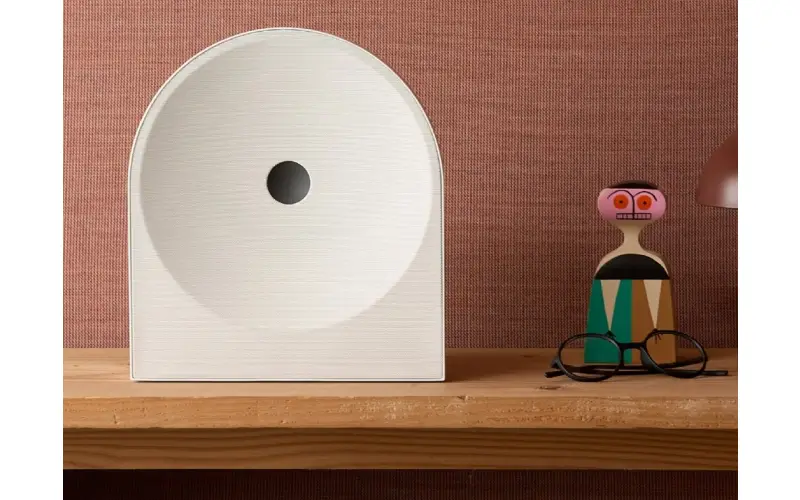
Design: Compact, gallery-inspired
-
Drivers: 4-inch woofer + dual tweeters
-
Features: AI Dynamic Bass Control, built-in waveguide
-
Connectivity: Wi-Fi casting, Bluetooth, voice control
Both models share the distinctive dot design by Erwan Bouroullec, emphasizing that Samsung wants these speakers to blend into living spaces—not dominate them.
Q-Symphony Gets Smarter (and More Complex)
Samsung’s Q-Symphony continues to be one of its most differentiating features. In 2026, it becomes more adaptive, allowing up to five sound devices—TV speakers, soundbars, and Wi-Fi speakers—to work together as a unified system.
Q-Symphony now:
-
Analyzes room layout
-
Accounts for speaker placement
-
Dynamically redistributes channels
In theory, this should lead to clearer dialogue and more precise surround effects. In practice, this is also where stability matters most. Multi-device systems are notoriously sensitive to sync issues, dropouts, and firmware bugs. Samsung explicitly calling out improved system intelligence suggests the company is aware of this—and trying to address it.
Stability: The Upgrade We’re Most Curious About
What’s buried beneath all the feature announcements is the most important part: Samsung is clearly prioritizing system stability.
With:
-
Wi-Fi speakers
-
TV speakers
-
Soundbars
-
Subwoofers
-
SmartThings control
…the complexity of Samsung’s audio ecosystem has grown significantly. When it works, it’s impressive. When it doesn’t, it can be frustrating.
The language around cleaner expression, unified performance, and adaptive intelligence strongly suggests Samsung is tightening the software layer. That’s the upgrade that matters most—and the one we’ll be watching closely at CES.
Connectivity and Control
Samsung’s SmartThings app remains the central control hub:
-
Sound mode adjustments
-
Group playback
-
Music streaming
-
Voice assistant integration
Instant music controls and cross-device management are designed to make the system feel seamless, not fragmented.
Availability and Pricing
Samsung has confirmed that the 2026 sound device lineup will be showcased at CES 2026, but pricing and retail availability have not yet been announced.
Based on previous generations:
-
The Q990-series is expected to remain in the premium tier
-
The QS90H should slot below flagship pricing
-
Music Studio speakers will likely be sold individually and in bundles
Final pricing and regional availability will be announced closer to launch.
Final Thoughts: A Promising Refinement Year
Samsung already sits at the top of the soundbar market, competing head-to-head with Sonos. The 2026 lineup doesn’t chase radical reinvention—instead, it focuses on refinement, intelligence, and stability.
If Samsung delivers on the quieter promises embedded in this announcement, this could be one of the most important updates the company has made in years. CES 2026 should tell us a lot—and we’re genuinely excited to see how it all comes together.