By: Dipin Sehdev
Sony is making a splash in 2026 with 2 new soundbars. The new Bravia Theater Bar 7 and Bar 5, the company is making a very deliberate push into one of the most competitive categories in home audio, one currently dominated by Samsung and Sonos. And while Sony has been here before, this time feels different. The focus isn’t just cinematic sound. It’s flexibility. It’s gaming. And most importantly, it’s features that competitors still don’t offer.
A More Serious Push Into Soundbars
Sony’s new lineup sits below its flagship Bar 9 and Bar 8, but the Bar 7 in particular feels like the real headline product. It replaces the older HT-A3000 and addresses some of its biggest limitations, most notably true height channels and connectivity. On paper, this is the kind of upgrade Sony needed to stay relevant in a category that has evolved quickly over the past few years. The Bar 5, meanwhile, is the entry point. It’s designed to bring Dolby Atmos into a more affordable package, bundled with a wireless subwoofer. But make no mistake, the Bar 7 is the one aimed directly at Sonos and Samsung.
The Standout: HDMI 2.1 Pass-Through
The biggest differentiator here is simple: HDMI pass-through. Sony includes a full-bandwidth HDMI 2.1 input on the Bar 7, supporting:
- 4K at 120Hz
- Variable Refresh Rate (VRR)
- Auto Low Latency Mode (ALLM)
- Dolby Vision pass-through
That’s a feature Sonos still doesn’t offer. And it matters. For gamers, especially those with multiple consoles or high-end PCs, soundbars often become a bottleneck. Limited HDMI ports on TVs force compromises. Sony is solving that problem directly by turning the soundbar into part of the signal chain. This is one of the clearest signs yet that soundbars are evolving alongside gaming hardware.
Real Dolby Atmos, Not Just Processing
Sony is also addressing another long-standing critique. Previous mid-range models relied heavily on virtual processing for height effects. The Bar 7 changes that with dedicated up-firing drivers, delivering a true 5.0.2-channel configuration.
That includes:
- Upward-firing speakers for height
- Side-firing drivers for width
- A dedicated center channel for dialogue
- Multiple passive radiators for added bass
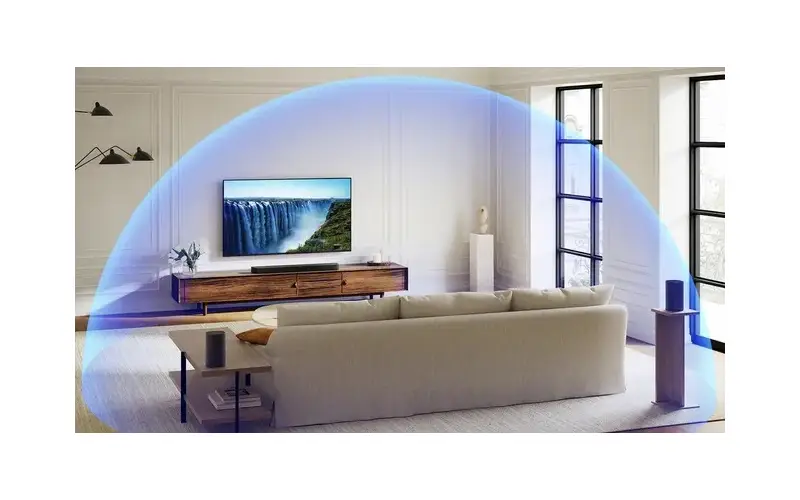
Combined with Sony’s 360 Spatial Sound Mapping, the goal is to create a more convincing “bubble” of sound—something that’s easier said than done in a single-bar solution. It also supports:
- Dolby Atmos
- DTS:X
- IMAX Enhanced
That last one is notable, as Sonos still doesn’t support DTS formats.
Bar 5: A More Accessible Entry Point
The Bar 5 takes a different approach. It’s a 3.1-channel system with an included wireless subwoofer, relying on Sony’s Vertical Surround Engine and S-Force Pro processing to simulate spatial audio. There are no up-firing drivers here, and no HDMI pass-through. But at its price point, that’s expected. This is the system for users who want a meaningful upgrade over TV audio without stepping into premium territory.
Specs, Pricing, and Availability
Sony Bravia Theater Soundbars
| Model | Channels | Drivers | Key Features | Connectivity | Price | Availability |
|---|---|---|---|---|---|---|
| Bar 7 | 5.0.2 | 9 drivers (up-firing, side-firing, center, woofers, passive radiators) | Dolby Atmos, DTS:X, IMAX Enhanced, 360 Spatial Mapping, HDMI 2.1 pass-through | HDMI eARC + HDMI 2.1 input, Wi-Fi 6, Bluetooth (LDAC), AirPlay 2, Spotify Connect | $869 / £699 | July 2026 |
| Bar 7 + Sub | 5.1.2 | Same as above + wireless subwoofer | Adds deeper bass performance | Same as Bar 7 | TBD (bundle pricing) | July 2026 |
| Bar 5 | 3.1 | Soundbar + wireless subwoofer | Dolby Atmos (virtual), DTS:X, Vertical Surround Engine | HDMI eARC, Optical, Wi-Fi, Bluetooth, AirPlay 2 | $349 / £399 | July 2026 |
Can Sony Challenge Sonos and Samsung?
That’s the real question. On paper, the Bar 7 has a lot going for it:
- True Atmos with up-firing drivers
- HDMI 2.1 pass-through (a major advantage)
- Broader format support (DTS:X, IMAX Enhanced)
- Expandability with optional subwoofers and rear speakers
In some ways, it’s more flexible than Sonos. But flexibility isn’t everything. Sonos, even with all its missteps, still leads in software experience, ease of use, ecosystem integration, and reliability. Samsung, meanwhile, continues to push aggressive pricing and feature sets across its lineup. Sony sits somewhere in between. The company’s strength has always been audio tuning and system integration, especially when paired with its own TVs. The Bravia ecosystem, combined with the Bravia Connect app and automatic calibration, could give Sony an edge for users already invested in the brand.
Waiting on Reviews
Right now, this is all potential. The Bar 7 looks like one of the most promising mid-range soundbars Sony has released in years. It fixes real issues, adds meaningful features, and targets a clear gap in the market, especially for gamers. But this category is unforgiving. Soundbars live and die by real-world performance:
- Dialogue clarity
- Atmos height accuracy
- Bass control
- Ease of setup
Until reviews come in, we won’t know if Sony has finally closed the gap.
The Bottom Line
The Sony Bravia Theater Bar 7 feels like a serious attempt to compete. It brings features that competitors still lack, particularly around gaming and connectivity, while improving on past limitations in spatial audio performance. The Bar 5, meanwhile, rounds out the lineup with a more accessible option for everyday users. If Sony delivers on performance, this could be one of the most important soundbar launches of the year. If not, Sonos and Samsung will remain exactly where they are: on top.