By: Dipin Sehdev
Klipsch has never been a brand that chases trends. When it does decide to re-enter a category, it usually means the company believes it has something genuinely different to say. That’s why seeing Klipsch preview an entirely new Atlas headphone series at CES 2026 was one of the more exciting—and surprising—audio moments of the show.
This wasn’t a loud public launch. Instead, Klipsch hosted an invitation-only preview that felt deliberately low-key and enthusiast-focused, offering a look at where the brand sees personal audio heading next. Among several early concepts, the Atlas headphones stood out immediately—not just because Klipsch hasn’t released a major new headphone line in years, but because the design and feature choices suggest real intent to disrupt a crowded market.
I left the demo genuinely excited. These aren’t just “Klipsch-branded” headphones—they feel like a serious rethinking of what premium over-ear headphones can be in 2026.
A Brief History—and Why This Return Matters
Klipsch’s relationship with headphones actually predates the company itself. As a teenager in 1919, Paul W. Klipsch famously modified military communication headphones to listen to music. And yet, despite being one of the most dynamic loudspeaker manufacturers in the industry, Klipsch has only dipped into headphones sporadically over the decades.
The Atlas series feels like a reset. Rather than chasing lifestyle trends or fashion-forward designs, Klipsch appears to be leaning into its strengths: efficiency, dynamics, and sound that feels alive. The result is a three-model lineup, each aimed at a distinct type of listener—but unified by thoughtful engineering and flexibility.
Three Models, Three Clear Use Cases
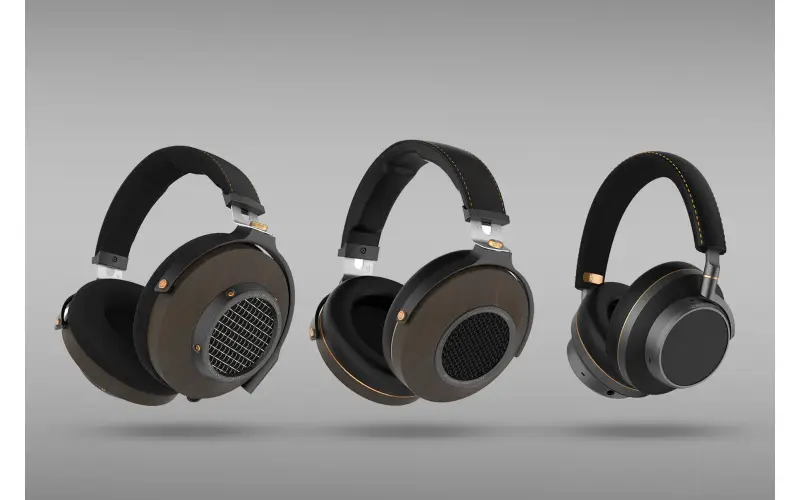
The Atlas lineup consists of three over-ear headphones, each designed around a different listening profile:
Atlas HP-1 — Wireless ANC, But Not Just for Convenience
The Atlas HP-1 is the most mainstream of the three, but it’s still very much a Klipsch product. This is a wireless, over-ear headphone with active noise cancellation, aimed at daily listening, commuting, and travel.
What stood out immediately in the demo was the balance Klipsch is trying to strike. The HP-1 is lightweight and comfortable, with long-term wear clearly prioritized. Noise cancellation was strong—especially considering how chaotic the CES show floor can be. While Bose and Sony still lead in absolute ANC performance, the HP-1 was closer than I expected, and noticeably better than some premium competitors.
The real hook, though, is flexibility. These are Bluetooth headphones—but they can also be used wired for hi-res listening when you want maximum audio quality. That alone is going to resonate with enthusiasts who don’t want to choose between convenience and fidelity.
Klipsch is also planning support for spatial audio and hearing compensation via third-party platforms, though details are still forthcoming.
Atlas HP-2 — Closed-Back, Bass-Forward, Enthusiast Tuned
The HP-2 moves away from ANC entirely. This is a wired, closed-back headphone tuned for listeners who want weight, impact, and physical low-end without losing control.
Klipsch has always been known for punch and dynamics, and the HP-2 feels like an extension of that philosophy into headphones. This model is clearly aimed at listeners who want energy and engagement—whether that’s electronic music, hip-hop, or cinematic scores—without veering into bloated or sloppy bass.
This is also where Klipsch’s decision to avoid noise cancellation makes sense. By focusing purely on acoustic performance, the HP-2 avoids compromises that often creep into hybrid designs.
Atlas HP-3 — Semi-Open, Audiophile-Focused, No Compromises
At the top of the lineup sits the Atlas HP-3, and this is where things get really interesting.
The HP-3 is a semi-open-back, wired headphone designed for critical listening. Klipsch is clearly targeting the audiophile and studio-monitor crowd here, with a presentation that aims to feel more like speakers in a room than sound trapped inside your head.
Comfort and materials are a big part of the story. The HP-3 uses Alcantara, perforated earcups for breathability, and a wider, cushioned headband designed to distribute weight evenly during long sessions. It also ships with a dedicated headphone stand, which is a small touch—but one that signals how seriously Klipsch is taking this model.
These are headphones meant for sitting down, plugging in, and listening—not multitasking.
Design Details That Actually Matter
One of my favorite design choices across the Atlas lineup is the magnetically attached ear pads. It sounds simple, but it’s incredibly practical. Pad replacement becomes easy, tool-free, and far less intimidating—something more manufacturers should be doing.
The industrial design leans premium without being flashy. Materials feel solid, and nothing about the headphones came across as rushed or unfinished. This matters, especially in a category where build quality and long-term comfort can make or break a product.
Specs Overview
Klipsch Atlas Headphones – Key Specs
-
Models:
-
Atlas HP-1 (Wireless ANC)
-
Atlas HP-2 (Wired, Closed-Back)
-
Atlas HP-3 (Wired, Semi-Open)
-
-
Noise Cancellation:
-
HP-1: Yes
-
HP-2 / HP-3: No
-
-
Connectivity:
-
HP-1: Bluetooth + wired hi-res listening
-
HP-2 / HP-3: Wired only
-
-
Materials:
-
HP-3: Alcantara, perforated earcups, cushioned wide headband
-
-
Special Features:
-
Magnetic ear pads
-
Planned spatial audio & hearing compensation (HP-1)
-
Headphone stand included (HP-3)
-
Availability and Pricing
Klipsch expects the Atlas series to launch in the U.S. in Summer 2026.
Pricing has not been officially announced, but based on positioning and build quality:
-
Atlas HP-1 is expected to land in the $650–$850 range
-
HP-2 and HP-3 pricing remains TBD, though they will clearly sit in the premium segment
Why These Matter
The headphone market is crowded—arguably oversaturated. But the Atlas series doesn’t feel like Klipsch trying to grab shelf space. It feels like the company stepping back into personal audio with confidence, clear intent, and a refusal to force one product to satisfy everyone.
Bluetooth when you want it. Wired hi-res when you care. Modular design that respects longevity. And tuning philosophies that actually differ from model to model.
If the final production units sound as promising as they look, Klipsch may have just re-entered the headphone conversation in a very big way. I’ll be watching reviews closely—but for now, this is one of the most exciting headphone announcements heading out of CES 2026.