By: Dipin Sehdev
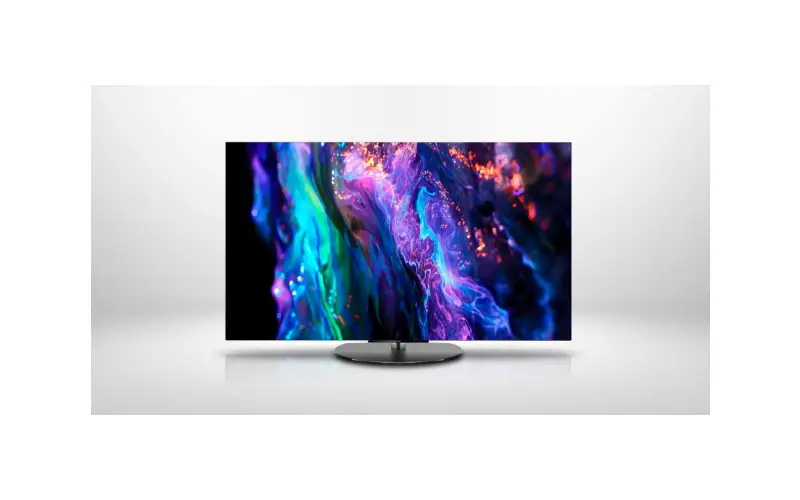
Panasonic’s European TV refresh for 2026 lands at a weird-but-exciting moment for the brand. On one hand, it’s coming right on the heels of Panasonic announcing a strategic manufacturing partnership with Skyworth, another reminder that building TVs at scale has become brutally difficult. On the other hand, Panasonic is still swinging for the fences on picture performance, calibration support, and the kind of “cinema-first” tuning that made its high-end OLEDs a staple in enthusiast home theaters for years.
If the last decade taught us anything, it’s that the TV business doesn’t reward sentimentality. Panels are expensive, margins are tight, and the silicon roadmap now moves faster than many traditional TV brands can comfortably follow. Panasonic has often been in the tougher position here: buying panels from outside suppliers and leaning on off-the-shelf SoCs can make the finished product more expensive than rivals who own more of the stack. That’s not inherently bad; it can mean Panasonic puts its resources into processing, calibration, industrial design, and out-of-the-box accuracy, but it does raise the bar for value.
The upside: the 2026 range looks designed to win in the real world, not just a demo room. Two themes stand out:
-
Calibration and creator-intent controls are getting deeper and more accessible
-
Bright-room usability is finally being treated like a first-class feature, thanks to multiple “Glare Free” tiers across OLED, Mini-LED, and mainstream LED models.
And yes, OLED competition is about to level up again. Panasonic, LG, Samsung, and Sony all have legitimate shots at the crown this year, and Panasonic clearly intends to stay in that conversation.
A quick nod to context: the industry is consolidating fast
Just last month, Sony and TCL announced a memorandum of understanding for a strategic partnership that would place Sony’s home entertainment business into a new joint venture structure (TCL 51%, Sony 49%), with a target start in April 2027 pending agreements and approvals.
Panasonic’s Skyworth move fits the same broader industry pattern: the economics of TV manufacturing favor scale, supply chain leverage, and fast iteration. The question is whether Panasonic’s “technology brain”—processing, calibration, and high-end tuning—keeps getting room to innovate under the new model. I’m hoping it does, because the lineup suggests there’s still real ambition here.
The big story: calibration is becoming Panasonic’s differentiator again
Panasonic is leaning hard into a pro-style workflow, and that matters, because modern TV image quality isn’t just about panel type anymore. Two TVs can share a panel family and look wildly different in a living room depending on tone mapping, near-black handling, upscaling, motion, and how well the TV is calibrated (or at least calibrated-adjacent) out of the box.
Here’s what Panasonic is emphasizing in 2026:
-
FILMMAKER MODE across the premium tiers to reduce “helpful” processing and preserve creator intent.
-
Dolby Vision IQ (on higher-end models) using ambient light sensors to keep HDR readable without wrecking the grade.
-
Prime Video Calibrated Mode on select models to align playback with mastering intent inside Prime Video’s pipeline.
-
Calman calibration support and ISFccc support on select OLEDs—this is a big deal for enthusiasts and calibrators because it signals Panasonic still cares about measurable accuracy, not just a flashy preset.
If you’re the kind of viewer who has spent years tweaking motion settings, fighting oversharpening, or trying to keep skin tones consistent across streaming apps, Panasonic is basically telling you: we’re building for you again.
OLED: Z95B stays the halo, and the Z85C/Z86C matters more than it looks
Panasonic is carrying over its best-known OLED pillars for 2026:
-
Z95B (55/65/77) remains the flagship, pairing Panasonic’s top processing with its premium panel and thermal management approach (the “ThermalFlow” cooling story is all about sustaining brightness and stability).
-
Z90B continues as the step-down “still serious” OLED option with broader sizing.
But the real strategic play is the new entry point:
-
Z85C (Continental Europe) / Z86C (UK) introduces a 120Hz OLED option at a lower tier, using Google TV or Fire TV depending on market.
This is important because Panasonic historically wasn’t the cheapest route to OLED. If Panasonic can make a compelling “affordable but accurate” OLED while keeping its film-centric DNA, it becomes far more competitive—especially as LG and Samsung keep pushing value and brightness.
Also worth calling out: you noted the Panasonic Z95B was the best OLED of 2025 based on a 95% CE Critic scores. That kind of performance halo matters going into 2026—if Panasonic keeps that momentum, this year’s OLED leaderboard could get spicy.
QD Mini-LED: the bright-room counterpunch
Panasonic’s QD Mini-LED push is clearly designed for two types of buyers:
-
People who want big screens (up to 86") without OLED pricing
-
People whose rooms have windows, lamps, and daytime glare that punish glossy panels
Top tier models like W97C/W95C are positioned with:
-
144Hz panels
-
Glare Free Ultra
-
1,000+ local dimming zones (on 65" and up)
-
~1,500 nits peak brightness
-
wide color (up to 105% DCI-P3)
On paper, that’s a serious spec sheet for the premium LCD crowd—and exactly the kind of category where competition is fiercest.
Specs, pricing, and availability grid
| Series | Panel / Backlight | Sizes (EU) | Refresh Rate | Smart TV (varies by market) | Calibration / Creator Modes | Gaming highlights | Availability | Pricing |
|---|---|---|---|---|---|---|---|---|
| Z95B | OLED (flagship; Primary RGB Tandem Panel on this model) | 55, 65, 77 | Up to 144Hz | Fire TV (select markets) | Prime Video Calibrated Mode, Calman, ISFccc, FILMMAKER MODE, Dolby Vision IQ | HDMI 2.1, VRR, low latency; NVIDIA G-SYNC Compatible; AMD FreeSync Premium (select support) | 2026 (carry-over) |
£2500 - £4700 |
| Z90B | OLED (Master OLED Pro on 55/65/77) | 42, 48, 55, 65, 77 | Up to 144Hz | Fire TV (select markets) | Calman, ISFccc, FILMMAKER MODE, Dolby Vision IQ | HDMI 2.1, VRR up to 144Hz; NVIDIA G-SYNC Compatible; AMD FreeSync Premium (select support) | 2026 (carry-over) | £1,400 - £3,500 |
| Z85C (EU) | OLED | 55, 65 | 120Hz | Google TV | FILMMAKER MODE, Dolby Vision, HDR10+, HLG | HDMI 2.1, VRR, low latency | 2026 | TBA |
| Z86C (UK) | OLED | 55, 65 | 120Hz | Fire TV | FILMMAKER MODE, Dolby Vision, HDR10+, HLG | HDMI 2.1, VRR, low latency | 2026 | TBA |
| W97C / W95C | QD Mini-LED (1,000+ zones on 65"+; ~1,500 nits; up to 105% DCI-P3) | 55, 65, 75, 86 | 144Hz | Google TV (EU) | FILMMAKER MODE, Dolby Vision | HDMI 2.1, VRR, low latency | 2026 | TBA |
| W94C | QD Mini-LED | 55, 65, 75 | 144Hz | Fire TV | FILMMAKER MODE, Dolby Vision | HDMI 2.1, VRR, low latency | 2026 | TBA |
| W92C | QD Mini-LED | 55, 65, 75 | 144Hz | Google TV | FILMMAKER MODE, Dolby Vision | HDMI 2.1, VRR, low latency | 2026 | TBA |
| W91C (UK) | QD Mini-LED | 55, 65, 75 | 60Hz | Roku | FILMMAKER MODE, Dolby Vision | HDMI 2.1, VRR, low latency | 2026 | TBA |
| W90C | QD Mini-LED | 55, 65, 75 | 60Hz | Google TV | FILMMAKER MODE, Dolby Vision | HDMI 2.1, VRR, low latency | 2026 | TBA |
| W85B | QLED | 43, 50, 55, 65 | 120Hz | Fire TV | (varies) | (varies) | 2026 (carry-over) | TBA |
| W83C / W80C | QLED | 43, 50, 55, 65, 75 | 60Hz | Fire TV | FILMMAKER MODE, Dolby Vision, HDR10+, HLG | HDMI 2.1 features vary | 2026 | TBA |
| W60C | 4K LED | 43, 50, 55, 65, 75 | (varies) | TiVo | (varies) | (varies) | 2026 | TBA |
| S65C | 2K LED (Full HD) | 32, 40 | (varies) | Fire TV | (varies) | (varies) | 2026 | TBA |
| S45C / S40C | 2K LED (HD Ready) | 32, 40 | (varies) | TiVo | (varies) | (varies) | 2026 | TBA |
Even with the Skyworth partnership hanging over the category conversation, Panasonic’s 2026 lineup is not a retreat. It reads like a recommitment to what Panasonic historically did best: accurate images, calibration-forward features, and cinema-first presentation.
If Panasonic can keep its high-end processing identity intact while gaining the manufacturing scale and speed the modern TV business demands, this could be a net positive. More competition is good. It’s not inherently bad.
But time will tell, especially because we’ve “lost” Panasonic TVs in key markets before. The difference this time is that Panasonic’s lineup still looks ambitious, and the calibration story is strong enough to matter in a crowded OLED year.