By: Dipin Sehdev
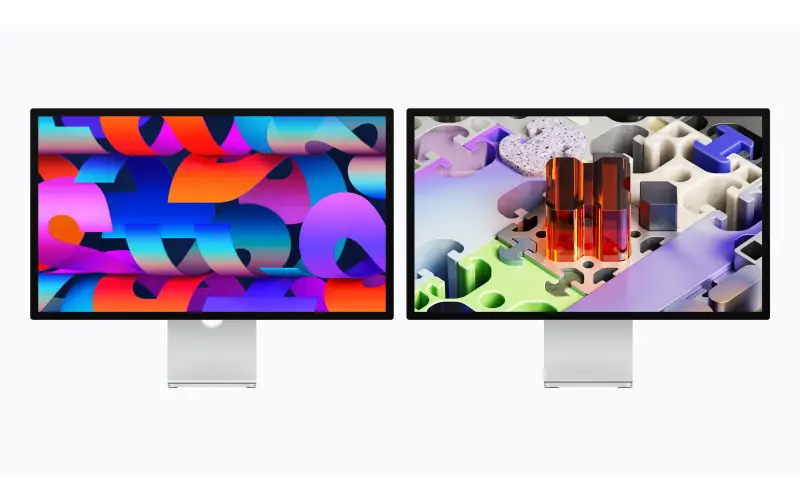
Apple is expanding its desktop display lineup with two new monitors aimed squarely at creative professionals and Mac power users. The company today unveiled an updated Studio Display and an all-new Studio Display XDR, bringing improvements to brightness, connectivity, refresh rates, and professional workflows. While Apple has long dominated the premium display market for Mac users, the timing of this launch feels particularly interesting. Over the past few years, competitors have begun catching up on performance and feature sets at lower price points. With the new Studio Display family, Apple appears determined to reassert its position at the top of the professional monitor stack. But perhaps more importantly, the broader monitor market may finally be reaching a point where price-to-performance is starting to catch up with Apple’s traditionally premium offerings. If the specs hold up in real-world testing, these new displays could be some of the most compelling Apple monitors in years.
Studio Display: A Familiar Companion Gets Meaningful Upgrades
The updated Studio Display continues to target Mac users who want a premium desktop display without stepping into ultra-high-end territory. At its core remains the same 27-inch 5K Retina panel Apple introduced previously, delivering extremely high pixel density and color accuracy designed for creative workflows. However, Apple has made several improvements that bring the monitor more in line with modern workflows.
Studio Display Key Specs
| Feature | Specification |
|---|---|
| Screen Size | 27-inch |
| Resolution | 5120 × 2880 (5K Retina) |
| Pixel Count | 14.7 million |
| Brightness | 600 nits |
| Color | P3 wide color gamut |
| Camera | 12MP Center Stage |
| Audio | Six-speaker Spatial Audio system |
| Microphones | Studio-quality three-mic array |
| Connectivity | Thunderbolt 5 + USB-C |
| Charging | Up to 96W for MacBook |
| Glass Options | Standard or Nano-texture |
The new model includes Apple’s 12-megapixel Center Stage camera, designed to keep users framed during video calls. Apple says the camera has improved image processing and now supports Desk View, which simultaneously shows the user and a top-down shot of their desk. Audio is another highlight. The display includes a six-speaker sound system with Spatial Audio, featuring four force-cancelling woofers and two tweeters designed to produce deeper bass and clearer sound during video calls or media playback. Connectivity has also received a meaningful boost. The monitor now supports Thunderbolt 5, allowing higher-bandwidth accessory connections and enabling users to daisy-chain up to four Studio Displays in a single setup. That configuration could create a combined desktop workspace approaching 60 million pixels.
Studio Display XDR: Apple’s New Flagship Pro Monitor
The bigger story, however, is the introduction of the Studio Display XDR, which pushes Apple’s display technology significantly further.
This model targets professionals working in fields like:
-
HDR video production
-
3D rendering
-
high-end design workflows
-
diagnostic medical imaging
It also marks Apple’s first mini-LED implementation in this display category.
Studio Display XDR Key Specs
| Feature | Specification |
|---|---|
| Screen Size | 27-inch |
| Resolution | 5120 × 2880 (5K Retina XDR) |
| Backlight | Mini-LED |
| Local Dimming Zones | 2,304 |
| SDR Brightness | 1000 nits |
| HDR Peak Brightness | 2000 nits |
| Contrast Ratio | 1,000,000:1 |
| Refresh Rate | 120Hz |
| Adaptive Sync | Yes |
| Color Gamut | P3 + Adobe RGB |
| Connectivity | Thunderbolt 5 + USB-C |
| Charging | Up to 140W |
The mini-LED backlight system is designed to deliver dramatically improved contrast and brightness compared with traditional LCD displays. With over 2,000 local dimming zones, the display can control light output far more precisely, helping eliminate common LCD issues like haloing or blooming around bright objects. The result should be significantly improved HDR performance. Apple claims the display can reach 2000 nits of peak HDR brightness while maintaining up to 1000 nits sustained SDR brightness, placing it among the brightest professional monitors available. The display also supports a 120Hz refresh rate with Adaptive Sync, making motion smoother for both video playback and gaming scenarios. While gaming clearly isn’t the primary focus, the higher refresh rate should also benefit creative workflows involving animation or video editing.
Color Accuracy and Professional Workflows
One of the biggest additions to the Studio Display XDR is support for Adobe RGB alongside P3 wide color. That matters for professionals working in print, photography, and design, where accurate color reproduction across multiple color spaces is critical. Apple says the display can cover over 80 percent of the Rec. 2020 color space, making it suitable for HDR video grading and advanced post-production work. Users can switch between color spaces quickly within macOS presets, making it easier to move between workflows like web design, print work, and HDR video production.
Medical Imaging Support
Apple is also pushing the display into new territory with DICOM medical imaging presets, designed for diagnostic radiology workflows. Combined with a new macOS Medical Imaging Calibrator tool, the display could potentially replace dedicated medical monitors in certain clinical environments. The feature is still awaiting FDA clearance in the United States, but Apple clearly sees an opportunity for the Mac ecosystem in medical imaging workflows.
Audio, Camera, and Connectivity
Both new displays share Apple’s latest audio and camera system.
That includes:
-
12MP Center Stage camera
-
Desk View camera mode
-
Three-microphone beamforming array
-
Six-speaker Spatial Audio system
For professionals who spend much of their day on video calls or remote collaboration sessions, the integrated camera and audio system could eliminate the need for external peripherals. Thunderbolt 5 connectivity also turns the display into a hub. Users can connect high-speed accessories or chain multiple displays together while delivering up to 140W of charging power to compatible MacBook Pro models.
Pricing and Availability
Both displays are launching soon.
| Product | Starting Price | Stand | Availability |
|---|---|---|---|
| Studio Display | $1,599 | Tilt adjustable | March 11 |
| Studio Display XDR | $3,299 | Tilt + height adjustable | March 11 |
Both models are available with standard glass or optional nano-texture glass, which reduces reflections in bright work environments. Preorders begin March 4, with shipping and retail availability starting March 11.
Price vs Performance: Is Apple Facing Real Competition?
For years, Apple’s professional displays have lived in a category of their own. They’ve offered excellent build quality, strong integration with macOS, and industry-leading color accuracy. But they’ve also carried premium price tags. In recent years, however, the monitor market has become far more competitive.
Manufacturers like LG, Samsung, ASUS, and Dell have introduced displays with:
-
mini-LED backlighting
-
OLED panels
-
high refresh rates
-
HDR brightness approaching professional levels
Many of these displays are priced aggressively compared to Apple’s offerings. That’s why this new Studio Display lineup feels particularly interesting. For the first time in a while, the specs and pricing feel like they’re finally aligning more closely with the broader market. Apple is still charging a premium, but the performance numbers are now starting to match what competitors have been pushing.
Looking Ahead
Of course, specifications only tell part of the story. Apple displays have historically performed well in real-world color accuracy, brightness consistency, and overall build quality. But until reviewers get their hands on the new Studio Display XDR, it’s hard to know exactly how it will compare to other high-end monitors. On paper, though, the new lineup looks promising. Mini-LED backlighting, 2000-nit HDR brightness, and a 120Hz refresh rate put the Studio Display XDR firmly in the conversation for professional display leadership. And if Apple’s implementation lives up to expectations, it could become one of the most desirable displays for Mac users. For now, the specs look exciting. But like most Apple hardware announcements, the real verdict will come once the reviews start rolling in.
And that’s where things should get interesting.