By: Dipin Sehdev
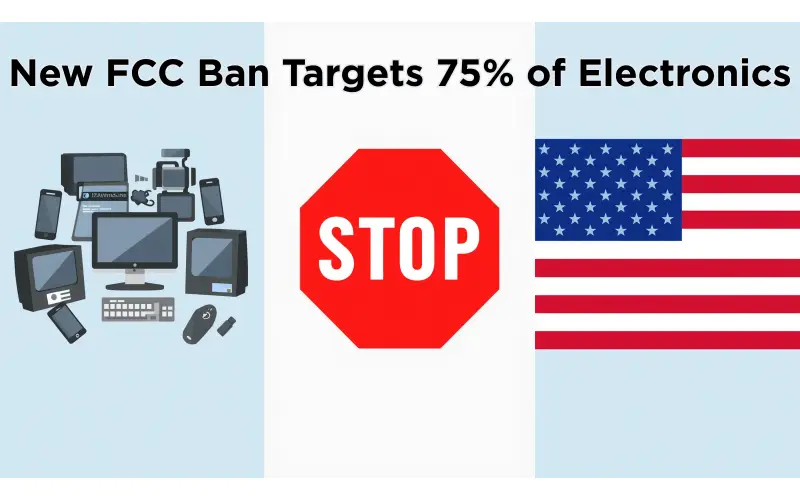
There are moments when policy decisions feel like course corrections. And then there are moments when they feel like collisions. Slow-moving, highly predictable, and difficult to avoid. The Federal Communications Commission’s latest move may fall into the latter category. In a unanimous vote, the FCC has advanced a proposal to strip all testing labs in China and Hong Kong of their ability to certify electronics for sale in the United States. On paper, the reasoning is clear: national security. In practice, the implications are far more complicated and potentially far more disruptive. Because this isn’t just about where devices get tested. It’s about how the global electronics pipeline functions. And right now, that pipeline runs heavily through China.
What the FCC Is Actually Proposing
At the center of this issue is a relatively obscure but critical process: FCC equipment authorization. Every device that emits radio frequency, smartphones, TVs, routers, laptops, wireless speakers, smart home gear, must be tested and certified before it can legally be sold in the U.S. This certification ensures:
- Devices don’t interfere with other electronics
- Wireless communications meet safety standards
- Products comply with spectrum regulations
To do this, manufacturers rely on FCC-recognized testing labs. Today, roughly:
- 591 labs are globally recognized by the FCC
- 126 are located in China or Hong Kong
- ~75% of U.S.-bound electronics are tested in those regions closest to manufacturing
The new proposal would ban all of those labs, regardless of ownership, including facilities operated by America or Western companies like:
- Intertek
- SGS
- TÜV Rheinland
- Bureau Veritas
This builds on earlier FCC actions under the so-called “Bad Labs” order, which already removed 15 Chinese labs tied to state entities. The new move expands that to every lab in China.
This Isn’t Just About TVs and Phones
When most people hear “electronics,” they think of:
- Smartphones
- TVs
- Laptops
- Headphones
But the reality is much broader and much more serious. FCC certification applies to far more than consumer gadgets. It includes:
- Medical devices that rely on wireless communication
- Automotive components (sensors, connectivity modules, safety systems)
- Industrial equipment
- Emergency communication systems
- Aviation and transportation electronics
- Smart infrastructure (traffic systems, utilities, IoT networks)
In other words: This isn’t just about whether your next TV costs more. It’s about systems that people rely on every day sometimes in critical, even life-saving situations. And when certification pipelines slow down or become bottlenecked, the ripple effects extend far beyond consumer inconvenience.
Timeline: When Does This Actually Happen?
Here’s the expected timeline:
- Now: Proposal advanced by FCC vote
- Next 60–90 days: Public comment period
- After that: Final rulemaking decision
- Then: Transition period (timeline unclear, but likely months—not years)
Realistically, we’re looking at late 2026 or early 2027 for full enforcement if the rule passes without major revisions.
What Products Are Affected? (Short Answer: Almost Everything)
If it connects, transmits, or emits a signal - it’s affected.
Major categories impacted:
- Smartphones
- Televisions
- Streaming devices
- Wi-Fi routers and networking gear
- Laptops and tablets
- Gaming consoles
- Smart home devices (thermostats, cameras, speakers)
- Wearables (smartwatches, fitness trackers)
- Bluetooth accessories (headphones, speakers)
- Drones and connected vehicles
- Medical and industrial electronics
Nearly every modern electronic system relies on FCC certification.
The Cost Problem: A Massive Price Shift
One of the most immediate, and measurable, impacts of this proposal is cost. FCC certification has never been free, but the global system has evolved in a way that keeps it relatively efficient. Manufacturers have long relied on Chinese labs not just for proximity to factories, but because of pricing and speed advantages that are difficult to replicate elsewhere.
Typical FCC Certification Costs (Global Baseline)
Before even comparing regions, it’s important to understand what certification actually costs depending on the product:
|
Certification Type |
Typical Cost Range |
|
SDoC (Non-wireless devices) |
$300 – $800 |
|
FCC ID (Wireless devices) |
$1,000 – $3,000 (testing only) |
|
Total FCC ID (with filing, documentation) |
$5,000 – $10,000 |
|
Complex RF Devices (SAR testing, etc.) |
$10,000 – $15,000+ |
Typical Cost Breakdown
- Testing Fees: $2,000 – $5,000
- TCB Filing Fees: $500 – $1,500
- Pre-scanning / debugging: $2,000+
- Documentation + engineering time: variable
Even in a normal environment, certification is not trivial especially for smaller companies or new entrants.
Now layer in geography and this is where things shift dramatically.
Basic Certification Costs by Region
|
Location |
Typical Cost per Device |
|
China Labs |
$400 – $1,300 (baseline testing) |
|
U.S. Labs |
$3,000 – $4,000 (baseline testing) |
For more complex devices, the gap widens further:
- A wireless product that might cost $5,000–$8,000 total in China
- Could easily exceed $10,000–$15,000+ in the U.S.
And that’s before factoring in:
- Engineering iteration delays
- Multiple test cycles
- Lab scheduling bottlenecks
That’s 3x to 5x higher, sometimes more. For large companies, that’s manageable (though still painful). For startups and smaller brands, it’s a serious barrier. And that cost doesn’t just disappear. It gets passed on to consumers.
The Capacity Problem: The Bigger Issue No One Is Solving
Cost is one thing. Capacity is another.
Right now:
- U.S. labs already take 5–10x longer to certify devices than Chinese labs
- The U.S. does not have the infrastructure to absorb an up to 75% workload shift
Let’s be blunt: The system isn’t built for this. Chinese labs are located near:
- Manufacturing hubs
- Supply chains
- Engineering teams
That proximity allows:
- Faster iteration
- Immediate testing adjustments
- Rapid certification cycles
Move that process overseas, and everything slows down.
Can the U.S. Build the Capacity?
In theory, yes. In reality, it’s complicated.
What it would require:
- Building new lab infrastructure
- Hiring and training RF engineers
- Expanding accreditation systems
- Scaling regulatory oversight
Estimated timeline:
- 2–5 years minimum to meaningfully scale capacity
And that assumes strong coordination between government and industry.
Is This Actually a Security Risk?
This is where things get complicated.
The FCC’s argument:
- Chinese labs could manipulate certification data
- Devices could be approved with vulnerabilities
- Foreign influence could impact network security
Those concerns are valid. But here’s the uncomfortable question: If this were a clear and immediate security threat, why aren’t existing devices being recalled?
Millions of products already certified through these labs are currently in:
- Homes
- Hospitals
- Vehicles
- Infrastructure systems
And yet:
- No mass warnings
- No replacement mandates
- No urgent advisories
That doesn’t mean the risk isn’t real. But it does suggest this is as much about future control and risk mitigation as it is about present danger.
The Broader Pattern: A Slow Decoupling
This move doesn’t exist in isolation. The FCC has recently:
- Banned certain Chinese routers and drones
- Expanded restrictions on telecom providers
- Targeted infrastructure and interconnection
This is part of a larger shift: Decoupling critical technology ecosystems between the U.S. and China
The Free Market Problem
Here’s the core frustration. This policy:
- Doesn’t introduce new standards
- Doesn’t improve certification quality
- Doesn’t change the underlying testing process
It simply moves it and makes it more expensive and slower. That’s not innovation. That’s restriction without a clear replacement.
The Innovation Risk: Falling Behind
If certification becomes:
- More expensive
- Slower
- Harder to access
Then companies will prioritize other regions first. The U.S. could shift from:
- First launch market
- To delayed rollout
- To secondary priority
Or worse: Not launched at all
What This Means for Consumers if Implemented
Short-term:
- Higher prices
- Slower product releases
Mid-term:
- Reduced product variety
- Delayed innovation
Long-term:
- The U.S. risks falling behind in access to cutting-edge technology
And again, this extends beyond gadgets. It impacts systems people rely on every day.
The Bottom Line
This is a policy with real intentions but incomplete execution. If it’s about security, the conversation needs to be clearer, broader, and more transparent. If it’s about control, then the industry needs viable alternatives, fast.
Because right now, the fundamentals don’t line up:
- The infrastructure isn’t ready
- The costs are rising
- The timelines are unclear
And perhaps most importantly: There is no clear path forward for companies that rely on this system.
That uncertainty may end up being the biggest problem of all. If you’re a global electronics manufacturer, this isn’t just a regulatory shift, it’s a risk calculation. With a public comment period still underway and the possibility of political changes ahead, many companies may simply choose to wait.
- Wait to see how the policy evolves
- Wait to see how enforcement is structured
- Wait to see what the next administration does
That creates a likely scenario: A holding pattern across the industry
And when companies pause, everything slows down:
- Product development
- Certification timelines
- Market launches
That delay doesn’t just impact companies, it cascades directly to consumers. So while the goal may be to secure the ecosystem, the near-term reality could look very different:
- Slower innovation
- Delayed product releases
- Higher costs
At the same time, this proposal does not exist in isolation. The FCC is also advancing broader restrictions tied to its national security “Covered List,” including actions involving:
- China Mobile (600941.SS)
- China Telecom (601728.SS)
- China Unicom (0762.HK)
The commission has already barred these companies from operating in the U.S. retail telecom space and is now proposing to:
- Ban them from operating data centers in the U.S.
- Restrict interconnection with U.S. telecom networks
- Extend restrictions to affiliated infrastructure providers
- Potentially block interconnection with carriers using equipment from companies like Huawei and ZTE (000063.SZ)
Taken together, these moves signal something much larger than a lab certification policy.
And ultimately, a U.S. market that risks falling behind the pace of global technology. This isn’t a final decision yet. There’s still time for industry feedback, public scrutiny, and course correction. But if this moves forward as-is, the impact won’t be subtle. It will be structural. And once systems like this slow down, they’re not easy to speed back up.
Read the FCC press release here.