By: Dipin Sehdev
There is a quiet shift happening in how we think about ownership. It doesn’t come with a product launch or a keynote presentation. It doesn’t announce itself in bold headlines. Instead, it reveals itself slowly, when a purchased movie disappears, when a game stops working offline, when a song you “own” is suddenly unavailable. And increasingly, consumers are asking a question that once would have sounded absurd:
If you can’t truly own digital media, what exactly are you paying for?
The Slow Death of Ownership
For decades, ownership was simple.
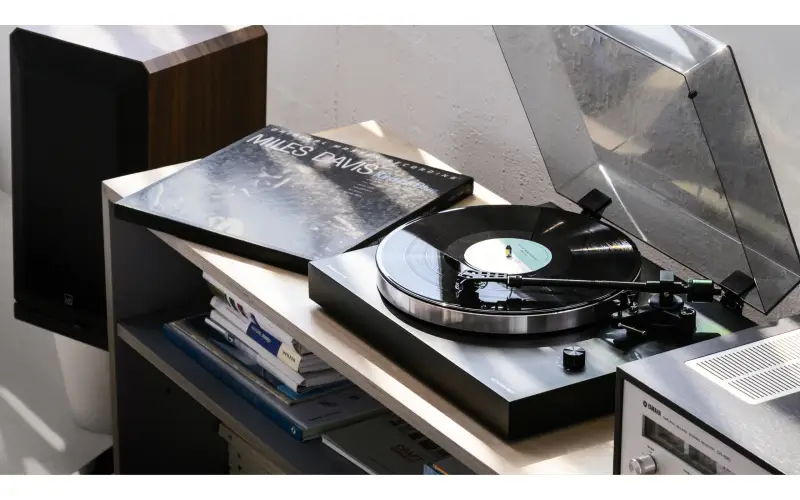
You bought a vinyl record—you owned it.
You bought a CD—you owned it.
You bought a Blu-ray—you owned it.
The transaction was clear. You exchanged money for a physical object, and with it came permanence. No one could revoke it. No company could remotely alter it. It existed independently of the entity that sold it to you. Then came digital. At first, it looked like a natural evolution. iTunes made it easy to buy and download music. Early digital storefronts promised convenience without sacrifice. But something fundamental had changed. You weren’t buying an object anymore. You were buying a license. And buried inside that shift was a quiet but critical detail: Licenses can be revoked.
The Rise of DRM
Digital Rights Management (DRM) emerged as the industry’s answer to piracy. In the early 2000s, companies were scrambling to protect digital content from being copied and distributed freely. File-sharing platforms like Napster and LimeWire had already exposed how vulnerable digital media was. DRM was supposed to fix that. It worked by restricting how content could be used:
- Limiting playback to specific devices
- Requiring authentication servers
- Preventing copying or sharing
But DRM didn’t just target pirates. It applied to everyone. And over time, it evolved from a protective measure into something more restrictive. Consumers began to realize they didn’t have the same freedoms they once did:
- You couldn’t lend a digital movie
- You couldn’t resell a digital game
- You couldn’t always access content offline
In some cases, you couldn’t even access content you had already paid for.
When Purchases Disappear
The most unsettling examples are the ones where content is removed entirely. This isn’t theoretical; it has happened multiple times.
- Amazon (2022–2023): Customers reported losing access to purchased movies and TV shows due to licensing changes. In some cases, content was quietly removed from libraries without refunds.
- Sony PlayStation Store (2022): Sony announced that purchased Discovery content would be removed from users’ libraries due to licensing agreements. After backlash, the decision was reversed—but only after public pressure.
- Apple iTunes: Users have reported losing purchased content when licensing deals expired or accounts were affected. Apple’s terms explicitly state that content availability is not guaranteed.
The pattern is consistent. You didn’t lose access because you violated terms. You lost access because the business arrangement changed. Ownership, it turns out, was conditional.
The Streaming Shift and Its Consequences
Streaming was supposed to simplify everything. Instead, it fragmented the market. Today, consumers are juggling multiple subscriptions:
- Netflix
- Disney+
- Amazon Prime Video
- Apple TV+
- Max, Hulu, and others
Costs have risen steadily. Content libraries shift constantly. Shows disappear. Movies rotate in and out. And the experience is often less user-friendly than the physical alternatives it replaced. Ironically, streaming has recreated many of the frustrations piracy once solved:
- Content availability varies by region
- Libraries are inconsistent
- Access is temporary
The convenience that once defined streaming is eroding.
A Familiar Pattern: Piracy’s Origins
To understand the current moment, it helps to look back. Piracy didn’t begin as a moral rebellion. It began as a convenience solution.
Platforms like:
- Napster
- LimeWire
- The Pirate Bay
offered something the industry didn’t:
- Immediate access
- No regional restrictions
- No format limitations
They were faster, simpler, and more flexible than legal alternatives. When Spotify and Netflix emerged, piracy declined because the legal options became better. Now, as streaming becomes more fragmented and restrictive, piracy is rising again. Not necessarily out of defiance, but out of frustration.
The Economics Behind It All
There is another layer to this story: money. The shift to digital hasn’t just changed ownership. It has changed how revenue flows. Streaming platforms have been criticized for:
- Low payouts to artists
- Opaque royalty structures
- Algorithm-driven exposure
Musicians have publicly spoken out about earning fractions of a cent per stream. Film and television creators face similar challenges, with residual structures disrupted by streaming models. Meanwhile, large platforms consolidate power:
- Controlling distribution
- Setting pricing
- Owning customer relationships
This concentration raises concerns about monopolistic behavior. Consumers pay more. Creators often earn less. Platforms capture the difference.
The New Restrictions
In gaming, the situation is becoming even more explicit. Sony recently introduced policies requiring periodic online verification for digital games. In some cases, access can be restricted if the system cannot connect to servers. This reflects a broader trend:
- Games tied to online authentication
- Content locked behind subscriptions
- Features disabled without connectivity
The idea of “ownership” becomes increasingly abstract. You don’t own the game. You own access under unclear conditions.
The Cultural Divide: Ownership vs Access
This is where the conversation becomes more philosophical. There are now two competing models:
Ownership Model (Physical Media):
- Permanent
- Transferable
- Independent
Access Model (Digital Media):
- Conditional
- Revocable
- Platform-dependent
For some consumers, the trade-off is acceptable. Convenience outweighs permanence. For others, it feels like a loss of control. And that tension is growing.
Why Physical Media Still Matters
Despite predictions of its demise, physical media persists.
Vinyl records are experiencing a resurgence.
Collectors continue to buy Blu-rays and 4K discs.
CDs, while diminished, still exist.
Why? Because physical media offers something digital often cannot:
- True ownership
- Consistent quality
- Independence from platforms
For enthusiasts, It’s about reliability. You know what you’re getting and you know it won’t disappear.
The Argument vs the Reality
This is where the controversial argument emerges: If consumers are paying for something they don’t truly own, what obligation do they have to respect the system? It’s a provocative question. And it reflects real frustration. But it’s also incomplete. Because piracy, regardless of justification, still impacts creators, many of whom are already navigating difficult economic realities. The issue is not black and white. It’s a system problem.
The Real Solution
The industry doesn’t need stricter DRM. It needs better trust. That means:
- Transparent ownership terms
- Guarantees around purchased content
- Fairer compensation for creators
- Consistent user experiences
It also means recognizing that consumers are not the enemy. They are reacting to the system they are given.
A Tipping Point
We are approaching another inflection point. Much like the early 2000s, the gap between what consumers want and what the industry provides is widening. History suggests what happens next:
- Either the industry adapts
- Or alternative systems emerge
Sometimes those alternatives are legal. Sometimes they are not.
The Bottom Line
The debate over digital ownership is not going away. As media becomes more centralized, more controlled, and more conditional, consumers are questioning the value proposition. They want to know what they’re paying for. And until that question has a clear answer, the tension between access and ownership will continue to grow.