By: Dipin Sehdev
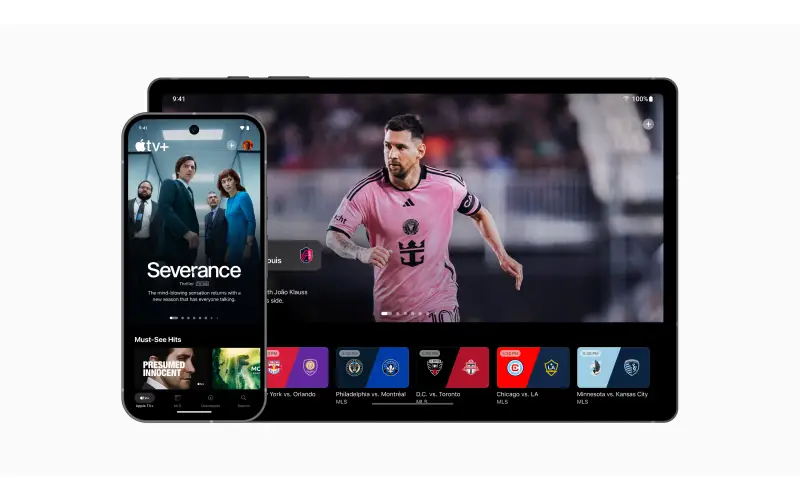
In a quiet but telling move, Apple has rebranded its six-year-old streaming service Apple TV+ as simply Apple TV, describing the change as “a vibrant new identity.” The reveal came not in a dedicated announcement, but tucked at the bottom of a press release promoting F1: The Movie, which premieres exclusively on the platform December 12.
The brief line read: “Apple TV+ is now simply Apple TV, with a vibrant new identity.”
That’s it. No splashy campaign, no updated website yet, and no clear explanation as to what “vibrant” means in this context. But in typical Apple fashion, the smallest change could signal something much bigger.
A Simpler Name — or a Strategic Reset?
Apple’s decision to drop the “Plus” follows an industry-wide trend of simplifying brand identities. HBO Max reverted to HBO Max after an ill-fated stint as just Max; Paramount+ and Disney+ both continue to lean into the “+” model; while Apple is now moving in the opposite direction.
At first glance, it might seem like a straightforward brand refresh—streamlining its naming convention to align the service, app, and device under a single identity. But this choice introduces a new kind of confusion.
Apple’s streaming service is now called Apple TV. Its set-top box hardware is also Apple TV. And the app used to access both is, you guessed it, Apple TV.
That’s three products with the same name, all living within Apple’s entertainment ecosystem. For most companies, that would be a branding nightmare. For Apple, it may be part of a larger unification strategy.
The Bigger Picture: Apple’s Entertainment Ecosystem
Since its launch in November 2019, Apple TV+ has evolved from a modest content experiment into a serious player in Hollywood. The service has earned over 553 wins and 2,500 award nominations, including an Oscar for CODA, Emmys for Ted Lasso, and critical acclaim for Severance, Slow Horses, and The Morning Show.
But despite critical success, Apple’s streaming service has often struggled with brand clarity. “Apple TV+” lived somewhere between a niche creative outlet and a bonus feature for Apple users—often bundled into promotions with new iPhones, Macs, and iPads.
By dropping the “+,” Apple appears to be positioning Apple TV not as an add-on, but as the definitive entry point for everything Apple offers in entertainment—streaming, apps, movies, and potentially, interactive experiences that extend beyond traditional video content.
This shift could also align Apple’s branding more closely with its hardware strategy. Just as Apple Music lives across devices and Apple Arcade connects seamlessly with controllers and Apple Silicon Macs, a unified Apple TV identity could create a tighter link between content and hardware.
Could This Signal a New Apple TV Device?
The timing of this rebrand raises some intriguing questions.
Rumors have been circulating for months that Apple is preparing a next-generation Apple TV device, possibly powered by a new A-series or even a dedicated “Proxima” chip. Internal iOS 18 code leaks have hinted at prototypes featuring enhanced GPU performance, expanded local storage, and support for 8K HDR output—ideal for high-bitrate content and Apple Arcade titles.
If a new Apple TV box is indeed in the pipeline, this rebrand could be laying the groundwork.
Imagine Apple launching a new Apple TV (2025) alongside its refreshed streaming identity: a device that merges media, gaming, and smart home controls into a single hub, powered by tvOS 26.
Unifying everything under one name would simplify marketing—and more importantly, reinforce Apple’s broader message that its products are part of one seamless ecosystem.
In other words, this might not just be a cosmetic tweak. It could be Apple preparing the stage for its next living-room play.
The “Vibrant New Identity”
Apple hasn’t shared visuals of this new brand identity yet, but based on how the company handles similar transitions, we can expect subtle yet meaningful design updates. A new icon, refreshed typography, and more dynamic colors are likely on the horizon.
The rebrand also dovetails with Apple’s push into spatial computing through the Vision Pro. The Apple TV app already plays a central role in the Vision Pro’s media experience, offering immersive environments that place users inside virtual theaters. Dropping the “+” could make the brand more universal across platforms—from iPhone to Vision Pro—without the baggage of being perceived as “just a streaming app.”
What It Means for Viewers
From a consumer standpoint, little changes—at least for now. Apple TV (formerly Apple TV+) remains $12.99 per month with a seven-day free trial, and new Apple device owners still get three months free. The service is available on over 1 billion screens across 100+ countries, including iPhone, iPad, Mac, Apple TV, Vision Pro, and major smart TV platforms from Samsung, LG, Sony, TCL, Roku, Amazon Fire TV, and Chromecast with Google TV.
The catalog still includes all of Apple’s original hits—Ted Lasso, Severance, Foundation, Slow Horses, and more—alongside premium films like Napoleon and the upcoming F1: The Movie.
The Bottom Line
Apple’s decision to drop the “Plus” from Apple TV+ may seem like a small branding change, but it fits neatly into the company’s larger pattern of convergence.
Apple rarely makes these moves in isolation. A “vibrant new identity” could be the start of a broader expansion of what Apple TV is—a unified platform for streaming, gaming, and perhaps even mixed-reality entertainment.
If the rumored next-gen Apple TV hardware does appear in 2025, this rebrand won’t just make sense—it’ll look prescient.
After all, Apple doesn’t just rename things for fun. It renames them when it’s about to redefine them.