By: Dipin Sehdev
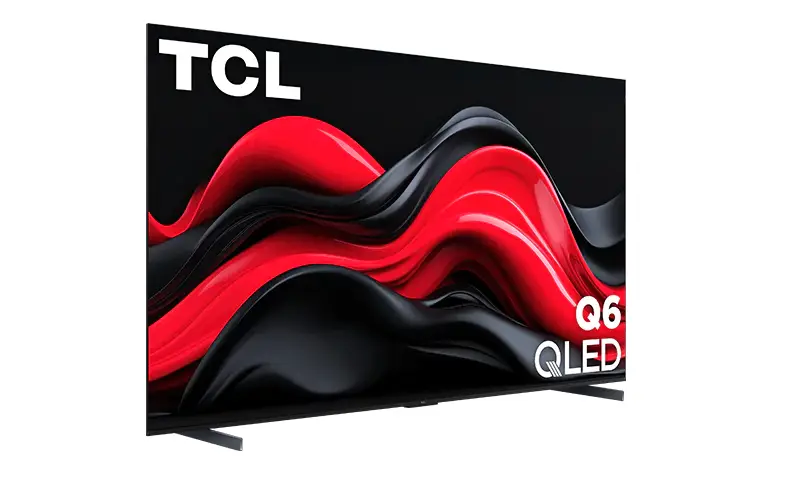
A German court has ruled that TCL can no longer market or sell certain televisions as QLED TVs in Germany, marking the latest development in a growing dispute over how the term “QLED” is used across the television industry. The decision, issued by the District Court of Munich I, concluded that some TCL models advertised as QLED televisions did not deliver the color performance consumers typically associate with quantum dot technology. As a result, the court found that TCL’s marketing violated Germany’s unfair competition law. The case was brought by Samsung, one of TCL’s biggest competitors in the global TV market and the company most closely associated with the QLED brand. While the ruling currently applies only to Germany, similar lawsuits are expected to appear in other regions, including the United States. The case highlights an issue that has quietly existed in the television industry for years: what exactly qualifies as a QLED TV.
What QLED Actually Means
To understand the controversy, it helps to understand what QLED technology is supposed to be. QLED stands for Quantum Dot Light Emitting Diode, although in practice most QLED TVs are still traditional LCD televisions with LED backlighting. What differentiates them is the addition of a quantum dot layer placed between the LED backlight and the LCD panel.
Quantum dots are microscopic semiconductor particles that emit extremely precise colors when illuminated by light. When used in televisions, they allow displays to produce:
-
Wider color gamuts
-
Higher brightness levels
-
Improved color accuracy
In a typical QLED TV, a blue LED backlight shines through a quantum dot film, which converts portions of that light into highly accurate red and green wavelengths. The LCD panel then shapes the image on top of that enhanced color foundation. The result is a display capable of brighter highlights and more vibrant colors, which is why QLED TVs have become extremely popular in recent years. However, unlike technologies such as OLED, the term QLED is not governed by a single universal standard. That lack of a clear definition has created confusion across the market.
The Source of the Dispute
The Munich court ruling focused on specific TCL televisions sold in Germany, including models from the QLED870 series. Samsung argued that these models were being marketed as QLED TVs even though they did not deliver the expected color performance associated with quantum dot displays. According to the court, the quantum dot diffusion plates used in those TVs did not improve color reproduction sufficiently to justify the QLED label. Because of this, the court determined that marketing those televisions as QLED constituted deceptive advertising. The decision means TCL must stop selling or advertising those particular models as QLED televisions within Germany.
Conflicting Test Results
The ruling also draws attention to a technical debate that has been circulating since 2024, when tests commissioned by Korean materials company Hansol Chemical claimed that TCL televisions contained little evidence of the materials typically used to produce quantum dots. According to reports from South Korean outlet ET News, laboratory testing conducted by SGS in Switzerland and Intertek in the UK did not detect the presence of indium or cadmium, two materials commonly associated with quantum dot displays. Hansol argued that if neither element was present, then true quantum dot technology may not have been used. However, the situation is not entirely straightforward. TCL disputed those findings and commissioned its own testing, which it says confirmed that quantum dot materials were indeed present. One key difference in methodology may explain the conflicting results. The tests commissioned by TCL focused on individual quantum dot films, while the tests commissioned by Hansol analyzed finished televisions. That difference could influence how trace elements are detected.
Why the Market Has Been Confusing
Part of the confusion stems from the fact that QLED is not a single technology, but rather a category of technologies built around quantum dots.
Different manufacturers may use quantum dots in different ways, including:
-
Quantum dot films
-
Quantum dot diffusion plates
-
Alternative material compositions
Because of this, two televisions labeled as QLED may use slightly different implementations of the technology. This flexibility has helped manufacturers innovate, but it has also made the term less precise for consumers. Samsung, which helped popularize QLED branding through its QLED Alliance, has long promoted the term as representing a specific level of performance. Other manufacturers have adopted the label more loosely, contributing to the current debate.
What This Means for TCL and the Industry
For now, the ruling only applies to Germany, but the legal dispute may not stop there. Samsung has reportedly launched similar lawsuits in other countries, including the United States, suggesting that the broader issue could expand internationally. TCL is also expected to appeal the ruling, meaning the legal process could continue for some time. Importantly, the court decision does not necessarily mean that TCL’s televisions perform poorly. In fact, many of the company’s recent models have received strong reviews from critics and consumers alike, often praised for delivering excellent performance at competitive prices. Instead, the case is largely about how those televisions are marketed.
The Bigger Picture
The dispute highlights a broader challenge facing the TV industry: the need for clearer terminology and standards as display technologies evolve.
Consumers today encounter a wide range of labels, including:
-
QLED
-
Mini-LED
-
OLED
-
QD-OLED
-
MicroLED
Each describes different display technologies or improvements, but the distinctions are not always obvious. Some industry observers believe that standardized certification programs could help reduce confusion by defining what qualifies for labels such as QLED. Until then, legal disputes like this may continue to appear from time to time as companies compete not just on technology, but also on how that technology is presented to consumers. For shoppers, the takeaway remains simple: look beyond the label and focus on real-world performance and reviews when choosing a television.