By: Dipin Sehdev
Arendal Sound has been on a quiet but undeniable roll over the last few years, and 2025 was arguably its strongest yet. With growing recognition in both hi-fi and home cinema circles, the Norwegian manufacturer has built a reputation around consistency, engineering discipline, and an unusually customer-friendly direct-to-consumer model. The newly announced 1610 Series feels like the most deliberate expression of that momentum so far.
Unveiled today, the 1610 Series is positioned directly below Arendal’s flagship 1528 line, but it isn’t a watered-down derivative. Instead, it’s a response to repeated customer feedback: deliver the same design philosophy, voicing consistency, and build confidence—just in a form that works in more rooms, at more listening distances, and at a more approachable price point.
This is not a “statement” series built to impress in perfect demo rooms. It’s designed for how systems are actually used.
Designed for Real Rooms, Not Ideal Ones
Arendal has always leaned into the reality that most people don’t have acoustically perfect spaces or unlimited placement flexibility. The 1610 Series doubles down on that idea. Music remains the primary tuning reference, but movie performance is treated as equally critical, resulting in speakers that aim for coherence, scale, and balance rather than spotlight-chasing detail or exaggerated dynamics.
Jan Ove Lassesen, Arendal Sound’s founder, frames the series clearly:
“With 1610, we’re deliberately moving the reference point. This is high-end sound built for customers who expect real value for their money—not inflated pricing justified by marketing narratives or tradition.”
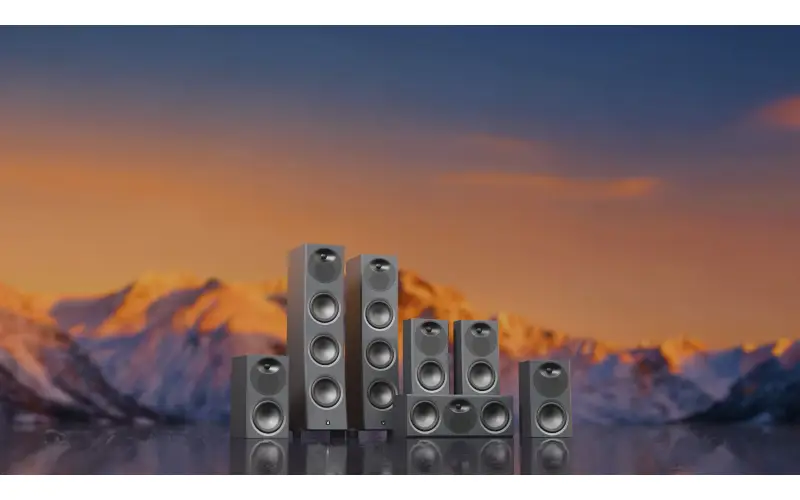
That philosophy shows up in how the series is structured. There are four models—Tower, Bookshelf, Slim, and Center—all sharing the same voicing and acoustic intent. The goal is simple: you can build a system today, expand it later, or reconfigure it entirely without changing the sonic character.
A System-First Approach
Every speaker in the 1610 Series is a three-way design, which is notable at this price level. Rather than leaning on two-way compromises, Arendal has opted for dedicated midrange drivers across the lineup to improve clarity, reduce crossover stress, and maintain consistent tonal balance across listening positions.
The driver complement is shared across models where possible. All four speakers use a 28mm aluminum tweeter and a 127mm midrange driver, with bass duties scaled appropriately depending on cabinet size and use case. This uniformity is key to the series’ modular nature and long-term system coherence.
The cabinets themselves are built from rigid HDF (High Density Fiberboard) rather than MDF, continuing a design choice Arendal favors for its predictable acoustic behavior and structural stability.
Technology Carried Down from the 1528 Series
The 1610 Series borrows heavily from Arendal’s flagship 1528 line—not in marketing terms, but in core engineering principles:
-
RØST Essence Architecture for controlled, predictable performance
-
Time-Aligned Design to improve phase coherence and wave propagation
-
Carefully shaped waveguides to manage dispersion and maintain tonal balance off-axis
-
Rigid cabinet construction to minimize coloration and resonance
None of this is new for Arendal, and that’s the point. The company isn’t chasing novelty—it’s refining what already works.
Four Models, One Sonic Signature
The lineup consists of four speakers designed to cover most real-world scenarios:
-
1610 Tower 8: A full-range three-way floorstander built to anchor both stereo and home theater systems
-
1610 Bookshelf 8: A compact three-way speaker designed to deliver genuine full-range performance in smaller to mid-sized rooms
-
1610 Slim 8: A slimline, wall-friendly three-way design intended for close-to-wall or on-wall installations
-
1610 Center 8: A dedicated three-way center channel designed to maintain dialogue clarity and tonal consistency
The flexibility here is obvious—and intentional.
Why the 1610 Name Matters
Arendal’s speaker series names reference key moments in local Norwegian history. Founded in 1528, the city of Arendal gained international trading rights in 1610, marking its transition from recognition to independence.
That symbolism fits. The 1610 Series represents Arendal Sound stepping beyond niche recognition into broader relevance—without abandoning the principles that got it there.
Arendal Sound 1610 Series: Specs, Pricing & Availability
| Model | Design | Driver Configuration | Finish Options | Price (per pair unless noted) |
|---|---|---|---|---|
| 1610 Tower 8 | 3-way floorstander | 28mm aluminum tweeter, 127mm midrange, 3× 200mm woofers | Basalt / Polar | £5900 / $7600 / €6900 |
| 1610 Bookshelf 8 | 3-way standmount | 28mm aluminum tweeter, 127mm midrange, 1× 200mm woofer | Basalt / Polar | £2800 / $3600 / €3300 |
| 1610 Slim 8 | 3-way on-wall | 28mm aluminum tweeter, 127mm midrange, 1× 200mm woofer | Basalt / Polar | £2200 / $2800 / €2600 |
| 1610 Center 8 | 3-way center | 28mm aluminum tweeter, 127mm midrange, 2× 200mm woofers | Basalt / Polar | £1800 / $2100 / €2300 |
Availability
-
Ordering opens: February 10
-
Deliveries begin: Early March (region dependent)
-
Where to buy: Direct from Arendal Sound
Included with Every Speaker
-
60-day home audition
-
Free returns (USA & EU mainland)
-
10-year warranty
-
Direct support from Arendal Sound
The Bottom Line
Arendal Sound isn’t trying to reinvent itself with the 1610 Series—it’s doing something more difficult. It’s taking everything that worked in its flagship designs and reshaping it into a lineup that makes sense for far more people, far more rooms, and far fewer compromises.
Given the brand’s strong 2025 and growing track record, expectations are understandably high. We’re especially looking forward to seeing independent reviews of the 1610 Tower 8, which on paper looks like it could become one of the most compelling floorstanders in its price class.
If Arendal executes in the listening room the way it has on paper, the 1610 Series may end up being the company’s most important release yet.