By: Dipin Sehdev
A new California law will finally silence one of the most universally annoying parts of modern streaming life: blaring commercials.
Governor Gavin Newsom has officially signed Senate Bill 576, authored by Senator Thomas Umberg (D-Santa Ana), which bans streaming platforms from playing ads louder than the programs they interrupt. The law — inspired, quite literally, by a crying baby — takes effect July 1, 2026, and could have ripple effects far beyond the Golden State.
It’s a small-sounding rule with big implications. If you’ve ever scrambled for the remote to lower the volume after a jarringly loud ad interrupted your quiet evening binge-watch, you already understand why this matters.
Why This Law Exists: From Baby Samantha to Millions of Annoyed Streamers
The story behind SB 576 is surprisingly relatable. According to Senator Umberg, the idea came from his legislative director, Zach Keller, who told him about his infant daughter Samantha being jolted awake by an overly loud streaming ad. That moment of domestic frustration — one shared by millions of parents — became the spark for a bill that’s now state law.
“This bill was inspired by baby Samantha and every exhausted parent who’s finally gotten a baby to sleep, only to have a blaring streaming ad undo all that hard work,” Umberg said when the bill passed.
The move builds on the federal Commercial Advertisement Loudness Mitigation (CALM) Act, passed by Congress in 2010. The CALM Act required broadcast television stations and cable providers to keep commercials at a consistent average volume with the programs they accompany. At the time, streaming services were still niche — Netflix had just started streaming a few years earlier, and Hulu was barely out of beta.
Now, with more than 80 percent of U.S. households subscribed to at least one streaming service, the old law feels outdated. The Federal Communications Commission (FCC) has continued receiving thousands of complaints about loud ads, especially from streaming viewers. California’s new rule is the first attempt to modernize that regulation for the streaming era.
What SB 576 Actually Does
Starting July 1, 2026, any video streaming service operating in California will be prohibited from transmitting commercials that are louder than the main program audio.
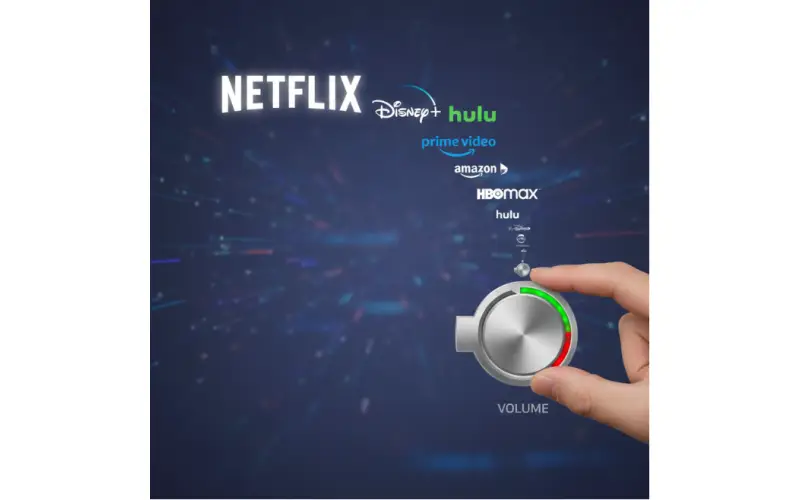
The law applies to major platforms such as Netflix, Hulu, Amazon Prime Video, Disney+, Peacock, Paramount+, YouTube TV, and Freevee, as well as smaller ad-supported services.
Like the CALM Act, SB 576 requires ads to match the “average volume” of the program content they accompany. The FCC already defines this technically through a system called LKFS (loudness, K-weighted, relative to full scale) — a measurement standard broadcasters use to keep things consistent.
The new California law extends those same technical expectations to streaming platforms.
However, to address industry concerns, the law prevents private citizens from suing streaming companies for violations. Enforcement will fall to California’s Attorney General and related state agencies, who can impose penalties for non-compliance.
A Welcome Change for Viewers — and a Headache for Streaming Tech Teams
For most consumers, this feels like an easy win.
“We heard Californians loud and clear, and what’s clear is that they don’t want commercials at a volume any louder than the level at which they were previously enjoying a program,” Governor Newsom said.
For engineers at streaming companies, though, the fix isn’t trivial.
Unlike traditional broadcasters, streaming services don’t control a single transmission chain. Ads can come from multiple sources — sometimes dynamically inserted based on region, demographics, or device type. For example, Hulu’s ad inventory might include spots from Disney’s own ad sales network, third-party ad servers, or even programmatic exchanges that supply ad content moments before playback.
That patchwork delivery makes it tricky to normalize volume consistently.
The Motion Picture Association (MPA) and the Streaming Innovation Alliance (which represents companies like Netflix and Disney) initially opposed the bill, arguing that streaming services “do not have the ability to control volume settings on the devices on which their content is offered.”
They warned that device-level differences — such as how Roku, Fire TV, and smart TVs handle audio normalization — could make perfect compliance impossible.
After the bill was amended to limit legal exposure and clarify enforcement, both groups dropped their opposition.
Why This Matters Beyond California
Even though SB 576 is a California-only law, its effects are likely to extend nationwide.
California is home to Netflix’s Los Gatos headquarters, Hulu’s offices in Santa Monica, and major production hubs for Amazon Studios and Disney. It’s also the state with the largest population of streaming subscribers.
From a practical standpoint, it’s far simpler for companies to roll out a single, compliant volume-leveling system across all U.S. viewers than to maintain one set of loudness rules for California and another for everyone else.
That’s exactly what happened after the original CALM Act passed in 2010: even though enforcement technically applied only to broadcasters and cable systems, streaming platforms voluntarily adjusted their ad mixes to match the same standards.
So, while SB 576 is a California law, expect it to influence national streaming practices by 2026.
The Broader Context: Another Step in Media Consolidation Regulation
This law arrives at a time when the streaming industry is consolidating fast — and regulators are starting to take a harder look at consumer protections.
Netflix, Warner Bros. Discovery, Disney, and Amazon are all integrating more ad-supported tiers to drive revenue growth. In 2023, fewer than 10 percent of Netflix users saw ads; by mid-2025, that number had doubled. Ad tech has become a cornerstone of streaming business models — and with that comes new scrutiny.
Consumers who once paid to avoid commercials are now seeing them again, often with inconsistent quality and jarring volume spikes.
SB 576 doesn’t touch pricing, but it does remind streaming companies that user experience still matters, even in an ad-tier world.
A Technical Look: Why Ads Are Louder in the First Place
The loud-ad phenomenon isn’t just about volume sliders — it’s about audio dynamics.
TV programs typically have wide dynamic range: soft dialogue, then loud explosions or music swells. Advertisers, by contrast, compress the dynamic range so everything sounds uniformly loud — a trick that makes their ads “pop” even at the same average decibel level.
That’s why commercials often feel louder even if they technically aren’t.
The CALM Act and now SB 576 address this by enforcing average loudness levels, measured in LKFS. But enforcing that in the fragmented world of streaming ad delivery means re-encoding or normalizing every incoming ad asset before playback — a significant backend challenge.
Expect to see streaming platforms adopt new AI-based audio normalization tools in the next two years to handle compliance automatically.
Opposition and Compromise
The streaming industry didn’t fight this law as aggressively as some other regulations — but it did make its case.
In a June 2024 hearing, Melissa Patack, MPA Vice President of State Government Affairs, said streaming services “cannot necessarily or practically control” ad loudness because of the complexity of ad delivery chains.
To ease those concerns, lawmakers clarified that platforms would be responsible only for the ads they transmit to consumers — not for hardware behavior or third-party device issues.
The bill’s authors also added a provision barring private lawsuits, limiting enforcement to state regulators. That change ultimately won neutrality from both the MPA and the Streaming Innovation Alliance.
What Happens Next
The law gives the industry 18 months to prepare before it takes effect on July 1, 2026.
In that time, expect:
-
Technical updates to ad delivery systems — streaming platforms will need to adopt audio loudness normalization across all ad sources.
-
Testing partnerships — ad agencies and streaming services will run test campaigns to measure and certify compliance.
-
Industry standards alignment — groups like the Advanced Television Systems Committee (ATSC) and Digital Advertising Alliance (DAA) will likely publish updated loudness guidance.
-
Potential federal momentum — if California’s rule works, expect the FCC or Congress to revisit the CALM Act to include streaming nationwide.
Why This Is Good News for Viewers
For viewers, this is one of those quiet (literally) quality-of-life improvements that doesn’t make headlines but changes how you feel about streaming every night.
Whether you’re watching a late-night drama with a sleeping baby next door, or binging a show at moderate volume, those sudden ad blasts break immersion and create frustration.
Fixing that isn’t just about comfort — it’s about accessibility and respect for the audience.
Potential Challenges Ahead
While most consumers will cheer this regulation, it won’t be completely seamless.
-
Device differences: Smart TVs, soundbars, and mobile devices all handle volume normalization differently. Even with compliant ads, output could vary.
-
Ad-supported tier complexity: Not all streaming services sell or serve their own ads. Third-party distributors might lag in adopting consistent loudness controls.
Still, compared to most tech regulations, this one is both feasible and popular — two traits that often determine whether a law has staying power.
A Sign of Things to Come
California’s SB 576 represents something bigger than quiet ads. It’s part of a growing wave of state-level tech and media regulation aimed at modernizing outdated federal laws.
In 2024, California also passed new rules for digital privacy, children’s online safety, and AI transparency. Now it’s extending that vigilance to streaming entertainment.
If successful, the law could push the FCC to revisit its 2011 CALM Act rules for the first time in over a decade — ensuring that “turning down the TV” stops being a nightly ritual for millions of households.
Bottom Line
When SB 576 takes effect in July 2026, Californians will finally enjoy ad breaks that don’t sound like sonic assaults.
It’s a small but meaningful example of how regulation can align with everyday frustration — and deliver a fix that makes sense in both policy and practice.
And while the law technically applies only to one state, it’s almost certain to reshape ad-tech standards across the entire U.S. streaming industry.
For once, viewers everywhere might find themselves saying something rare about a new regulation: thank you.