By: Dipin Sehdev
Well, not entirely for sale.
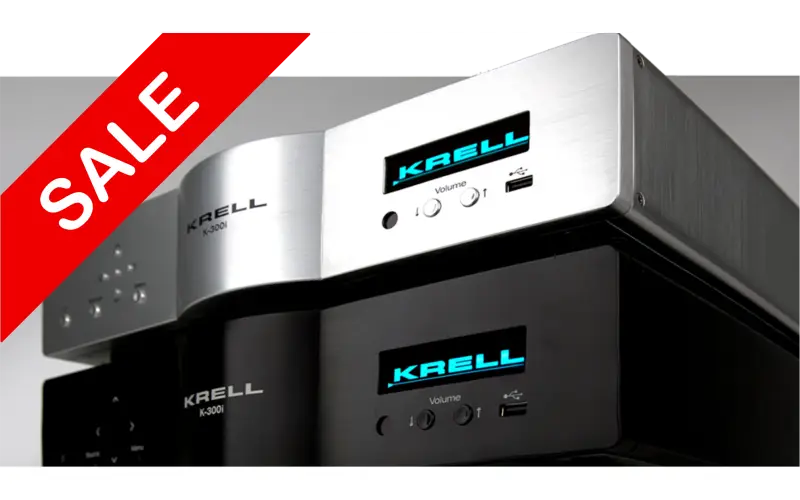
But a significant piece of one of American high-end audio’s most recognizable names is now available. JF Bicking & Co., an investor in Krell Industries, is looking to sell its roughly one-third ownership position in the company for $500,000, according to partner Wil Buhler. The firm hopes to complete a transaction by the end of 2026 and says it is prepared to move quickly with a qualified buyer.
For the right investor, this is not simply a minority stake in an audio company. It is an opportunity to participate in what could become the next chapter of Krell. And Krell desperately needs one.
The company has been in an uncertain position since the unexpected death of longtime President and co-founder Rondi D’Agostino on June 18, 2024. Krell initially announced that operations would temporarily close while the family and employees grieved, saying at the time that it intended to fulfill existing orders and eventually resume full operations. More than two years later, however, Krell remains far from the company audiophiles once knew.
JF Bicking Invested Because of Rondi
Buhler said JF Bicking’s investment in Krell was closely tied to its confidence in D’Agostino and her vision for the company.
“We invested in Krell because of Rondi,” Buhler told CE Critic. “She was an amazing person and had a great vision for Krell. But now, with her untimely and unfortunate passing, we are looking to move away from the company.”
This is not JF Bicking selling because the Krell name suddenly has no value. It is an investor whose original thesis was built around a leader who is no longer there.
Stereophile previously reported that JF Bicking claimed approximately a 30% interest in Krell. Documents reviewed by the publication appeared to support the existence of that ownership position. Buhler also told Stereophile that Rondi D’Agostino had retained majority ownership while JF Bicking shared managerial control with her.
Following D’Agostino’s death and the subsequent death of her husband, the majority interest passed to her son, Kristofer D’Agostino, according to Buhler’s earlier comments to Stereophile. Krell’s current website likewise identifies Kristofer D’Agostino as the person leading the company after inheriting it from his parents. That leaves JF Bicking as a significant minority shareholder looking for an exit and potentially creates an opening for a new investor to enter the story.
Krell Has Been Largely Quiet Since Rondi D’Agostino’s Death
This is where the story becomes difficult. Krell said in June 2024 that its closure would be temporary and that it expected to resume operations. From what CE Critic has been able to determine, however, there has been little evidence of normal product manufacturing or shipment activity since D’Agostino’s death. That does not mean existing Krell owners have been completely left without support.
Steven Javaherian has continued performing some Krell repairs independently, helping customers keep existing equipment running. This is not an official Krell factory service operation or a sign that Krell has resumed normal business. Rather, Javaherian has stepped in independently to provide support where he can for owners of legacy Krell products. Repairing existing equipment on an independent basis is very different from Krell operating as a functioning manufacturer with active production, distribution, customer service and new product shipments. And that is ultimately the issue facing the brand today. Krell still has products and designs. It still has intellectual property. Most importantly, it still has a name that means something to audiophiles around the world. What appears to be missing is the operational infrastructure and leadership required to turn those assets back into an active, growing audio company.
That is also what makes the opportunity interesting. The foundation of the brand has not disappeared. The challenge is finding the right people, capital and vision to begin building on it again.
This Is a Sad Position for One of High-End Audio’s Great American Brands
Krell was founded in 1980 by Dan and Rondi D’Agostino and became one of the defining American manufacturers of high-end amplification. Its first product, the KSA-100, helped establish the company’s reputation for high-power, high-current Class A amplification. Krell would go on to become known for amplifiers, preamplifiers, digital products and home theater electronics, building a reputation around massive power supplies, demanding engineering and ambitious industrial design.
For generations of audiophiles, the Krell name meant something very specific. Power. Control. American high-end engineering. Equipment designed without much concern for whether it was inexpensive, small or easy to move.
That reputation was built over decades. Dan D’Agostino served as Krell’s chief engineer through 2009 before eventually founding Dan D’Agostino Master Audio Systems. Krell continued without him, with Rondi ultimately becoming one of the central figures keeping the company and brand moving forward.
Her death therefore was not simply the loss of an executive. It removed a person who had been connected to Krell essentially from its beginning. That helps explain why the company appears to have struggled to regain momentum afterward.
But $500,000 Changes the Conversation
There is another way to look at this. Someone can now potentially buy roughly one-third of Krell Industries for $500,000. For a brand with more than four decades of global recognition in high-end audio, that is an unusually low entry point. Of course, buying a minority interest is not the same thing as acquiring the company outright. Any prospective buyer would need to understand the ownership structure, liabilities, intellectual property rights, outstanding obligations, manufacturing relationships, inventory, dealer network and what authority actually comes with the stake.
This is not the type of transaction someone should enter because they remember hearing a KSA amplifier 25 years ago and love the logo. Serious due diligence would be essential. But the underlying opportunity is interesting. Krell does not need someone to invent an identity for it. The identity already exists. The brand reputation exists. The engineering legacy exists. The designs exist. There is still a global population of Krell owners and enthusiasts who would like to see the company succeed. That is a very different starting point from building a premium audio company from zero.
Krell 2.0?
In the right hands, there is an argument for a Krell 2.0. That does not mean trying to recreate 1995. The high-end audio market has changed. Today's premium customer expects streaming integration, modern control systems, better software, advanced room correction, strong home theater integration and increasingly sophisticated industrial design alongside traditional amplifier performance. But there is no reason Krell’s core identity could not work in that world. Imagine a properly capitalized Krell with a focused lineup. A great integrated amplifier. A new generation of Krell power amplification. A modern preamp. A serious streaming platform. Perhaps a renewed push into high-end home theater. Keep the engineering DNA and brand character, modernize everything surrounding it and rebuild trust with dealers and customers. That is the opportunity. The hard part would not be convincing people that Krell was once important. The hard part would be proving that Krell can become important again.
The Designs Still Matter
One reason this opportunity deserves attention is that Krell's value is not limited to nostalgia. The company developed a substantial body of amplifier and electronics design work across more than four decades. Krell components became known for extremely high current capability, large power reserves and an ability to drive difficult loudspeaker loads characteristics that helped make the brand synonymous with muscular American solid-state amplification. Even after Dan D’Agostino's departure, Krell continued developing products and technologies under Rondi D’Agostino's leadership. The challenge now is converting whatever design and intellectual-property assets remain inside Krell into actual products customers can purchase.
That requires capital. It requires manufacturing. It requires distribution. And perhaps most of all, it requires leadership. A new minority investor alone may not solve all of those issues. But the right minority investor could potentially help create the momentum required to solve them.
The Majority Ownership Still Matters
Any discussion of the opportunity also needs to be realistic about the structure. JF Bicking is selling a minority interest, not control of Krell. Available public information indicates that Kristofer D’Agostino currently holds the majority interest after inheriting the family’s ownership position. Krell’s own website describes him as leading the company. That means anyone buying JF Bicking’s position would presumably need to establish a productive working relationship with the majority owner. That could ultimately be more important than the $500,000 purchase price. A minority investor with capital but no alignment with controlling ownership is not going to rebuild Krell. A minority investor working together with ownership around a credible operating plan potentially could. The opportunity, therefore, is not simply buying equity. It is buying a seat at the table.
JF Bicking Wants to Move Before the End of 2026
JF Bicking says it wants its position sold before the end of the year and is prepared to move quickly. According to information provided to CE Critic, the asking price for its roughly one-third interest is $500,000. Interested parties are being directed to KrellIndustries.com for additional information. This is being treated as a serious transaction rather than an open-ended inquiry process. JF Bicking says it will only respond to potential buyers who provide proof of funds and a letter of intent.
That should eliminate most curiosity inquiries. It also signals that the seller is looking for someone capable of actually completing a transaction rather than simply exploring what owning part of Krell might be like.
There Is Still Something Worth Saving Here
It is difficult not to view the current state of Krell with some sadness. This was once one of the names that helped define American high-end audio. Krell amplifiers were aspirational products. People built systems around them. The company influenced how an entire generation of audiophiles thought about solid-state amplification. Today, the brand appears largely dormant while an independent service operation works to keep existing products alive. That is a long way from where Krell once stood. But dormant is not the same thing as dead. Brands with genuine history are difficult to create. Reputation is difficult to create. Engineering credibility is difficult to create.
Krell already has all three. What it needs is somebody who sees value in rebuilding them. For $500,000, a qualified investor now appears to have an opportunity to acquire roughly one-third of that story. There would be significant work ahead. There are also significant unanswered questions that any buyer should investigate before writing a check. But high-end audio has repeatedly shown that legacy brands can come back when the right people, capital and product vision come together. Krell does not need another caretaker. It needs a plan. And perhaps this sale creates an opportunity for someone to help build one. A Krell 2.0 would be good for the brand, good for existing Krell owners and, frankly, good for high-end audio. It would be a shame to see a name with this much history simply fade away.
If interested you can email an LOI to Info@krell.industries. The LOI can be found here.