By: Dipin Sehdev
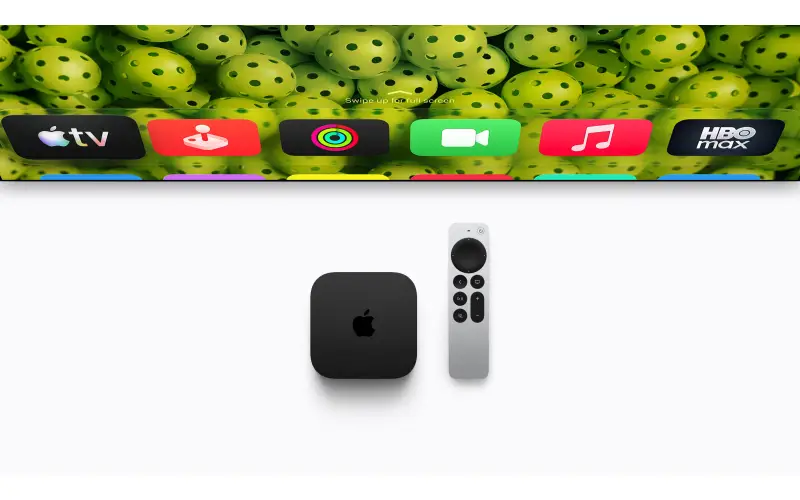
Apple has introduced the fourth-generation Apple TV 4K, giving its streaming box a substantial hardware upgrade with an A19 processor, dedicated AV1 decoding, Wi-Fi 7, HDMI 2.1, a redesigned Siri Remote with Precision Finding and a new four-speaker HomePod surround option. It is the most capable Apple TV Apple has built. It is also dramatically more expensive. The new Apple TV 4K costs $299, a massive increase over the previous generation, which launched at $129 for the 64GB Wi-Fi model and $149 for the 128GB Wi-Fi and Ethernet version. That price changes the entire conversation. At $129, Apple TV 4K was expensive compared with a Fire TV Stick or Roku, but it was easy to justify for enthusiasts who wanted a fast interface, strong format support, frame-rate matching and Apple's polished ecosystem.
At $299, it has to do more than simply be better. It has to justify costing more than twice what the previous generation did at launch. And that is where some of Apple's omissions become harder to ignore. The A19 is excellent. AV1 is overdue. HDMI Quick Media Switching remains a great enthusiast feature. The new Find My remote is genuinely useful. But Apple still does not offer true HDMI audio bitstream passthrough, and it has not announced support for Dolby Vision 2. For a $299 streaming box aimed at the living room, those are meaningful omissions.
The A19 Is the Upgrade I Actually Wanted
The most important improvement is straightforward: Apple replaced the A15 Bionic in the previous-generation Apple TV 4K with the A19. Apple says the new chip delivers up to 50% faster CPU performance and up to twice the GPU performance of the previous model. The A19 also includes dedicated hardware decoding for AV1, a codec increasingly important for high-quality streaming at lower bitrates. Pasted text That is a meaningful upgrade. The previous Apple TV 4K was hardly slow, even several years after its release, which is part of what made the product so good. But faster navigation, smoother animations and more processing headroom should help the new model age well.
AV1 is arguably even more interesting. Netflix, YouTube and other streaming companies have increasingly adopted AV1 because it can deliver comparable picture quality at lower bitrates than older codecs. That can mean better video quality at a given connection speed or reduced bandwidth requirements without sacrificing as much image quality. For an enthusiast streaming device, hardware AV1 decoding was overdue.
Yes, It Supports AV1 and HDR10+, but There Is an Important Catch
Apple lists AV1 among the new Apple TV 4K's supported video codecs alongside VP9, HEVC, H.264 and MPEG-4. It also lists Dolby Vision, HDR10, HDR10+ and HLG among supported HDR formats. More importantly, Apple's streaming framework now supports AV1 with HDR10+ metadata, which means the underlying platform has a technical path for combining AV1 with HDR10+ playback. That is the good news. The unanswered question is what Netflix, Prime Video, YouTube and other services will actually send to the box. Codec capability does not automatically mean every streaming app will immediately use it. So the accurate answer at launch is this: The new Apple TV 4K supports AV1 decoding and HDR10+, but we still need independent testing to determine which streaming platforms actually deliver AV1 HDR10+ streams to the device.
That is one of the first things I want tested once the hardware ships. Does YouTube use AV1? Does Netflix? Does Prime Video deliver HDR10+ over AV1? What bitrates are those services using compared with the previous Apple TV? Those answers matter more to me than how conversational Siri has become.
The Real Missing Feature Is HDMI Audio Passthrough
This is the biggest disappointment for me from a home theater perspective. I am not asking Apple to add another HDMI input or turn Apple TV into an HDMI switch. I want true HDMI audio passthrough. In a serious home theater system, the Apple TV is often connected to an AV receiver or dedicated surround processor. Ideally, the source device should be able to send the original encoded audio bitstream directly over HDMI and let that receiver or processor perform the decoding. That is not how Apple TV currently works.
Apple TV generally decodes the available audio format internally and sends the resulting signal to the connected system. For Dolby Atmos, Apple can use Dolby MAT rather than simply passing the source bitstream untouched. That approach works fine for mainstream streaming. It also means a high-end receiver or processor does not necessarily receive the original audio bitstream in the same form it came from the source.
That distinction matters to enthusiasts. If I have invested in a capable Anthem, Marantz, Denon, Trinnov, StormAudio or similar processor, I would like the option to let that hardware handle the decoding. Apple already understands the concept. On supported Macs, Apple offers an HDMI passthrough option that can send the original encoded Dolby Digital, Dolby Digital Plus or Dolby Atmos bitstream over HDMI. There is no equivalent option documented for Apple TV 4K.
That makes the omission harder to understand. The box has HDMI 2.1. It has more than enough processing power. Apple has implemented HDMI bitstream passthrough elsewhere in its ecosystem. Give enthusiasts the choice.
And since this is an HDMI 2.1 device, this is also one of those rare occasions when I can make a completely unbiased recommendation that you should probably use a properly certified Ultra High Speed HDMI cable. I happen to know a company you can check out here.
Moving on.
What About Dolby TrueHD and DTS:X?
The lack of true audio passthrough becomes even more relevant when looking beyond mainstream streaming services. Apple's published specifications list Dolby Digital 5.1, Dolby Digital Plus 7.1 and Dolby Atmos. They do not list Dolby TrueHD or DTS:X. That means anyone hoping this generation would turn Apple TV into the ultimate local-media player for untouched Blu-ray-quality Dolby TrueHD Atmos or DTS:X bitstreams should temper expectations.
Apple TV remains much more clearly optimized around streaming audio formats. That is fine for Netflix, Disney+, Apple TV+, Prime Video and most other streaming services, where Atmos is generally delivered using Dolby Digital Plus. But enthusiasts using applications such as Plex, Infuse or local media libraries often want something different: the original audio track delivered untouched to their processor. This generation would have been a perfect opportunity for Apple to close that gap.
Based on Apple's current documentation, it has not.
QMS Is Much More Interesting Than Siri AI
One feature I am very happy to see retained is HDMI Quick Media Switching. QMS allows compatible displays and source devices to change between certain video frame rates without producing the familiar black screen that appears while HDMI resynchronizes. Anyone who uses Match Frame Rate on an Apple TV knows exactly what this problem looks like.
You select a 24-frame-per-second movie while the Apple TV interface is operating at 60Hz. The TV goes black. HDMI resynchronizes. Then the movie starts. QMS can remove that interruption when switching between compatible frame rates that use the same resolution and HDR mode. For enthusiasts, that is exactly the type of feature I care about.
It makes the actual viewing experience better without requiring me to think about it. The previous third-generation Apple TV 4K also supported QMS, so this is not exclusive to the new model. But I am glad Apple continues to support it as the platform moves forward.
21:9 Projector Support Remains a Nice Enthusiast Feature
Apple also continues to support 21:9 and other cinematic aspect ratios when playing compatible movies and shows on supported projectors and displays. That is a relatively niche feature. It is also exactly the sort of niche feature a premium streaming box should have. Constant-image-height projector installations are one of the areas where consumer streaming hardware often feels designed around televisions first and everything else second. The ability to properly support cinematic displays makes Apple TV more attractive in higher-end theater installations.
The New Siri Remote Is a Genuine Upgrade
The new remote may be one of the most universally useful improvements. Apple retains the familiar aluminum Siri Remote design but adds proper Find My integration with Precision Finding. Users can now locate the remote from a compatible iPhone and make the remote itself play a sound. Pasted text That is excellent. There are very few technologies I need less explanation for than a remote that helps me find itself. The remote uses Bluetooth 6, includes USB-C charging and continues to support television and receiver control through IR or HDMI-CEC. Apple says the new remote is also compatible with older Apple TV HD and Apple TV 4K hardware. Find My is available on second-generation Siri Remotes and later, while Precision Finding and the ability to play a sound are features of the latest hardware under the applicable compatibility requirements. Pasted text If you own an older Apple TV and are happy with its performance, the remote might eventually be the upgrade worth buying separately.
Siri AI Is the Headline. I Am Less Excited.
Apple is putting considerably more emphasis on Siri AI. The new Apple TV has three far-field microphones built directly into the box, allowing users to say "Siri" or "Hey Siri" without touching the remote. Apple says its new Siri can answer conversational questions about movies, recommend content, access broader world knowledge and use personal context from a compatible iPhone. You could ask which Apple TV shows won Emmys, ask where a show was filmed or tell Siri to play something a friend recommended in a message. Pasted text That all sounds impressive in a demonstration. It just isn't the reason I would buy this Apple TV. Apple's AI efforts have not yet given me enough confidence to make Siri the centerpiece of a home theater product. Siri is already hit or miss for me on the iPhone, so the idea of making it more prominent in my television experience is not necessarily an upgrade. If Siri AI turns out to be excellent, great. But for me, it is a bonus feature rather than the product's reason for existing. And importantly, Siri AI itself does not require this new Apple TV. Apple says Siri AI in beta is available on the second-generation Apple TV 4K and later, assuming the other hardware and software requirements are met.
That changes the value discussion considerably.
Then There Is Dolby Vision 2
There is one more issue that makes the new Apple TV 4K's $299 price harder to swallow: Dolby Vision 2. Dolby Vision 2 was announced before this Apple TV reached consumers, and the format is now beginning to appear in new televisions and content pipelines. Apple's new Apple TV 4K does not list Dolby Vision 2 support. It supports Dolby Vision Profiles 5 and 8.1, along with HDR10, HDR10+, HLG and AV1. Those are all good things. But for a brand-new $299 streaming box arriving at the end of 2026, the absence of Dolby Vision 2 immediately raises a question about how future-proof this hardware really is. That is especially awkward because there have been persistent reports that this Apple TV hardware had been in development for a long time before launch. If the product was largely finalized well before Dolby Vision 2 was announced, Apple may have found itself in an unfortunate timing window: delaying the device long enough that it launches after the next major Dolby Vision generation, but not updating the hardware or certification to support it. That should not be stated as fact without Apple confirming the development timeline.
But from the consumer's perspective, the result is the same. You are buying a $299 premium streaming device in late 2026 that launches without announced support for one of the newest premium HDR formats. That is not ideal.
Dolby Vision 2 Is More Than Just Brighter Dolby Vision
Dolby Vision 2 is not simply another badge. Dolby says the new system uses an updated image engine and expanded metadata to better adapt content to the capabilities of the display, the material being watched and the viewing environment. It also introduces features such as Content Intelligence and Authentic Motion, giving creators and displays more control over how images are presented. Existing Dolby Vision content remains compatible with Dolby Vision 2 displays, and current Dolby Vision equipment does not suddenly stop working.
That distinction is important. The new Apple TV does not become obsolete because it lacks Dolby Vision 2. But there is a difference between "not obsolete" and "future-proof." At $129 or $149, I would be much more willing to view this as something to watch over the next few years. At $299, I expect Apple to be ahead of the curve.
This Is Where the Delayed Launch Hurts Apple
This is what makes the timing frustrating. Had this Apple TV launched a year earlier, before Dolby Vision 2 reached the market, nobody could reasonably criticize Apple for not supporting a standard that had not yet arrived. Instead, Apple is launching the fourth-generation Apple TV 4K after Dolby Vision 2 has been announced and is moving into the television market. That creates the appearance that a brand-new Apple product is already one generation behind in a category that matters to the very enthusiasts Apple is asking to spend $299. And that feels like Apple stepping on its own foot.
The company had extra time. Yet the product that finally arrived still lacks true HDMI audio bitstream passthrough and, based on the published specifications, Dolby Vision 2. Meanwhile, a significant amount of the launch messaging is centered around Siri AI. For the mainstream Apple customer, that may be exactly the right priority. For someone building a serious home theater, it is much harder to understand.
Could Dolby Vision 2 Be Added Later?
This is the big unanswered question. Some Dolby Vision 2 implementations can be enabled through firmware when the underlying hardware is capable. That does not mean Apple can simply flip a switch and add Dolby Vision 2 to the Apple TV. Support depends on the underlying Dolby implementation, processing pipeline, certification and potentially the capabilities of the chip and video engine. Apple has not said the fourth-generation Apple TV 4K will receive Dolby Vision 2 later.
Until it does, buyers should treat Dolby Vision 2 as unsupported rather than assuming a future tvOS update will add it. And at $299, I would like Apple to answer that question. If the A19 and video pipeline are capable of supporting Dolby Vision 2 through software, say so. If they are not, enthusiasts should know that too.
How Future-Proof Is the New Apple TV 4K?
The answer is mixed. On one hand, the hardware is excellent. The A19 provides substantially more performance than the previous generation. There is hardware AV1 decoding. Wi-Fi 7 and Bluetooth 6 are forward-looking. HDMI 2.1, QMS, HDR10+, Dolby Vision and 21:9 projector support give it one of the strongest video feature sets of any mainstream streamer. On the other hand, there are two conspicuous gaps for enthusiasts:
No true HDMI audio bitstream passthrough. No announced Dolby Vision 2 support. Those omissions matter more because of the price. Apple is asking $299 for a device that should reasonably last for many years. Anyone spending that much should be thinking about what happens when Dolby Vision 2 content becomes more common and when more televisions support the format. If you buy a premium television with Dolby Vision 2 in 2027 or 2028, will your $299 Apple TV be able to take full advantage of it? Right now, Apple has not given us enough information to say yes. That is a problem for a product this expensive.
The $299 Price May Be the Biggest Problem
Apple is asking $299 for the new Apple TV 4K. That is a huge number for a streaming box. The third-generation Apple TV 4K launched at $129 in 2022. Even the more capable version with 128GB of storage, Gigabit Ethernet and Thread networking launched at $149. The fourth-generation model is $299. That means Apple has effectively doubled the price of the comparable high-end configuration. Yes, you get considerably more hardware. The A19 is faster. There is dedicated AV1 decoding. Wi-Fi moves to Wi-Fi 7. Bluetooth moves to Bluetooth 6. Storage is now 128GB. There are far-field microphones. The remote has Precision Finding. Apple has added its new HomePod surround capabilities.
But we are still fundamentally talking about a streaming media player. That creates an awkward value proposition. A consumer who simply wants Netflix, Disney+, Prime Video, YouTube and Apple TV+ does not need an A19 chip to accomplish that. And an enthusiast who does appreciate the A19, QMS, AV1, HDR10+, Dolby Vision and 21:9 projector support is exactly the type of buyer likely to notice that Apple still does not offer true HDMI audio bitstream passthrough or Dolby Vision 2.
At $149, I could overlook those omissions more easily. At $299, I start asking harder questions.
Should You Buy the Previous Apple TV 4K Instead?
This may end up being the most important buying question surrounding the new Apple TV. If retailers discount remaining third-generation inventory, the older model could become an exceptional value. The third-generation Apple TV 4K already supports Dolby Vision, HDR10+, Dolby Atmos, Match Frame Rate and HDMI Quick Media Switching. It remains a fast and polished streaming device. And perhaps most importantly, Apple says Siri AI will also work on the second-generation Apple TV 4K and later. Pasted text So you are not paying $299 simply to get Apple's new AI experience. That leaves the A19 processor, dedicated AV1 decoding, Wi-Fi 7, new microphone array, upgraded HomePod integration and new remote as the major hardware reasons to move up.
Those are legitimate improvements. Are they worth another $150 or more compared with a discounted third-generation box? For many people, I suspect the answer will be no. And if neither model supports Dolby Vision 2, and neither provides true HDMI audio passthrough, the decision becomes even more difficult. Buy the previous-generation Apple TV now. Use it for a few more years. Then upgrade when Apple releases a model that supports Dolby Vision 2 and, hopefully, finally gives enthusiasts true HDMI audio bitstream passthrough. That may prove to be a more sensible strategy than spending $299 today on hardware that already has questions hanging over its long-term format support.
Four HomePods Can Now Become a Surround System
Apple is also expanding the Apple TV and HomePod relationship. For the first time, four compatible HomePods can be used together to create a surround configuration. The Apple TV analyzes the speakers' locations and automatically calibrates timing and levels for the room. Users can build the system with four HomePod mini 2 speakers or four second-generation HomePods, with matching front and rear pairs required. Pasted text That is an interesting option for people already committed to Apple's ecosystem. I still would not consider it a replacement for a traditional AVR and discrete speaker system for a serious home theater. Physical speaker placement, dedicated center channels, subwoofer integration and larger speakers still matter. But as an alternative to a soundbar or for someone who wants a clean wireless system, Apple's approach is getting substantially more interesting.
HomeKit Continues to Get Better
Apple TV remains one of the stronger reasons to use HomeKit. The new box supports Wi-Fi 7, Thread and Gigabit Ethernet and can continue serving as a smart-home hub. Apple is adding AI-generated HomeKit Secure Video descriptions and summarized camera notifications. With compatible cameras and doorbells, users can view alerts, communicate through the device and control accessories directly from the television. Pasted text Apple also says HomeKit Secure Video remains end-to-end encrypted and inaccessible to Apple, while Siri AI requests can be processed on-device or through Private Cloud Compute. Pasted text That integration is useful. Again, it is not why I would choose a streaming box for a serious theater. But if you are already inside Apple's ecosystem, it adds value.
Apple TV 4K (4th Generation) Specifications
| Specification | Apple TV 4K (4th Generation) |
|---|---|
| Processor | Apple A19 |
| Storage | 128GB |
| Maximum video resolution | 4K / 2160p |
| Maximum frame rate | 60 fps |
| HDMI | HDMI 2.1 |
| HDMI audio bitstream passthrough | No documented option |
| Ethernet | Gigabit Ethernet |
| Wi-Fi | Wi-Fi 7, 2x2 MIMO |
| Bluetooth | Bluetooth 6 |
| Thread | Yes |
| AV1 hardware decoding | Yes |
| HDR | Dolby Vision, HDR10, HDR10+, HLG |
| Dolby Vision profiles | Profile 5 and 8.1 |
| Dolby Vision 2 | Not announced |
| Video codecs | AV1, VP9, HEVC/H.265, H.264/AVC, MPEG-4 |
| QMS | Yes |
| 21:9 output support | Yes, compatible content/displays |
| Audio | Dolby Digital 5.1, Dolby Digital Plus 7.1, Dolby Atmos |
| Dolby TrueHD bitstream passthrough | Not listed |
| DTS:X bitstream passthrough | Not listed |
| Far-field microphones | Three |
| Voice assistant | Siri AI |
| Smart-home platform | Apple Home / HomeKit |
| Home networking | Thread |
| HomePod surround | Up to four supported HomePods |
| Remote | Siri Remote, 4th generation |
| Remote Find My | Yes |
| Precision Finding | Yes, with compatible iPhone |
| Remote charging | USB-C |
| Dimensions | 3.67 x 3.67 x 1.22 inches |
| Weight | 7.6 ounces |
| Price | $299 |
| Preorders | Available now |
| Availability | Nov. 13, 2026 |
Pricing and Availability
The fourth-generation Apple TV 4K is priced at $299 in the U.S. Preorders opened Oct. 13, with availability beginning Friday, Nov. 13, in the U.S. and 29 other countries and regions. Pasted text For comparison, the third-generation Apple TV 4K launched in 2022 at $129 for the 64GB Wi-Fi model and $149 for the 128GB Wi-Fi and Ethernet version. That makes the new $299 price one of the largest changes between generations. Apple includes the fourth-generation Siri Remote, power cord and documentation. An HDMI cable is still sold separately.
The Bigger Question: Who Is This Apple TV For at $299?
That is ultimately what I keep coming back to. I like the new Apple TV. The A19 is a great upgrade. AV1 support matters. QMS is exactly the kind of enthusiast feature I want. The new remote is better. Wi-Fi 7 is welcome. The HomePod improvements are interesting. There is a lot here to like.
But $299 is a serious price increase. Apple took a product that started at $129 in the previous generation and moved it into a completely different price category. And once Apple asks that much money, I expect more. I expect the new processor. I expect excellent video-format support. I expect QMS. And I think it is reasonable to expect a proper HDMI audio passthrough option for enthusiasts who want their AV receiver or processor decoding the original bitstream. I also expect a product this expensive to feel genuinely future-proof. Right now, the lack of announced Dolby Vision 2 support complicates that argument. Instead, one of Apple's headline additions is Siri AI. Maybe Siri AI turns out to be fantastic.
I hope it does. But Siri is already inconsistent enough on my iPhone that it is difficult for me to view a more prominent Siri experience as the feature that justifies moving from a $129-generation product to a $299 one. That is why the outgoing Apple TV 4K could become the sleeper deal. If you can find a third-generation model at a significant discount, it already does most of what makes Apple TV excellent for movies and television. Siri AI is coming to it. Dolby Vision and HDR10+ are already there. QMS is already there. The new model is clearly better. The tougher question is whether it is $299 better. For many home theater enthusiasts, I am not convinced it will be.
And at this price, Apple has made that comparison unavoidable.
Disclosure: CE Critic may earn a commission from purchases made through qualifying affiliate links in this article. Dipin Sehdev is a co-founder of CableRated. Any CableRated references are clearly identified, and that relationship does not affect CE Critic's editorial conclusions.