By: Dipin Sehdev
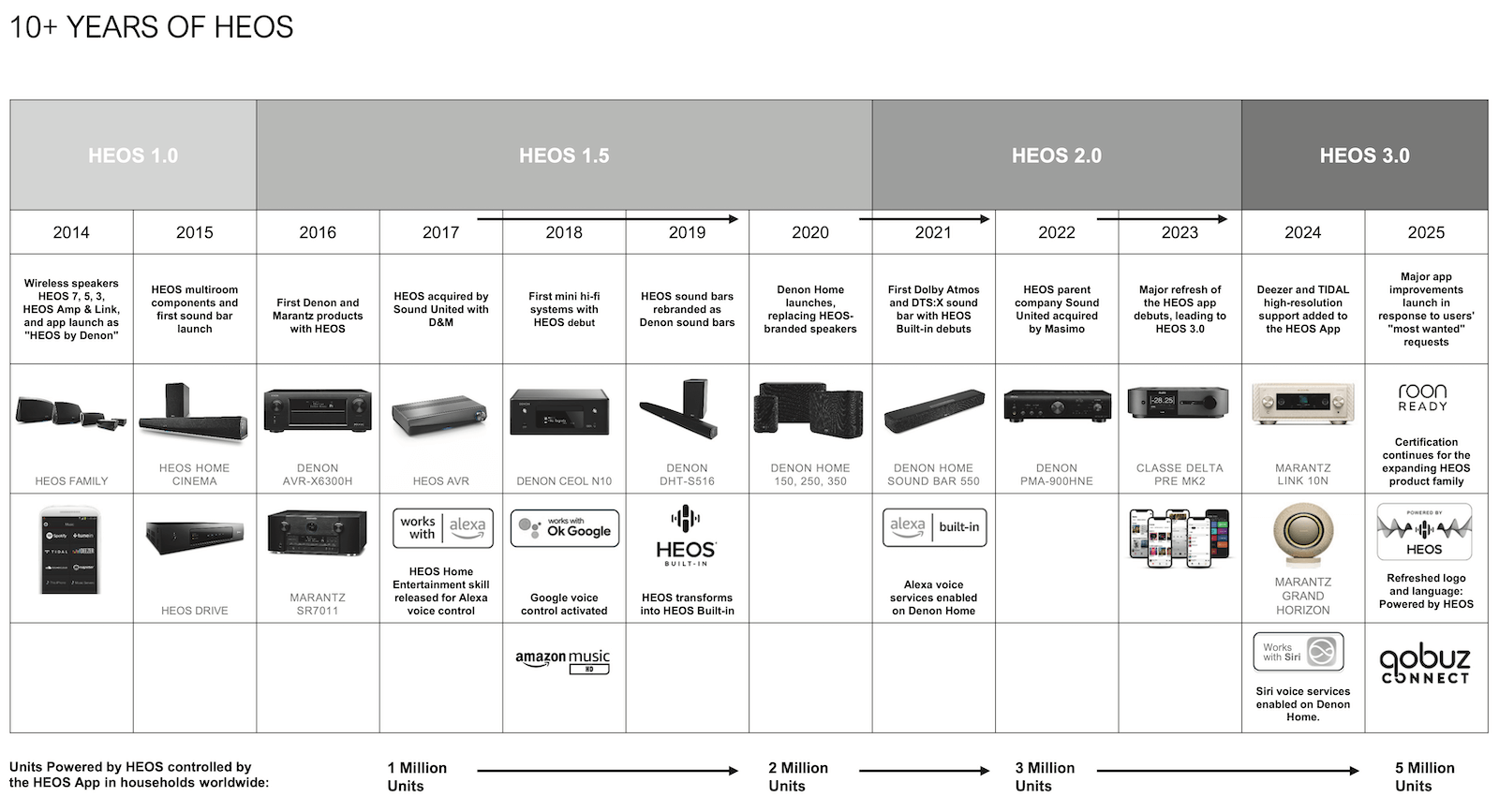
Denon, Marantz, and Classé have introduced a bold new chapter for HEOS, their long-running multiroom audio platform. What started in 2014 as a forward-thinking approach to wireless sound is now being reintroduced with a refreshed identity, expanded software features, and broader positioning across premium audio products.
The headline change is a rebrand: what was once “HEOS Built-in” is now Powered by HEOS™. It’s more than a cosmetic update. The new identity emphasizes that HEOS is not a standalone brand but rather the wireless audio engine inside over 50 premium products worldwide. From AV receivers and soundbars to wireless speakers, HEOS is the connective tissue that ties everything together into a whole-home ecosystem.
But beyond branding, this update is about HEOS’ role in the rapidly evolving world of streaming audio—especially now that the platform sits under Harman International, which also owns Roon. That connection could be the key to HEOS’ next chapter.
What Is HEOS and How Does It Work?
HEOS, short for Home Entertainment Operating System, was created with a simple idea in 2014: deliver uncompromising sound throughout the home without wires, complicated setups, or unstable apps. Unlike some competitors that approached wireless audio from a software-first angle, HEOS was developed by Denon engineers with deep hi-fi roots. That means the system was built to put sound quality first, ensuring wireless playback didn’t come at the expense of fidelity.
At its core, HEOS is a multiroom audio platform. It lets users stream music from a wide variety of sources—Spotify, Apple Music (via AirPlay 2), TIDAL, Amazon Music, Qobuz, local libraries, and more—and distribute it across multiple zones in a house. A single HEOS-powered product can act as the entry point, but the system scales up to 64 devices in 32 zones.
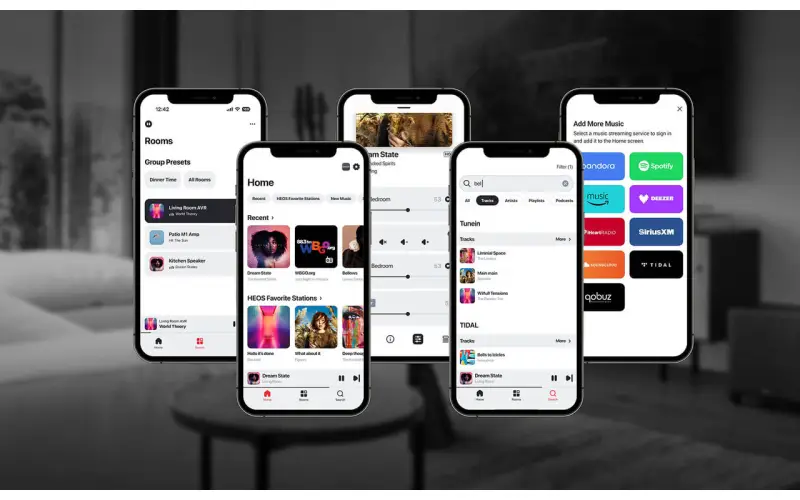
The HEOS app serves as the control hub. Users can group rooms, create presets for different listening scenarios, or quickly search across services. Unlike traditional closed ecosystems, HEOS is embedded directly into products from Denon, Marantz, and Classé. That means no proprietary wireless speakers are required; instead, AV receivers, integrated amps, soundbars, and streaming components all become part of the system.
This flexibility is one of HEOS’ biggest strengths. A family can have a Denon soundbar in the living room, a Marantz receiver in the home theater, and a Classé amplifier in a two-channel system—all linked together seamlessly.
A Decade of Growth
Since its debut, HEOS has shipped in more than five million products worldwide. That’s a significant footprint, especially in a category where ecosystems like Sonos dominate consumer awareness. HEOS carved out its niche by targeting performance-driven listeners who wanted high-quality sound without giving up wireless convenience.
In 2023, Denon and Marantz rolled out HEOS 3.0, a complete rebuild of the platform’s software architecture. That update made the app faster, more reliable, and more intuitive, with an emphasis on a music-first interface. Features like customizable home screens, centralized search, and improved grouping controls gave users a modern, flexible way to manage their systems.
More importantly, HEOS 3.0 introduced support for new services and formats. The platform gained high-resolution streaming options like Qobuz, as well as Roon Ready certification, which opened HEOS devices to one of the most respected music management systems in the audiophile community.
That Roon connection is particularly interesting in hindsight, given HEOS’ new corporate structure.
Enter Harman International
In 2024, parent company Masimo sold its Sound United division—which included Denon, Marantz, Polk, Bowers & Wilkins, and Classé—to Harman International, a Samsung subsidiary. That move brought HEOS under the same umbrella as Roon Labs, which Harman acquired earlier in the decade.
This consolidation creates intriguing possibilities. Roon is beloved among audiophiles for its rich metadata, advanced DSP, and seamless integration with high-end hardware. HEOS, meanwhile, is a mass-market multiroom system designed to be easy and intuitive.
The big question is whether Harman will eventually bridge the two. Imagine a future where HEOS products offer deep Roon integration beyond basic certification—perhaps pulling Roon’s library intelligence into the HEOS app, or allowing HEOS’ multiroom grouping to work natively inside Roon. Such a move could merge the best of both worlds: HEOS’ scalability and ease of use with Roon’s audiophile-grade management and playback.
For now, there’s no official announcement of cross-pollination, but the ownership structure makes the idea more than speculative—it’s logical.
Powered by HEOS: A New Identity
The rebrand from “HEOS Built-in” to Powered by HEOS clarifies what the platform actually is: the underlying wireless engine inside trusted audio products. In a crowded wireless audio market, that clarity matters.
The refreshed logo, inspired by radio waves, represents the flow of music through the home. The app icon has also been updated, visually unifying the experience across AV receivers, soundbars, and speakers.
This isn’t just about aesthetics, though. It’s about signaling to consumers that when they see Powered by HEOS on a product, they can expect:
-
Premium sound quality (no compromises for wireless)
-
Scalability (from one room to an entire house)
-
Interoperability (works across Denon, Marantz, and Classé hardware)
-
Flexibility (streaming services, local files, hi-res, AirPlay 2, and Roon)
2025 Updates: A Smarter App Experience
The 2025 update builds on HEOS 3.0 with even more personalization and control. The app now makes it easier to:
-
Switch between multiple streaming services without friction
-
Save room and grouping presets for different moods (e.g., “Morning Playlist,” “Movie Night”)
-
Customize the Home Page with favorite sources or zones
-
Use centralized search across services and local libraries
This aligns HEOS with consumer expectations shaped by competitors like Sonos, Bluesound, and Apple AirPlay ecosystems, while still highlighting HEOS’ audiophile heritage.
Why HEOS Matters in 2025
The wireless audio space is more competitive than ever. Sonos remains dominant in mainstream households, Apple and Amazon leverage ecosystem lock-in, and Bluesound caters to hi-res enthusiasts. HEOS sits uniquely in between—integrated into traditional hi-fi components yet approachable for everyday users.
Its embedded strategy means buyers don’t need to replace their entire system to go wireless. A Denon or Marantz AVR with HEOS effectively turns a home theater into a multiroom hub, while still offering HDMI switching, surround processing, and all the features enthusiasts demand.
That dual role—wireless convenience layered on traditional performance hardware—is where HEOS continues to stand apart.
Looking Ahead
With its new identity, updated app, and expanded service support, Powered by HEOS enters its second decade with momentum. The platform has grown from an experiment into a mature ecosystem, trusted by millions of users worldwide.
But the bigger story may be what happens next under Harman International. Will HEOS and Roon remain separate, serving different audiences, or will they converge into a unified ecosystem that combines scalability with audiophile sophistication?
For now, HEOS remains focused on delivering the HEOS Music Experience: a promise that your music will always sound its best, be easy to control, and feel effortless every time you press play.
A decade in, that mission hasn’t changed. What has changed is the platform’s clarity of purpose—and its potential future as part of Harman’s growing audio portfolio.