By: Dipin Sehdev
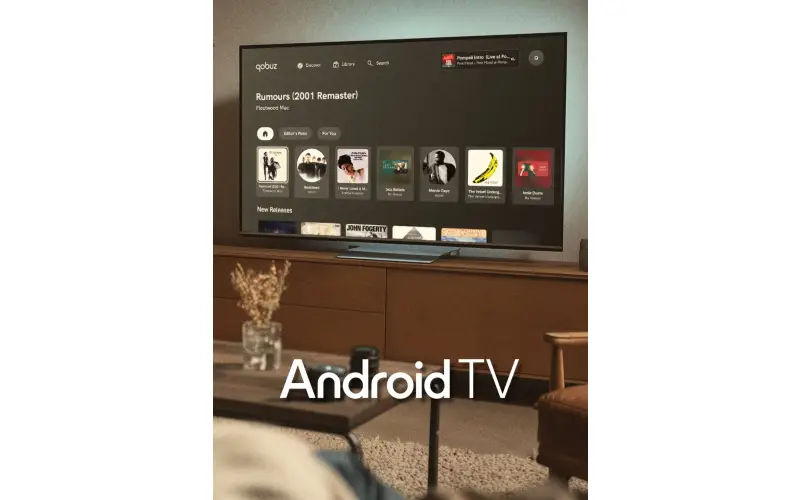
For years, Qobuz has carved out a loyal following among music lovers who prioritize sound quality over flashy features or sheer convenience. With a vast library of high-resolution music, curated editorial, and a commitment to lossless playback, the French-born streaming service has become a favorite for discerning listeners around the world. Now, Qobuz is making life a little easier for its subscribers by launching a dedicated app for Android TV — a small addition that carries big benefits for those who enjoy their music through home theater systems, smart TVs, or streaming boxes.
This move may not make headlines like Apple Music’s latest spatial audio update or Spotify’s experiments with AI DJs, but for Qobuz fans, it’s a very welcome development. Let’s take a closer look at what Qobuz is, what makes its catalog special, and why its arrival on Android TV is a meaningful milestone.
What Is Qobuz?
Founded in Paris in 2007, Qobuz has always aimed to distinguish itself from mass-market competitors like Spotify, Apple Music, and Amazon Music. Instead of focusing on algorithms and playlists designed for background listening, Qobuz has built its brand around one core promise: delivering the best possible sound quality.
The service offers streaming in CD-quality (16-bit/44.1 kHz) as a baseline, and for many albums, goes up to true high-resolution audio — 24-bit/192 kHz in some cases. Unlike other platforms that limit higher-quality tiers to premium subscribers or use proprietary formats, Qobuz streams lossless FLAC, an open standard supported by many devices.
Beyond audio quality, Qobuz also emphasizes music discovery through human curation. The platform employs a team of editors and critics who create in-depth articles, reviews, and recommendations. This magazine-style approach appeals to listeners who want to engage with music on a deeper level rather than just skimming playlists.
A Vast and Unique Library
Qobuz’s catalog features over 100 million tracks, covering everything from pop and rock to jazz, classical, world music, and niche genres often underserved by mainstream platforms. Where Qobuz particularly shines is in its support for classical and jazz — two genres where high-resolution recordings, detailed liner notes, and careful curation make a world of difference.
For classical enthusiasts, Qobuz often provides multiple performances of the same work, complete with detailed metadata about conductors, orchestras, and recording dates. Jazz fans can dive into meticulously remastered albums and discover both legends and contemporary artists.
In addition to streaming, Qobuz also maintains a download store. Subscribers (and even non-subscribers) can purchase albums in high-resolution formats, making Qobuz one of the few services that bridges the gap between streaming and music ownership. For collectors who still value owning their favorite albums in the best available quality, this is a rare and appreciated feature.
Why Android TV Matters
Until now, Qobuz subscribers wanting to listen through their TVs had limited options. You could cast music from your phone, use Chromecast built-in, or connect an external streamer like a hi-fi music player or network DAC. While these solutions worked, they weren’t always seamless — and they often required juggling multiple devices.
The arrival of a dedicated Qobuz app for Android TV changes the equation. Now, subscribers can install Qobuz directly on their smart TV or streaming box (such as Nvidia Shield, Chromecast with Google TV, or TVs from Sony, TCL, Hisense, and other Android TV partners).
This means you can:
-
Browse the entire Qobuz catalog directly from your TV.
-
Stream high-resolution audio without needing your phone as a bridge.
-
Pair the app with your home theater setup for immersive listening.
-
Explore Qobuz’s editorial content on a large screen.
For living rooms and media rooms where the TV often acts as the central hub, this update makes Qobuz much more accessible. It’s a small addition, but it simplifies the way many subscribers will experience their music.
Competing in a Crowded Streaming Landscape
To put this move in context, it’s worth remembering how competitive the streaming space has become. Spotify remains the global leader with over 600 million users, while Apple Music and Amazon Music push exclusive features like Dolby Atmos, Spatial Audio, and AI integration. Tidal, Qobuz’s closest rival, has also invested heavily in device compatibility, ensuring its app is available on TVs, game consoles, and even automotive systems.
Qobuz, while smaller in scale, has consistently focused on its strengths: sound quality, editorial depth, and a catalog that serves serious listeners. By expanding to Android TV, Qobuz is plugging a gap that made it less convenient compared to its peers. It may not transform the service overnight, but it helps Qobuz remain competitive while giving subscribers more value for their money.
Who Benefits the Most?
The Qobuz Android TV app is likely to appeal to several types of users:
-
Audiophiles with home theater systems – If you’ve invested in a high-quality soundbar, AVR, or surround-sound system, having native access to Qobuz makes it much easier to stream high-resolution tracks.
-
Classical and jazz fans – Being able to read through detailed album notes and browse curated selections on a large TV screen could make exploration even more engaging.
-
Casual listeners who want simplicity – Not everyone wants to use a phone as a controller. For those who prefer the straightforwardness of a TV remote, the Android TV app is a welcome option.
-
Multi-room households – Families who share a Qobuz account can now easily pull up music in the living room without tying up someone’s phone or tablet.
A Sign of Steady Growth
Qobuz has been gradually expanding its footprint in recent years. The service is now available in more than two dozen countries, including the U.S., U.K., Canada, Australia, and much of Europe. It has also been making partnerships with hardware brands in the hi-fi world, integrating with platforms like Roon, Bluesound, and Sonos.
Adding Android TV may not be as splashy as launching in a new country or unveiling a groundbreaking feature, but it reflects the service’s steady and deliberate growth strategy. Instead of chasing gimmicks, Qobuz is quietly ensuring its loyal user base can access the platform in more places and in more convenient ways.
The Bottom Line
Qobuz on Android TV is a small but significant upgrade for one of the most respected music streaming services on the market. It won’t dominate headlines or lure millions of casual Spotify listeners overnight, but for existing subscribers — and particularly for those who care about high-resolution audio in the living room — it’s a very welcome development.
By combining a vast catalog, true hi-res streaming, thoughtful editorial content, and now better device compatibility, Qobuz continues to prove that it understands what serious music fans want. And while it may never match Spotify’s scale or Apple’s deep ecosystem integration, its Android TV debut shows that Qobuz is committed to refining the listening experience, one step at a time.
For audiophiles and enthusiasts who believe music deserves better than compressed streams and generic playlists, Qobuz remains one of the most compelling options available. With its arrival on Android TV, enjoying that experience has never been easier.