By: Dipin Sehdev
The global display industry is at a turning point. OLED may have dominated the last decade, but a new wave of inorganic LED (iLED) technologies—particularly Micro RGB LED—is quickly ramping up and setting the stage for the next leap in performance. South Korea, home to display giants Samsung and LG, doesn’t intend to lose its edge.
This week, the country’s Ministry of Trade, Industry and Energy (MOTIE) announced a sweeping national initiative: a 484 billion won (around $350 million USD) investment through 2032 to accelerate iLED technologies such as Micro LED, Quantum Dot LED, and Nano LED. The goal is to build a self-sufficient domestic ecosystem that eliminates dependence on imported components while positioning South Korea as a leader in the post-OLED era.
Why This Matters Now
Micro RGB LED TVs have gone from lab demos to actual consumer products over the past two years. Hisense, Samsung, and Sony have already planted their flags, unveiling their first mainstream consumer-level Micro LED TVs in 2024 and 2025. These launches signal that production bottlenecks are finally easing and costs—while still high—are inching downward.
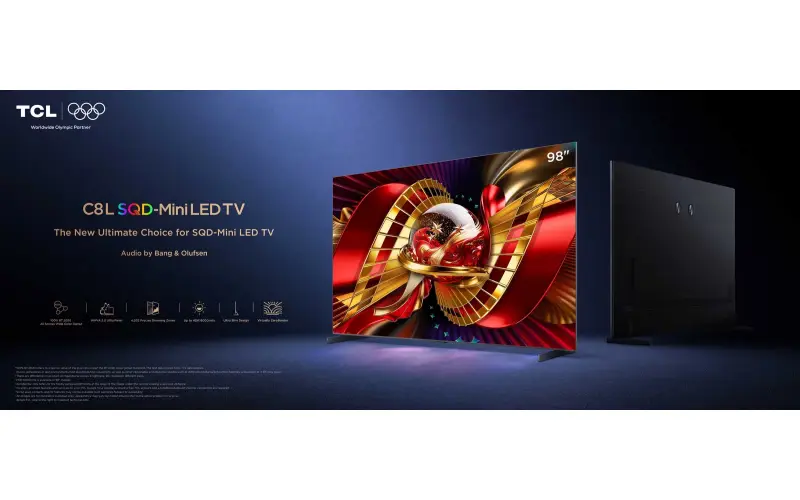
LG and TCL are expected to follow with their own Micro RGB LED sets within the next 12–18 months, making it clear that every major panel maker sees this as the heir apparent to OLED. In that context, South Korea’s national investment is not just about R&D—it’s about making sure its companies can compete as this new category begins to scale.
iLED vs. OLED: The Technical Edge
At the heart of the investment is inorganic LED (iLED), an umbrella term covering Micro LED, Quantum Dot LED (QD-LED), and Nano LED. These technologies share one big advantage: unlike OLED, which relies on organic materials, iLEDs use inorganic compounds that are far more stable and durable.
That translates to several key benefits:
-
Longer Lifespan – No burn-in risk and slower degradation over time.
-
Higher Brightness – iLEDs can push peak luminance beyond what OLED panels can achieve, making them ideal for HDR content.
-
Superior Energy Efficiency – Less power draw for the same brightness levels.
-
More Accurate Color – Especially in RGB Micro LED implementations, which emit red, green, and blue directly without needing color filters.
These advantages make iLED the most disruptive display technology since OLED. But while the potential is huge, the production challenges are equally daunting.
The Bottlenecks: Supply Chain and Manufacturing
South Korea has historically dominated OLED manufacturing, with Samsung Display and LG Display leading the world in both premium TV panels and flexible smartphone displays. But the story looks very different in iLED.
Today, South Korean firms remain heavily dependent on imports for critical upstream components such as LED epi-wafers, chips, and raw materials. That reliance puts them at a disadvantage compared to Chinese rivals, which have been aggressively developing their own domestic iLED ecosystems with strong government subsidies.
Compounding the challenge, Micro LED production requires semiconductor-like precision. Instead of depositing organic layers (as with OLED), manufacturers must fabricate and transfer millions of microscopic LED chips onto substrates, then test and align them at near-perfect accuracy. The process is expensive, time-consuming, and prone to yield issues.
It’s this combination of supply chain vulnerability and production complexity that South Korea’s new $350 million program is designed to address.
What the Investment Covers
According to MOTIE, the program will run through 2032 and target three primary areas:
-
Domestic Supply Chains – Funding will help establish local production of epi-wafers, chips, and materials, reducing reliance on imports.
-
Manufacturing Innovation – Investment in advanced R&D for micro-transfer, inspection, and repair technologies to boost yields.
-
Next-Generation Display Development – Support for research into Quantum Dot LED and Nano LED technologies, alongside Micro RGB LED.
The strategy is clear: build a vertically integrated iLED ecosystem entirely within South Korea, just as the country once did with OLED.
Competitive Pressures: China and Beyond
South Korea’s urgency isn’t just about future-proofing—it’s also about survival. Chinese display manufacturers such as BOE, TCL CSOT, Visionox, HKC, and Tianma have already overtaken South Korea in the LCD market and are rapidly narrowing the gap in OLED.
While South Korean firms still hold an edge in high-end flexible OLED, Chinese players are scaling aggressively in the mid-range and investing heavily in next-gen OLED technologies like FMM-free deposition. The fear is that history could repeat itself with iLED—unless South Korea takes decisive action now.
By creating a robust domestic supply chain, South Korea hopes to avoid being outpaced once again.
Micro RGB LED TVs: The Consumer Angle
For consumers, the significance of this investment might not be obvious today. Micro RGB LED TVs are still eye-wateringly expensive—often priced at $20,000 or more for early models—and available only in limited sizes. But industry watchers expect that to change rapidly by the late 2020s.
Hisense, Samsung, and Sony’s consumer launches mark the first wave. LG and TCL’s expected entries will push the market further, and with national-level investments from governments like South Korea’s, costs are likely to come down. Within the next decade, Micro LED TVs could very well become the mainstream premium display, displacing OLED in the same way OLED displaced LCD at the high end.
The Bigger Picture
This $350 million pledge is about more than just keeping pace with global rivals. It’s about ensuring that South Korea’s display industry—worth billions and employing tens of thousands—remains a key growth engine in the country’s economy.
The initiative represents three long-term goals:
-
Close the Technology Gap – Catch up and surpass Chinese and Japanese efforts in iLED.
-
Secure Independence – Build a complete domestic supply chain for critical materials and chips.
-
Drive Economic Growth – Establish iLED as a new growth pillar beyond OLED, helping diversify South Korea’s tech exports.
Outlook
The road ahead won’t be easy. Micro LED in particular remains a production challenge, and it may take most of the decade before costs fall to mass-market levels. But with South Korea’s heavy government backing, the momentum is shifting.
If successful, this initiative could help Samsung, LG, and other South Korean companies not only maintain their dominance but also lead the next display revolution—just as they once did with OLED.
The timing is crucial: with Hisense, Sony, and Samsung already shipping consumer-grade Micro RGB LED TVs and LG and TCL on the verge of entry, the race is no longer theoretical. It’s happening right now.
And South Korea is betting big that it can win.