By: Dipin Sehdev
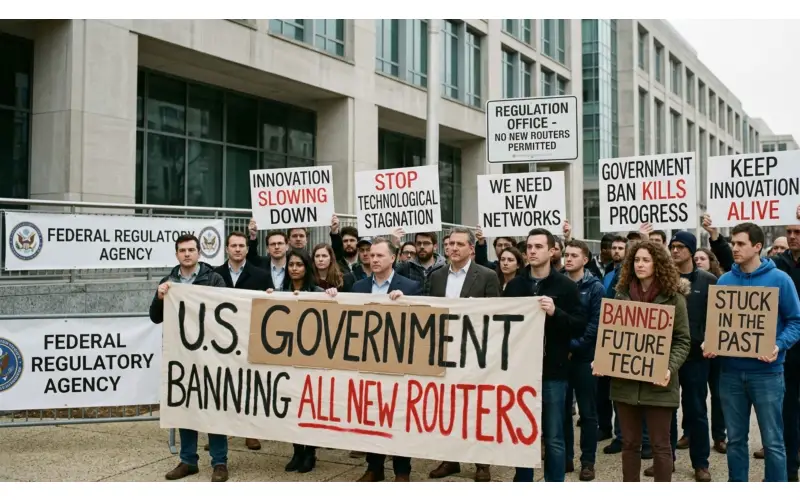
The FCC just did something that, on paper, looks like a targeted national security move. In reality, it’s about to send shockwaves through one of the most foundational parts of modern life: the internet itself. The agency has officially added all foreign-made consumer routers to its “Covered List,” effectively banning any new router models manufactured outside the United States from being approved, imported, or sold going forward. At first glance, it sounds like a policy aimed at cybersecurity. But when you zoom out, even slightly, it becomes clear this is something much bigger. And much more disruptive.
What the Ban Actually Covers
Let’s start with what this decision does and does not do—because the details matter.
Included in the ban:
- All new consumer-grade routers manufactured outside the U.S.
- Devices that include any major foreign production stage (manufacturing, assembly, design, or development)
- Future models from brands like TP-Link, Netgear, Google Nest, Eero, Ubiquiti, and others
Not included (for now):
- Existing router models already approved by the FCC
- Routers currently in use in homes or businesses
- Inventory already on store shelves
- Previously approved models still being sold
There’s also a temporary lifeline: Routers already on the market can continue receiving firmware and security updates through at least March 1, 2027, though that deadline could shift.
Companies can apply for “Conditional Approval” through the Department of Defense or the Department of Homeland Security. But there’s a catch: they must present a plan to shift at least part of their manufacturing to the U.S. That’s easier said than done.
The Reality: The U.S. Doesn’t Make Routers
Here’s the uncomfortable truth: the United States doesn’t have the infrastructure to support this policy, not even close. Modern routers rely on a global supply chain:
- Chips from Taiwan and South Korea
- Memory and storage from Asia
- Assembly across China, Vietnam, and beyond
Even “American” brands like Netgear, Eero (Amazon), and Google Nest rely heavily on overseas manufacturing. This is the entire industry.
And that’s why TP-Link, in a statement to The Verge, put it bluntly:
“It appears that the entire router industry will be impacted by the FCC’s announcement concerning new devices not previously authorized by the FCC.”
That’s not an exaggeration. It’s an understatement.
This Isn’t Just About Routers
Routers are just the starting point. Every modern device, phones, TVs, game consoles, smart home gear, relies on Wi-Fi chips and networking components that are part of the same global ecosystem.
If the U.S. begins restricting access to those components or forcing domestic production, the ripple effect won’t stop at routers.
It hits:
- Smart TVs
- Streaming devices
- Gaming consoles
- Laptops and desktops
- Smart home devices
- Even appliances
- Phones and tablets
And it comes at a time when memory and storage prices are already rising. This is how you get a perfect storm.
Prices Are Going Up—Fast
Let’s be direct: this will raise prices. There’s no scenario where forcing domestic production, or limiting supply, leads to cheaper hardware in the short term.
Routers are one of the few tech products that:
- Everyone needs
- Most people replace every few years
- Businesses buy in bulk
Now layer in:
- Limited supply of new models
- Increased manufacturing costs
- Potential bottlenecks in approval
You don’t just get higher prices, you get scarcity.If you’re a gamer, content creator, or someone relying on high-speed, low-latency internet, this hits even harder. High-performance routers, Wi-Fi 6E, Wi-Fi 7, are already premium products. Now imagine fewer options, higher costs, and slower rollout cycles. That’s where we’re headed.
A Country Already Behind
What makes this more concerning is where the U.S. already stands globally. For all its innovation, the United States is not leading in internet speeds.
Top 10 Countries by Average Internet Speed
| Rank | Country | Avg Speed (Mbps) |
|---|---|---|
| 1 | Singapore | 270+ |
| 2 | UAE | 260+ |
| 3 | Hong Kong | 250+ |
| 4 | Chile | 240+ |
| 5 | Thailand | 230+ |
| 6 | Denmark | 220+ |
| 7 | China | 210+ |
| 8 | South Korea | 200+ |
| 9 | Switzerland | 190+ |
| 10 | United States | ~170 |
The U.S. isn’t at the bottom, but it’s not leading either. Now consider what happens when:
- Hardware becomes more expensive
- Innovation slows
- New networking standards take longer to reach consumers
That gap doesn’t close. It widens.
Innovation at Risk
This is where things get more complicated. Policies like this are often framed around long-term independence, building domestic supply chains, reducing reliance on foreign manufacturing. That’s a valid goal. But in the short to medium term, there’s a real risk: innovation slows down. Why? Because:
- Fewer companies can afford to adapt quickly
- Product cycles get longer
- Investment shifts from innovation to compliance
Instead of asking, “What’s the next big thing in networking?” companies are asking, “How do we even get this approved?” That’s not how industries move forward.
The Timeline Matters
This isn’t a future problem. It’s already happening.
Effective immediately:
- No new foreign-made routers can receive FCC approval
Through 2026:
- Existing inventory continues to sell
- Approved models remain available
By March 1, 2027:
- Guaranteed support window for existing devices
After that? Unclear. And that uncertainty is part of the problem.
What You Should Do
There’s no way to soften this: if you need a router upgrade, the smart move is to act sooner rather than later because:
- Selection will shrink
- Prices will rise
- New models may be delayed or unavailable
This applies to:
- Home users
- Gamers
- Content creators
- Small businesses
- Enterprises
Routers are a core infrastructure in everyday life.
The Bigger Question
This decision is going to reshape the networking industry in the U.S., there’s no way around that. The question is whether it strengthens it in the long run or slows it down in the process. Right now, it looks like both are possible. But in the near term, one thing is clear: It’s a supply chain reset, with consequences that will reach far beyond your Wi-Fi network.