By: Dipin Sehdev
Triangle has officially unveiled the Capella 2, the second generation of its premium active wireless speaker system. Built in France and designed as a fully integrated streaming solution, Capella 2 blends Triangle’s 40+ years of loudspeaker expertise with modern connectivity, DSP-driven tuning, and cable-free placement via WiSA wireless transmission.
The original Capella earned praise for its musicality and versatility. The Capella 2 arrives with a faster hub, expanded connectivity, native streaming integrations, room calibration, and broader finish options. On paper, it’s a significant step forward.
But there’s a larger conversation here: the active wireless speaker market is now extremely crowded. Between KEF, Dynaudio, Bowers & Wilkins, Focal, Buchardt, and others, competition at this price point is intense. To stand out, brands need more than strong engineering — they need differentiation.
Triangle clearly believes Capella 2 has what it takes.
Built in France, Styled for Modern Living
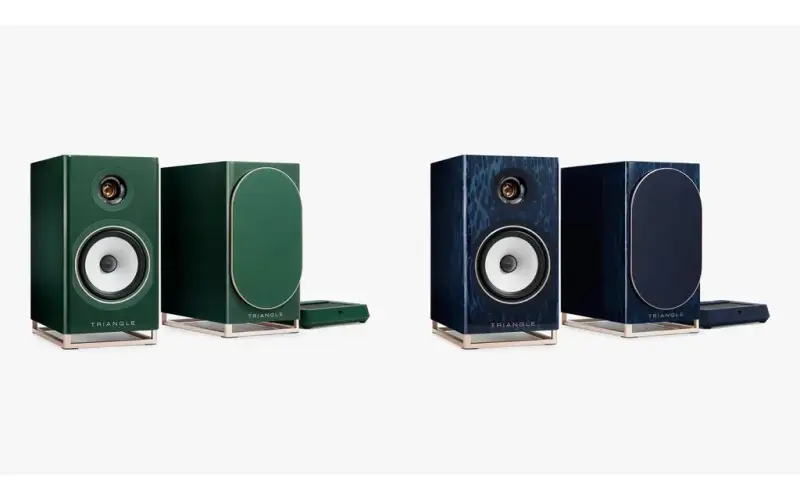
Capella 2 is manufactured in Soissons, France, with a finish quality that reflects Triangle’s heritage. The cabinets feature high-gloss lacquer and anodized aluminum accents, offered in five finishes:
-
Space White
-
Space Black
-
Astral Blue
-
English Green
-
Oak
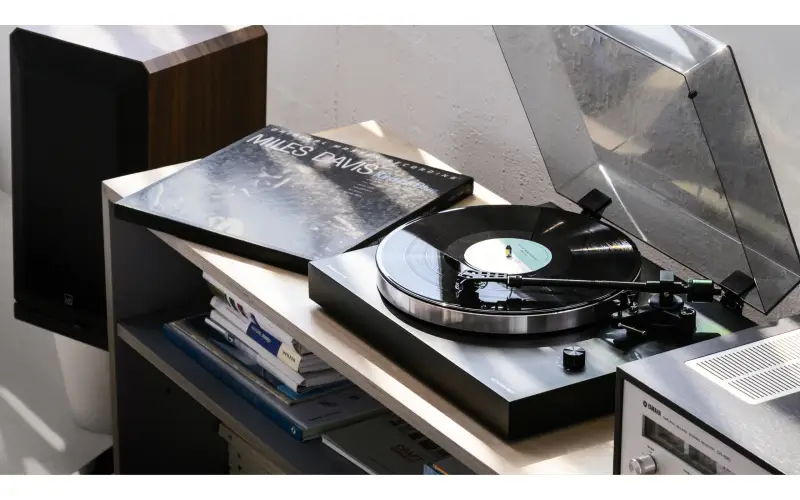
Matching S05 stands and the optional Lunar 3 turntable (developed with Pro-Ject) extend the ecosystem for buyers who want a cohesive, design-forward setup.
Visually, the Capella 2 leans into lifestyle appeal without abandoning serious acoustic engineering — a balance that’s increasingly important in this category.
The WiSA Advantage
At the heart of the system is the redesigned Stereo Hub 2, a network player and wireless transmitter powered by WiSA technology. Rather than running speaker cables between channels, WiSA sends 24-bit/96kHz audio wirelessly over a dedicated 5GHz connection with effectively zero latency.
All sources plug into the hub. The speakers require only power. No interconnects. No signal cables.
In theory, this offers true placement flexibility — useful for living rooms where aesthetics matter as much as soundstage geometry.
The hub itself is significantly upgraded, now powered by a Cortex A53 quad-core processor (1.5GHz) for smoother operation. It also adds:
-
HDMI eARC with CEC
-
Dedicated subwoofer output
-
Ethernet (RJ45)
-
Native Spotify Connect Lossless
-
Native Tidal Connect
-
Roon Ready certification
-
USB-C rechargeable RF remote
For many buyers, that level of integration eliminates the need for any additional streamer.
Streaming, Connectivity, and Expansion
Triangle has made Capella 2 format-agnostic. It supports:
-
AirPlay 2
-
Chromecast
-
Spotify Connect Lossless
-
Tidal Connect
-
Roon Ready
-
UPnP/DLNA
Wireless connectivity includes Wi-Fi (2.4GHz) and Bluetooth 5.2, with support for high-resolution playback up to 24-bit/192kHz (24-bit/96kHz via WiSA).
Wired inputs are extensive for an all-in-one system:
-
3× Optical
-
1× Coaxial
-
1× USB-B
-
1× USB-A
-
1× HDMI eARC
-
RCA stereo
-
3.5mm analog
-
Subwoofer output
That flexibility positions Capella 2 as both a music-first system and a credible TV upgrade solution.
Acoustic Engineering: Familiar Triangle DNA
Each speaker uses 100W of Class D bi-amplification (2×50W per speaker), with dedicated amplification and DAC per driver. A DSP manages crossover and protection.
Driver configuration includes:
-
165mm (6.5") natural cellulose pulp mid-woofer
-
25mm magnesium/aluminum dome horn-loaded tweeter (TZ2530MG)
Triangle’s cellulose driver material is a longstanding design choice, known for its neutral tonal balance and natural vocal reproduction. The horn-loaded tweeter aims to deliver wide dispersion and smooth high-frequency extension without harshness.
A downward-firing bass reflex port aids low-frequency uniformity, while internal DVAS (Driver Vibration Absorption System) bracing helps reduce cabinet resonance.
Triangle also includes automatic room calibration via iOS devices or its optional Zen microphone. Manual EQ adjustments are available through the Triangle Capella app (iOS & Android).
On paper, the ingredients are strong. The real question is how it competes sonically against equally ambitious rivals.
A Crowded Field
Let’s be honest: this is now one of the most competitive segments in audio.
Wireless active speakers in the £2,000–£3,000 range are no longer novel. Buyers expect full streaming support, HDMI eARC, DSP tuning, and elegant design as baseline features.
WiSA wireless transmission is a differentiator — but whether that alone is enough to stand out remains to be seen.
Execution will matter. Tuning will matter. Usability will matter.
We’re looking forward to independent reviews to see whether Capella 2 separates itself from a very capable field.
Triangle Capella 2 — Specs, Price & Availability
| Category | Details |
|---|---|
| Type | Active bass reflex speakers with integrated DSP |
| Amplification | Class D bi-amp, 2×50W per speaker (100W total per speaker) |
| Drivers | 165mm cellulose pulp mid-woofer; 25mm magnesium/aluminum horn tweeter |
| Frequency Response | 42Hz–22kHz (±3dB) |
| Crossover | 3,600Hz (DSP active) |
| Wireless | WiSA (speaker to hub), Wi-Fi 802.11 b/g/n, Bluetooth 5.2 |
| Streaming | AirPlay 2, Chromecast, Spotify Connect Lossless, Tidal Connect, Roon Ready, UPnP |
| Resolution Support | Up to 24-bit/192kHz (24-bit/96kHz via WiSA) |
| Hub Inputs | 3× Optical, 1× Coaxial, 1× USB-B, 1× USB-A, HDMI eARC, RCA, 3.5mm |
| Outputs | Subwoofer |
| Room Calibration | Auto (iOS / optional mic) + Manual EQ |
| Speaker Size | 200 × 315 × 380mm |
| Weight | 8.5kg per speaker |
| Finishes | English Green, Astral Blue, Space White, Space Black, Oak |
Pricing
-
Capella 2 System (pair + Stereo Hub 2): £2,299
-
S05 Stands: £279 per pair
-
Lunar 3 Turntable: £699
Availability
-
UK debut at Bristol Hi-Fi Show
-
Global retail availability: March
Triangle has delivered a technically complete, beautifully built wireless system with Capella 2. Now comes the real test: in a market this crowded, does it simply compete — or does it lead?
We’ll be watching closely once the reviews land.