By: Dipin Sehdev
TCL has just pulled the curtain back on its 2026 television lineup, and it’s nothing short of audacious. Leading the charge is the X11L flagship Mini-LED TV, boasting a staggering 10,000 nits of peak brightness, alongside the long-awaited debut of RGB Mini-LED in the new Q10M Ultra and Q9M series.
Announced at a domestic event in China, these new models set the stage for what’s shaping up to be one of the most competitive years in display technology. While global availability details will come at CES 2026 in January, the specs alone make it clear: TCL is doubling down on high-brightness, wide-color, and cutting-edge backlight technology.
But brightness and color volume aren’t the only headlines. TCL’s announcement comes on the heels of Dolby recently introducing Dolby Vision 2 (you can read the announcement here), an updated HDR format designed to take advantage of next-generation displays capable of hitting extreme brightness and color performance. The timing couldn’t be better.
Let’s dig into why these announcements matter—and why 2026 could be the year HDR and display technology finally take a major leap forward.
TCL X11L: The Brute Force Brightness Champion
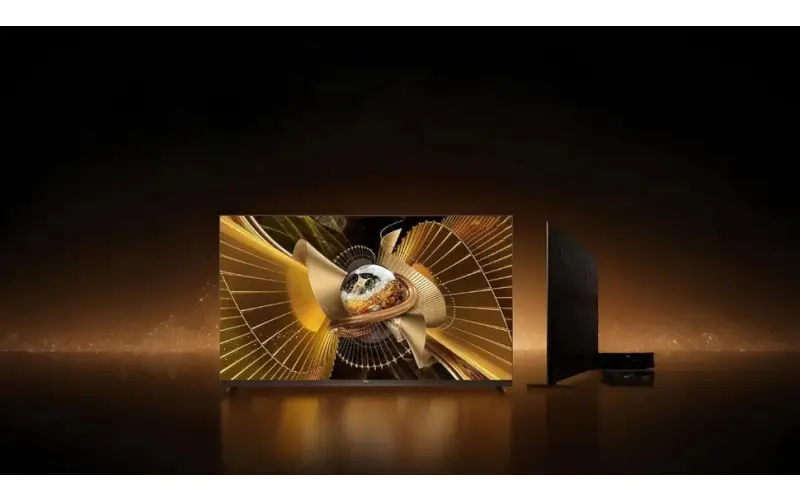
TCL’s X11L is its new flagship Mini-LED LCD, replacing the current X11K. On paper, it’s one of the most advanced TVs ever built:
-
Peak brightness: Up to 10,000 nits (with boosting)
-
Dimming zones: 20,736 (up from 14,112 on the X11K)
-
Color coverage: 100% Rec.2020
-
Panel sizes: 75, 85, and 98 inches
-
Thickness: Just 2 cm
-
Panel tech: Improved WHVA Pro LCD for wider viewing angles
That 10,000-nit figure is almost mythical in home displays. For comparison, most high-end OLED TVs max out at 1,000–1,500 nits, while current Mini-LED flagships from Samsung and Hisense push closer to 3,000–4,000. Even TCL’s own X11K capped out in that range.
At 10,000 nits, TCL’s X11L essentially reaches the HDR specification ceiling. HDR10 and Dolby Vision were both initially designed with 10,000 nits in mind, even if most content today doesn’t come close.
The technology enabling this brightness is what TCL calls Super Quantum Dot (SQD) Mini-LED, which uses single white LEDs per dimming zone rather than the blue-LED-plus-phosphor approach in traditional Mini-LED. This allows for cleaner white output and better energy efficiency, crucial when pushing extreme luminance.
RGB Mini-LED: A True Next-Gen Step
While the X11L flexes with brute force brightness, the real revolution comes with TCL’s Q10M Ultra and Q9M, the company’s first TVs using RGB Mini-LED backlighting.
The Difference: Mini-LED vs RGB Mini-LED
-
Standard Mini-LED: Uses blue LEDs coated with a yellow phosphor to approximate white light. This light then passes through color filters (red, green, blue) in the LCD layer. While effective, it introduces inefficiencies and limits peak color volume.
-
RGB Mini-LED: Uses separate red, green, and blue LEDs as the backlight. No phosphor coating required. This means:
-
Higher efficiency (less wasted energy converting blue light into white).
-
Richer color volume, because each LED directly emits its color.
-
Improved HDR impact, especially at extreme brightness.
-
It’s similar in spirit to Micro-LED displays, which are made of microscopic self-emissive RGB LEDs. The difference? RGB Mini-LEDs are still a backlight for LCD panels, not a self-emissive technology. That makes them less costly to produce and more scalable in larger screen sizes.
TCL Q10M Ultra Specs
-
Sizes: 85", 98", 115"
-
Peak brightness: 9,000 nits
-
Dimming zones: Up to 16,848
-
Color: 100% Rec.2020
-
Price (China): Starts at 27,999 yuan (~$3,935 / £2,915 / €3,700) for 85"
-
Top model: 115" flagship at 99,999 yuan (~$14,050 / £10,400 / €13,300)
TCL Q9M Specs
-
Sizes: 65" up to 115"
-
Peak brightness: 2,000 nits
-
Dimming zones: Up to 2,880
-
Color: 100% Rec.2020
-
Price (China): Starts at 7,999 yuan (~$1,150 / £830 / €1,050) for 65"
The Q10M Ultra goes toe-to-toe with Samsung’s and Hisense’s giant RGB LED TVs, but the Q9M is especially interesting—it brings RGB Mini-LED to more affordable price points, something competitors haven’t done yet.
Dolby Vision 2: Arriving at the Right Time
Coinciding with TCL’s announcement, Dolby Vision 2 was unveiled. While details are still emerging, the format is designed to take advantage of next-generation HDR displays capable of:
-
10,000-nit brightness
-
Wider color volume beyond Rec.2020
-
Dynamic metadata improvements for finer tone mapping
The timing couldn’t be better. For years, the bottleneck in HDR has been display limitations. Studios often master films at 1,000 nits, occasionally 4,000 nits for premium titles. Dolby Vision 2 provides a framework for future-proofing content as TVs like the X11L and Q10M Ultra push into uncharted brightness territory.
That said, many argue that 4,000 nits is already plenty bright for practical HDR—especially in dark home theater settings. The real hope is that Dolby Vision 2 pushes studios to utilize these capabilities, rather than leaving them untapped.
Nits in the Real World: Blu-ray vs Streaming
One of the biggest questions is how much consumers will actually see from these advances. The answer depends on content source.
| Format | Typical HDR Mastering | Peak Nits Preserved | Notes |
|---|---|---|---|
| 4K UHD Blu-ray | 1,000–4,000 nits (some up to 10,000) | Full HDR metadata preserved | No compression limits, best HDR fidelity |
| Streaming (Netflix, Disney+, Apple TV+) | Usually mastered at 1,000 nits | Often tone-mapped or capped lower | Heavy compression reduces fine HDR detail |
| Broadcast HDR (HLG) | 1,000 nits max | Lower than Blu-ray, less dynamic | More about live sports than cinema |
This means that the 10,000-nit ceiling of the X11L may only be fully realized when watching UHD Blu-ray discs mastered for high peak brightness. Streaming services will benefit, but compression and mastering practices remain bottlenecks.
Competitive Landscape: TCL vs Samsung, Sony, Hisense
The TCL announcement doesn’t exist in a vacuum. Its rivals are moving fast:
-
Samsung: Pushing a massive 115-inch Micro RGB TV with extreme brightness and color volume.
-
Hisense: Promising TriChroma RGB Mini-LED models at mainstream prices in 2026.
-
Sony: Showed off a prototype RGB LED panel at IFA 2025, claiming 4× the color volume of QD-OLED.
What TCL brings to the table is balance—an ultra-premium offering (Q10M Ultra), a flagship brightness monster (X11L), and a more affordable RGB option (Q9M). That three-tiered strategy could be key in mainstream adoption.
Availability and Pricing
TCL has confirmed that:
-
China launch: Late 2025
-
Global launch: CES 2026 (U.S. and Europe announcements expected)
-
Pricing:
-
X11L: From 19,999 yuan (~$2,811 / £2,080 / €2,650) for 85"
-
Q9M: From 7,999 yuan (~$1,150 / £830 / €1,050) for 65"
-
Q10M Ultra: From 27,999 yuan (~$3,935 / £2,915 / €3,700) for 85", topping out at ~$14,050 for 115"
-
Australian availability wasn’t confirmed, but given TCL’s track record, expect these models to roll out globally in 2026.
Why This Matters
For years, OLED has been seen as the king of picture quality, with Mini-LED offering a bright but sometimes less nuanced alternative. Now, with RGB Mini-LED and 10,000-nit SQD backlighting, TCL is challenging that balance.
More importantly, these TVs are arriving just as Dolby Vision 2 launches, raising the stakes for HDR mastering and content distribution. If studios step up and begin producing content to take advantage of 4,000- to 10,000-nit displays, home theater could be on the cusp of a major leap.
Final Thoughts
TCL’s 2026 lineup is a statement of intent. The X11L redefines how bright a consumer TV can be, while the Q10M Ultra and Q9M mark the mainstream arrival of RGB Mini-LED. Together, they set a new bar for color, brightness, and HDR fidelity.
The big question now is whether content providers—from Hollywood studios to streaming giants—will rise to the occasion. If they do, 2026 might be remembered as the year HDR finally delivered on its full promise.
Until then, one thing is clear: if you’re a display enthusiast, TCL just gave you something very bright to look forward to.
Comparison Table: TCL 2026 vs Samsung / Hisense / Sony Premium RGB LED TVs
| Model / Brand | Peak Brightness (nits) | Backlight Type & Dimming Zones | Color Gamut / Rec.2020 Coverage | Screen Sizes / Price (Selected) | Stand-Out Features / Notes |
|---|---|---|---|---|---|
| TCL X11L | ~10,000 nits (boost) | SQD Mini-LED (non-RGB), ~20,736 dimming zones | 100% Rec.2020 | 75", 85", 98" ; 2 cm thickness | Extreme brightness, improved viewing angles using WHVA Pro LCD panel |
| TCL Q10M Ultra | ~9,000 nits | RGB Mini-LED, up to ~16,848 zones in 115-inch model | 100% Rec.2020 | 85", 98", 115" ; pricing in China ~27,999 yuan for 85", ~99,999 yuan for 115" top model | Flagship RGB LED performance; pushing RGB into giant sizes |
| TCL Q9M | ~2,000 nits (in largest, smaller sizes less) | RGB Mini-LED, up to ~2,880 dimming zones in largest 115-inch model | 100% Rec.2020 | 65-inch starting ~7,999 yuan (~US$1,150) | Accessibility: bringing RGB LED tech into more “affordable” sizes |
| Samsung 115-inch Micro RGB TV | Not fully disclosed; some claims of ultra-high brightness; assumed to be in the premium / ultra flag-ship tier | Micro RGB backlight (ultra-fine RGB LEDs, less than 100 μm size), high zone/dimming control | 100% BT.2020 claimed; very high color accuracy | 115-inch initial; MSRP in SKorea ~$29,999 KRW (KRW 44.9 million) ~US$32,000+ | Ultra-premium; uses “Glare Free” panel, AI engine optimizing RGB output, very large budget required |
| Hisense 116UX TriChroma RGB LED | Up to ~10,000 nits (claimed) | RGB Mini-LED (“TriChroma LED”) backlight; tens of thousands of RGB LEDs; exact dimming zone count not always published | ~97% BT.2020 color space in some reports | 116-inch model; pricing high / flagship range; region-availability mostly in China / limited rollout | Very large LCD screen; strong HDR claims; LED backlight advances; often seen as Hisense’s answer to premium flagships |
| Sony RGB LED / RGB Mini-LED Prototypes | ~4,000 nits claimed in some Sony 2026 tech demos | RGB LED backlight prototypes; aiming for finer LED control, improved off-axis color, reduced blooming | Coverage claims ~90%-100% of BT.2020 in various sources; precise color accuracy emphasis over raw spec numbers | Sony has not fully disclosed all sizes / pricing for RGB LED models; expect 2026 product launches |