By: Dipin Sehdev
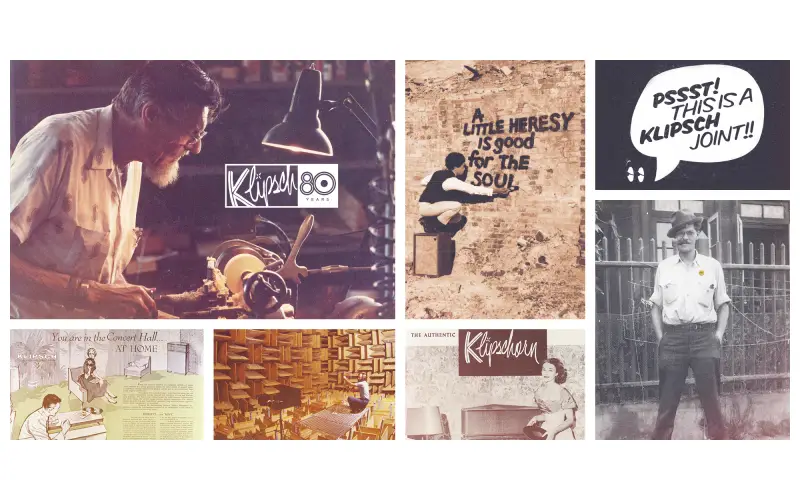
Eighty years is a long time for any company. In consumer electronics—where formats die, brands vanish, and yesterday’s innovation becomes landfill—it’s a tough milestone to reach. Yet here we are in 2026, watching Klipsch celebrate eight decades of doing something remarkably consistent: building speakers that sound big, dynamic, and unapologetically alive.
Klipsch kicked off its year-long 80th anniversary celebration at CES 2026, and the timing feels right. This isn’t nostalgia for nostalgia’s sake. It’s a reminder that long-term success in audio doesn’t come from chasing trends—it comes from committing to principles and letting the technology evolve around them.
Back in 1946, Paul W. Klipsch—PWK to anyone who’s ever read one of his papers or quotes—started building speakers in a tin shed in Hope, Arkansas. The goal wasn’t luxury, branding, or market share. It was physics. PWK wanted to reproduce live sound with clarity and efficiency, and he believed horn-loaded designs were the most honest way to do it.
That belief became the Klipschorn, a speaker that has remained in continuous production longer than any other loudspeaker in history. Not revised every few years. Not “reimagined.” Just refined, slowly, carefully, and always with the same acoustic DNA intact.
That DNA is still recognizable today—sometimes literally.
Orange Cones and First Impressions
I’ll date myself here (insert old guy joke), but my first real exposure to Klipsch wasn’t a white paper or a trade show demo. It was walking into a Best Buy in the early 2000s and hearing the RF-7s absolutely light up the demo room. Those bright copper-colored woofers stood out immediately—visually and sonically. They were loud, dynamic, and fun in a way that made other speakers on the floor sound polite by comparison.
That moment matters, because it’s the same story you hear from a lot of people who grew up around audio in that era. Klipsch wasn’t just a brand enthusiasts talked about online—it was a gateway. You didn’t need a boutique dealer or a dedicated listening room to experience it. You just needed to walk past the right display and stop in your tracks.
What’s remarkable is how many of those speakers are still in use today. It’s not uncommon to meet people running original Reference Series towers, Heritage models passed down through families, or 20-year-old Klipsch systems that refuse to quit. That kind of longevity doesn’t happen by accident.
Built on Physics, Not Fashion
Klipsch has always been guided by science rather than fashion, and PWK made that clear in both his work and his personality. One of his most famous quotes still sums up the company’s approach:
“My theories on audio and audio reproduction will be proven wrong only when the laws of physics change.”
That mindset explains why Klipsch products age differently than most consumer electronics. When your designs are rooted in efficiency, controlled directivity, and low distortion rather than DSP tricks or voicing trends, they don’t expire when tastes shift.
It also explains why Klipsch speakers tend to be enjoyed globally and across generations. You’ll find Heritage models in dedicated listening rooms, Reference speakers in living rooms, and Klipsch Pro systems filling venues around the world. The underlying idea—high efficiency, low distortion, live-sound dynamics—scales surprisingly well.
CES, Legacy, and Full-Circle Moments
CES holds special meaning for Klipsch beyond product launches. It was one of Paul W. Klipsch’s last major public appearances, and in 2004 he was posthumously inducted into the CTA Hall of Fame. For a company so deeply tied to engineering culture, that recognition still carries weight.
Paul Jacobs, President and CEO of Klipsch, framed the anniversary not as a victory lap, but as continuity:
“Paul’s legacy, as always, is at the heart of our DNA. I’m beyond proud of the extraordinary innovation our team puts forward year after year to preserve his legacy with products that continue to define and inspire new generations of audio enthusiasts across the world.”
That sentiment rings true when you look at how Klipsch operates today. The company is headquartered in Indianapolis, maintains its factory in Hope, Arkansas, and supports engineering, manufacturing, and development teams around the globe. Yet the core philosophy hasn’t drifted.
The Klipsch Museum: Preserving the Science of Sound
Directly across from the Hope factory sits one of the most unique institutions in audio: the Klipsch Museum of Audio History. It’s one of the few museums dedicated entirely to audio, and it serves as both a historical archive andand an educational resource.
The museum houses original prototypes, lab notes, artifacts from the dawn of hi-fi, and personal items from PWK’s life. More importantly, it treats audio not as nostalgia, but as applied science. Its mission includes historical research, public education, and STEM-focused outreach built around PWK’s work on acoustics and sound reproduction.
Every year, the museum hosts a gathering around PWK’s birthday—an event that started as a simple appreciation lunch for factory workers and has grown into a pilgrimage for Klipsch fans. This year’s March 6–7 celebration will be the largest yet, including rare factory tours and access to the grounds where the company’s legacy began.
Why 80 Years Still Matters
Plenty of brands trade on heritage without earning it. Klipsch is different because its history is audible. You can hear it in a modern Reference tower. You can feel it in a Heritage system. You can recognize it instantly when a speaker doesn’t flinch at dynamic swings or complex music.
The fact that people are still using decades-old Klipsch speakers—and that new generations are discovering the brand for the first time—says something important about quality and consistency. Trends come and go. DSP improves. Formats change. But speakers that are fundamentally well-designed tend to stick around.
Eighty years after a tin shed in Arkansas, Klipsch is still building speakers with the same core belief: sound should be efficient, dynamic, and emotionally engaging. That belief has outlived technologies, competitors, and entire market cycles.
In audio, that’s not just longevity—that’s proof.