By: Dipin Sehdev
Gaming on the TV itself has long been promised as the future—and for years, that future arrived slower than expected. Performance limits, input latency, and underpowered TV hardware kept console and PC gaming firmly in the lead. But as consoles and gaming PCs become more expensive, and as cloud infrastructure improves, that transition is finally starting to feel real.
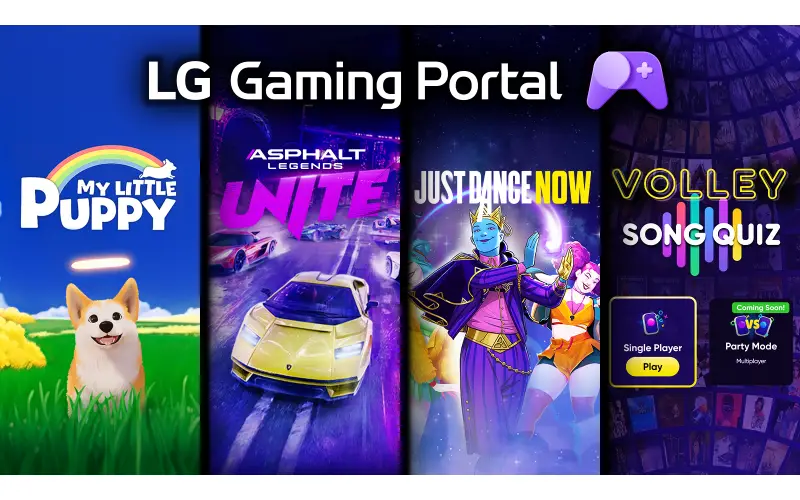
LG’s latest expansion of its LG Gaming Portal is another sign that TV-based gaming is quietly catching up. With thousands of cloud-based and casual titles now playable directly on LG Smart TVs—no console, no PC, no external hardware required—LG is positioning the television as more than just a display. It’s becoming a gaming platform in its own right.
This shift won’t replace dedicated gaming rigs anytime soon, but it does point to a future where gaming on the biggest screen in the house is far more accessible than it’s ever been.
Gaming Is Getting More Expensive—TVs Are Filling the Gap
There’s no avoiding it: gaming hardware costs have risen sharply. Current-generation consoles are more expensive than their predecessors, and PC gaming—once the most flexible option—now demands serious investment in GPUs, CPUs, cooling, and power supplies.
Against that backdrop, the idea of playing games directly on a TV starts to make a lot of sense. No box under the TV. No $2,000 PC build. Just a controller—or even a remote—and a screen you already own.
Microsoft’s Xbox “Play Anywhere” philosophy helped normalize this idea, pushing gaming across consoles, PCs, handhelds, and cloud streaming. Samsung has followed with aggressive efforts to bring console-level gaming to its TVs through cloud platforms and gaming hubs.
LG’s approach is different, but complementary. Instead of focusing exclusively on AAA console ports, LG is building a broad, flexible gaming ecosystem that spans casual, social, voice-controlled, and cloud-streamed experiences—designed specifically for living rooms.
Inside the LG Gaming Portal
LG’s Gaming Portal continues to expand, now offering:
-
Over 4,000 cloud-based games
-
More than 600 casual titles
-
Support for remote, smartphone, and voice-based input
-
No requirement for additional gaming hardware
The goal is clear: reduce friction. If you can turn on the TV, you can start playing.
These games run directly on LG Smart TVs, leveraging cloud streaming and lightweight local processing. While that limits the kind of ultra-demanding titles you’d expect from a high-end PC, it dramatically lowers the barrier to entry for everyone else.
Just Dance Now: Console-Free Party Gaming
One of the most notable additions is Just Dance Now, developed in collaboration with Ubisoft. Available on LG Smart TVs running webOS 22 or later, the game is rolling out in the US, Australia, Sweden, and Norway, with additional European markets to follow.
Unlike traditional Just Dance setups, this version:
-
Requires no console
-
Uses the LG Magic Remote’s motion sensors
-
Supports group play in the living room
It’s a smart fit for TV-based gaming. Just Dance thrives on accessibility, and removing the console makes it easier for families and casual players to jump in without setup overhead.
Voice-Controlled Gaming with Volley
LG is also leaning into something TVs do particularly well: voice interaction.
Through a partnership with Volley, LG is bringing popular voice-controlled games to the big screen, including:
-
Jeopardy!
-
Song Quiz, a music trivia game played by over 50 million users globally
Voice gaming won’t replace traditional controllers, but it works extremely well for social and trivia-style experiences. It also highlights something important about TV gaming: not every game needs a gamepad or a GPU-intensive engine to be engaging.
Arcade Racing Without the Console
For players looking for faster-paced experiences, LG has teamed up with Blacknut to deliver Asphalt Legends Unite.
Key highlights:
-
Available free with ads in the US
-
All cars and maps unlocked from the start
-
No in-game purchases required
-
Playable using directional controls on the remote
This isn’t console-level Asphalt in terms of graphical fidelity, but it captures the spirit of arcade racing—and it’s instantly accessible. That matters more than raw performance for many users.
Storytelling and Emotion on the Big Screen
Not all additions are about speed or competition. My Little Puppy, published by Krafton and offered through Blacknut, takes a more emotional approach.
The game follows a dog’s journey through relationships, farewells, and reunions, using:
-
Expressive visuals
-
Narrative-driven gameplay
-
The TV’s large screen to enhance immersion
It’s a reminder that TV gaming doesn’t have to chase realism or frame rates to be impactful. Sometimes scale and comfort are the point.
Smartphones as Controllers
Recognizing that remotes aren’t ideal for every game, LG has introduced a Wi-Fi–based mobile gamepad app.
The LG Mobile Gamepad Wi-Fi app:
-
Works on Android and iOS
-
Turns a smartphone into a controller
-
Reduces input friction for supported titles
This bridges the gap between casual and more traditional gaming experiences, without requiring users to buy dedicated accessories.
Innovation from the webOS Developer Community
LG is also spotlighting creativity from its developer ecosystem. Two award-winning titles from the LG webOS Hackathon have been added to the Gaming Portal:
-
Quest of Sunflower by Couchplay
An epic family adventure with AI-generated storytelling and stylized visuals. -
Signs of Magic by Lukas Klingsbo
A fantasy adventure where the LG Magic Remote acts like a wand, using gyroscopic gestures to cast spells.
These titles show how games can be designed around the TV experience, rather than awkwardly adapted to it.
The Big Question: Can TVs Keep Up?
As encouraging as all of this is, it’s worth being realistic.
Gaming—especially modern, high-end gaming—demands:
-
Powerful processors
-
Dedicated GPUs
-
Fast memory
-
Low-latency input paths
Most TVs still lag behind consoles and PCs in raw horsepower, RAM, and thermal headroom. Cloud gaming helps offset that, but latency and bandwidth remain variables outside the TV’s control.
That’s why this transition is happening gradually. TV gaming is expanding in categories where:
-
Performance demands are lower
-
Accessibility matters more than visuals
-
Social and casual play dominate
I’m genuinely curious to see how this evolves as TV processors improve and cloud infrastructure continues to mature.
Looking Ahead to CES 2026
What makes LG’s gaming push especially exciting is timing. With CES 2026 on the horizon, it’s clear that TV makers see gaming as a major growth area—especially as console and PC costs continue to climb.
We’re unlikely to see TVs replace dedicated gaming hardware anytime soon. But as part of a broader ecosystem—alongside consoles, PCs, handhelds, and cloud platforms—TV-based gaming is becoming increasingly relevant.
LG’s Gaming Portal shows that progress doesn’t always come from brute-force hardware. Sometimes, it comes from making gaming easier, more accessible, and better suited to the living room.
Availability and Compatibility
Availability of games and features:
-
Varies by TV model
-
Varies by region
-
Requires compatible versions of webOS
For the most accurate and up-to-date information, consumers should check LG’s official website for supported models and regional availability.
Final Thoughts
Gaming on TVs is no longer a novelty—it’s an emerging category finding its footing. As consoles and PCs grow more expensive, and as cloud platforms mature, TVs are stepping into a role they were always positioned to play.
LG’s latest Gaming Portal updates don’t promise console replacement. Instead, they offer something arguably more valuable: choice. And heading into CES 2026, that’s something worth being excited about.