By: Dipin Sehdev
For home-theater fans, the dream of getting more IMAX content in the living room—especially on disc, with the higher bitrates physical media can deliver—has felt long overdue. IMAX Enhanced has largely stalled, physical releases rarely get the IMAX scenes fans want, and enthusiasts continue to invest thousands into rooms that could easily showcase larger-format filmmaking as directors intend.
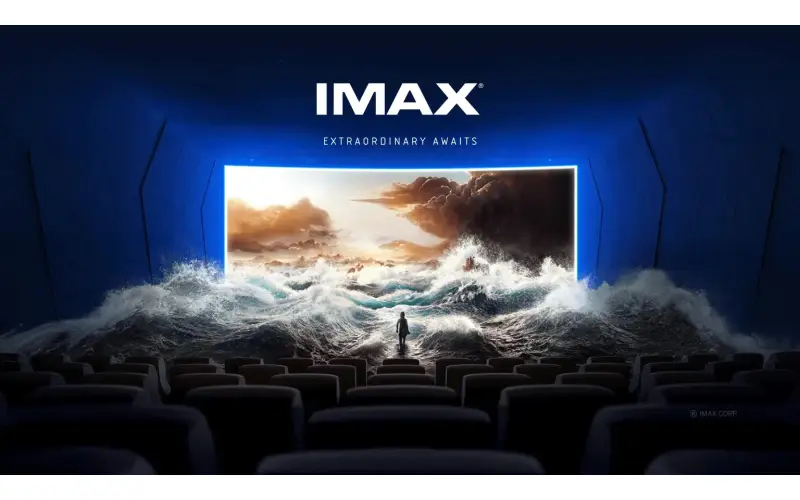
But on the other side of that dream sits the reality of theatrical exhibition, where premium formats like IMAX aren’t just optional flourishes but lifelines for cinemas navigating a rapidly shifting industry. That tension is at the center of the newest controversy in the theatrical world, after Variety broke the news that Vue Entertainment founder and CEO Tim Richards has issued a blistering open letter slamming IMAX for striking an exclusive deal with Netflix for Greta Gerwig’s upcoming Chronicles of Narnia film.
And his argument is loud and clear: IMAX’s move, he says, puts its own interests ahead of the theatrical ecosystem—and could encourage a trend that undermines cinemas and filmmakers alike.
The Netflix–IMAX Deal That Set Everything Off
First announced in January, the agreement gives Netflix’s The Magician’s Nephew—Gerwig’s first feature since Barbie—a two-week exclusive run on IMAX screens worldwide. After those 14 days, the film goes dark for another 14, before landing on Netflix on December 25, 2026.
It’s a strange “2 + 2” release structure, even by the post-pandemic standards of streaming-infused distribution. And it means something else: no other cinema chain, screen format, or premium experience will get the movie during its theatrical window.
Not Dolby Cinema.
Not Cinemark XD.
Not regional PLFs.
Not standard auditoriums.
Just IMAX—assuming a cinema operator is willing to accept the terms.
This exclusivity is exactly what has the broader exhibition community rattled. And now, thanks to Richards’ letter shared exclusively with Variety, that private frustration has become public.
Vue’s CEO: “Audiences and the industry will lose.”
Richards’ open letter does not mince words.
He argues that IMAX is knowingly breaking with long-established norms by embracing a hyper-restrictive window that locks out 99% of cinema screens worldwide. More importantly, he says, IMAX has threatened what he refers to as a “nuclear option” to ensure the exclusivity holds—reportedly a contract tool that would legally compel operators with IMAX screens to show the Netflix film, even if those operators oppose the terms.
That escalation stunned many in the industry.
“The outcome? IMAX and Netflix may enjoy a short-term gain, but the industry and audiences around the world will lose,” Richards writes.
His central case is two-fold:
-
Families who want to see Narnia in theaters may have no access—not because demand is low, but because IMAX’s arrangement removes the film from almost all screens.
-
IMAX is encouraging a precedent that could fracture the release model, giving streaming platforms and single-format deals disproportionate control.
Richards stresses that cinemas rely on shared access to content, especially family fare. When one format gatekeeps a major title, he says, it hurts everyone—exhibitors, partners, and audiences who expect choice.
IMAX Isn’t the Only Game in Town—And Vue Wants to Make That Clear
A key part of Richards’ argument is technological: IMAX, he says, is no longer the default leader in premium large-format projection and audio.
He goes out of his way to cite advances from competitors, including:
-
Dolby Vision + Dolby Atmos, which he notes is the preferred filmmaker reference for many directors
-
Christie and Barco HDR projection, whose image performance he calls “market-leading”
-
A global PLF landscape where IMAX holds less than 1% of screens
Richards even points to Barbie—one of the highest-grossing films of all time—as proof that theatrical momentum does not require an IMAX release. And he bolsters that point with a quote from Gerwig herself about Dolby Vision and Dolby Atmos being her ideal presentation formats.
It’s an unusually direct challenge to IMAX’s reputation as the pinnacle theatrical experience. But it’s also strategic: in 2025, Vue launched its own PLF format, called Epic, designed to compete directly with IMAX. If IMAX’s exclusivity suggests only one format “counts,” Vue’s investment could suffer.
Still, Richards’ broader point resonates across exhibition: cinema thrives on format diversity. Turning one format into a gatekeeping mechanism risks destabilizing that.
The Home-Theater Angle: A Different Kind of Exclusivity
This is where things get tricky for home-theater fans.
If you’re someone who wants IMAX home releases—on disc, in IMAX Enhanced, in any form—you might see IMAX partnering with streamers as a sign the company is becoming more forward-looking. And IMAX’s CEO Richard Gelfond has repeatedly emphasized the desire to expand exclusivity deals like Narnia’s.
But exclusivity in the theatrical window rarely leads to more access at home. Historically, the opposite is true. When a company treats its premium experience as leverage, that mindset tends to carry over into how it licenses content for home formats.
The worry for enthusiasts is that exclusive theatrical control doesn’t translate into richer home releases—it translates into more fragmentation. Today, IMAX still delivers almost no physical media titles with full IMAX sequences. Disney’s limited adoption of IMAX Enhanced on streaming is far from the bitrates discs can offer. And now, with deals tied to streaming-first companies like Netflix, the path toward robust IMAX-at-home offerings could get even more complicated.
Meanwhile, Dolby Vision and Dolby Atmos continue to dominate both high-end home cinema and premium theatrical rooms—many of which, Richards notes, outperform IMAX globally.
So there’s a strange irony here:
Cinemas want access to all formats. Home fans want access to all formats. Yet exclusivity benefits neither.
Netflix’s Theatrical History Isn’t Helping
Part of the tension arises from Netflix’s historically strained relationship with theaters.
For years, major chains refused to screen Netflix originals because the streamer would not agree to a 45-day theatrical window before a home release—the window that remains the industry standard. Netflix typically pushes for two-to-three-week exclusivity at most.
Many exhibitors see the Narnia deal as a workaround that lets Netflix get the prestige and marketing benefit of a theatrical release without sharing the film more broadly or honoring the release timelines traditional studios do.
And by using IMAX as the sole conduit, Netflix effectively sidelines the rest of the theatrical ecosystem.
Why the Deal Matters More Than the Movie
To be fair: this is not about whether The Magician’s Nephew will be good or bad. It’s not even purely about Netflix.
It’s about framework.
If IMAX proves that a major film—even a streamer-backed one—can succeed on IMAX screens alone, other streamers and studios may begin exploring similar arrangements.
If filmmakers start chasing the prestige of one-format exclusivity, the multi-format theatrical model could fracture in ways the industry is not prepared to absorb.
And if cinemas begin fighting over titles rather than sharing them, the theatrical experience gets weaker—and home entertainment becomes more balkanized by extension.
That’s the scenario Richards is trying to get ahead of.
Is IMAX Overreaching—or Just Adapting?
There is another way to look at this.
IMAX has struggled in recent years to define its role in a world where:
-
PLFs like Dolby Cinema regularly outperform it
-
High-end home setups rival or exceed mainstream theaters
-
Streamers are pouring billions into high-profile films that may never get wide theatrical releases
Locking down exclusives could be a survival plan, not power consolidation.
Still, that doesn’t address Richards’ core criticism: survival tactics are not inherently good for the ecosystem that supports them.
And that ecosystem—studios, cinemas, filmmakers, fans—lives or dies by access.
The Bottom Line
I love the idea of IMAX embracing more formats, giving audiences more ways to experience ambitious filmmaking, and ideally bringing IMAX-grade content into the home with the fidelity enthusiasts deserve. And I want the theatrical IMAX experience to thrive at the same time, because cinema and home viewing should elevate each other—not compete for scraps.
That’s what makes this dispute so frustrating.
Richards’ letter, as first reported by Variety, isn’t just a fight between one cinema chain and one premium format. It’s a warning about what the industry could look like if exclusivity becomes the norm rather than the exception.
If IMAX wants to be the definitive premium experience, the path forward shouldn’t be locking out Dolby, XD, Epic, or anyone else. It should be raising the bar—creatively, technically, and collaboratively—so that theatrical and home audiences get the best version of every film.
And that starts with access, not restrictions.
Source: Variety